

Kitchen Island Ideas: Inspiring Designs for the Heart of Your Home
From sculptural curves to working prep stations, explore kitchen island ideas that combine beauty with purpose. Shapes, sizes, seating, storage, materials, and configurations for every style of home.
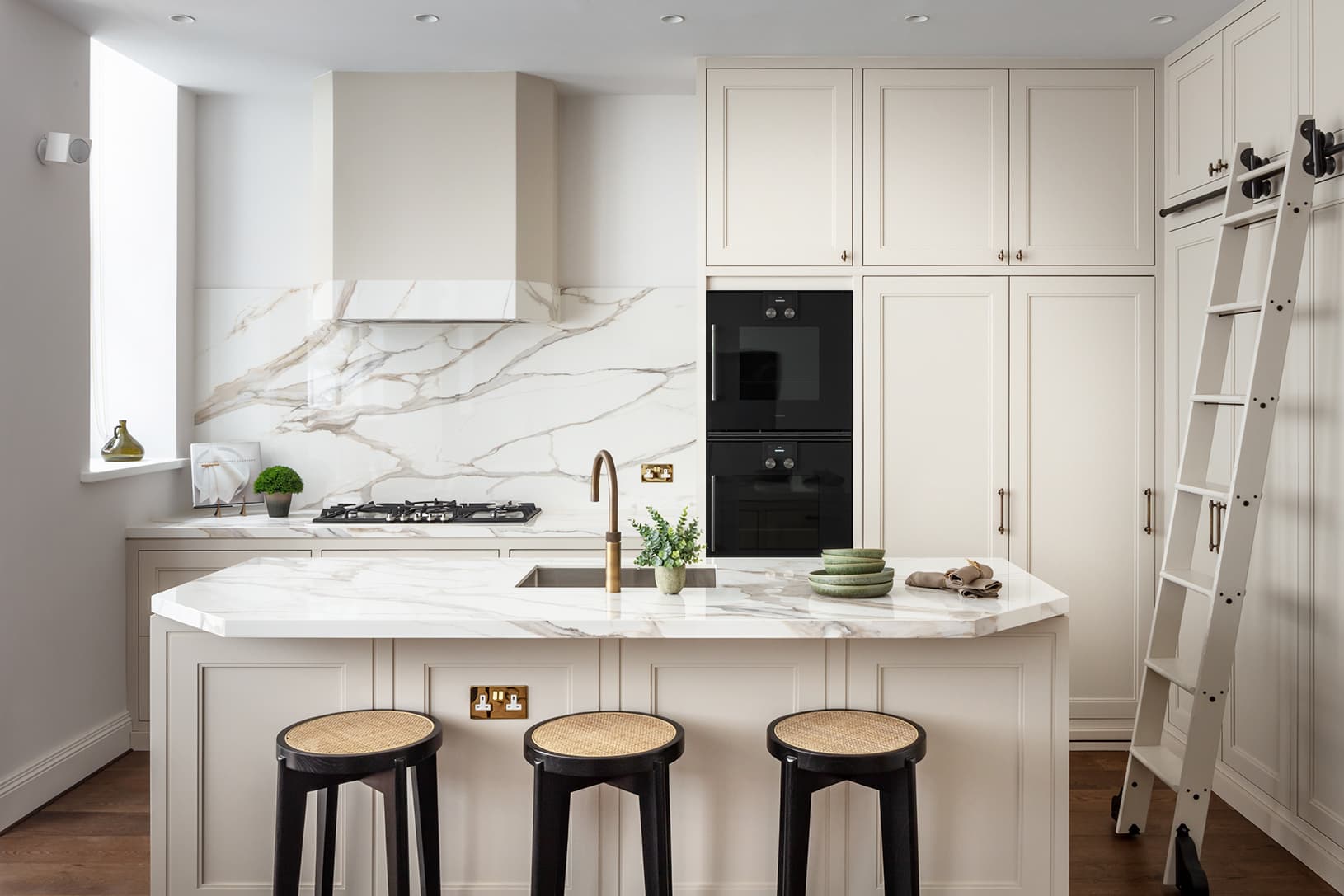
A kitchen island is one of those rare things in design that is genuinely as practical as it is beautiful. At its best, it anchors the room, organises the workflow, gathers the family, and gives a kitchen its unmistakable sense of generosity. At its worst — when chosen from a catalogue without a thought for proportion or purpose — it simply gets in the way.
The difference, as with most things in kitchen design, is intention. An island that has been designed around your particular room, your particular habits, and your particular idea of what a kitchen should feel like will earn its place a hundred times over. One that has been dropped in because the showroom said you needed one almost certainly will not.
What follows is a comprehensive collection of kitchen island ideas — shapes, configurations, materials, and details — drawn from years of designing bespoke kitchens across Hertfordshire, Essex, Cambridge, and London. Not every idea will suit every home. That is rather the point.
Island Shapes: Beyond the Rectangle
The rectangular island is the default for good reason. It is efficient, easy to manufacture, and works in the majority of kitchen layouts. But it is far from the only option, and for many rooms it is not the best one.
Rectangular Islands
The classic rectangular island suits most proportions. It offers a long, uninterrupted work surface, accommodates seating on one side with services on the other, and aligns naturally with the parallel runs of a typical kitchen. If your room is a straightforward rectangle, this is almost certainly where to start.
The key is proportion. An island that is too long and narrow feels like a corridor; too short and deep, and it becomes a stumpy block. As a general rule, the length-to-depth ratio should sit somewhere between 2:1 and 3:1. A 2400mm by 900mm island, for instance, has the poise that a 2400mm by 1200mm island lacks.
L-Shaped Islands
An L-shaped island creates two distinct working zones within a single structure — one arm for prep, the other for seating, or one for cooking and the other for serving. It wraps around a corner of the room in a way that feels natural and creates a more enclosed, convivial cooking area without boxing anyone in.
This shape works particularly well in large, open-plan kitchen-diners where a straight island would leave the cook marooned in the middle of an expanse. The return arm subtly defines the kitchen zone without the need for walls or partitions.
Curved and D-End Islands
A curved island softens a room in a way that no straight line can. Even a gentle radius at one end — a D-end — transforms the character of the piece, giving it a furniture quality that rectangular islands sometimes lack.
Full curves are more complex to manufacture and require worktop materials that can be shaped accordingly, but the result is often breathtaking. We have built islands with a sweeping concave curve on the seating side, creating an intimate, almost booth-like dining experience that our clients adore.
Curves also solve a practical problem: they eliminate sharp corners. In kitchens where children are underfoot or where the island sits on a thoroughfare, a radiused end is both safer and more graceful than a square one.
Circular and Oval Islands
Circular islands are rare, and intentionally so — they demand a room of generous, balanced proportions and a willingness to make the island the undisputed centrepiece. When the conditions are right, however, a round island has a magnetic quality. Everyone gravitates towards it. Conversation flows around it. It becomes the room.
Oval islands offer a similar sense of occasion with rather more practicality. The elongated form provides a usable working surface while retaining that organic, sculptural presence.
Size and Proportion: Getting the Fundamentals Right
Before falling in love with any particular island design, you need to confirm that your room can accommodate it comfortably. An island that crowds its surroundings, however beautiful in isolation, will make the kitchen feel cramped and frustrating to use.
Minimum Clearances
The critical measurement is the gap between the island and the nearest fixed element — whether that is a run of base cabinets, a wall, or a door swing. Allow at least:
- 1000mm on sides used purely as walkways
- 1200mm on sides where someone will be standing and working (opening drawers, loading a dishwasher)
- 1400mm or more where two people need to pass comfortably while one is working at the island or the perimeter
These are minimums, not ideals. In our experience, 1200mm walkways feel comfortable and 1400mm feels generous. Below 900mm, the space becomes genuinely difficult to use — and if an island forces you below that threshold, the honest answer is that you need a smaller island or no island at all.
Proportional Relationships
The island should feel like a natural part of the room, not an intruder. A useful test is the third rule: the island should occupy roughly a third of the available floor space between the perimeter cabinetry. Much more than that and the room feels congested; much less and the island floats without purpose.
Height matters too. Standard worktop height is 900mm, but if the island serves primarily as a breakfast bar, 1000mm to 1100mm creates a more natural bar-stool perch. Some of our most successful designs step the island at two heights — 900mm on the working side, 1050mm on the seating side — using a raised back section that also conceals any mess from diners.
Functional Configurations
Every kitchen island should earn its keep, but how it earns it depends on how you live. Here are four distinct approaches, each with its own logic.
The Prep-Focused Island
This is the cook's island: a generous, uncluttered work surface with a sink for washing and draining, deep drawers below for pans, bowls, and chopping boards, and perhaps an integrated bin for food waste. The priority is clear worktop space and everything within arm's reach.
A prep island works best with the hob and oven in the perimeter runs, so you prep at the island and cook at the wall. It is the most traditional configuration and, for many households, still the most effective.
The Cooking-Focused Island
Placing the hob in the island transforms it into a stage. You cook facing the room — facing your family, your guests, the garden — rather than staring at a wall. It is a sociable, theatrical way to cook, and for confident cooks it is a joy.
The practical considerations are ventilation and electrical services. A ceiling-mounted extractor hood above an island hob is the classic solution, though it can dominate the room visually. Downdraft extractors, which rise from behind the hob when needed, offer a cleaner sightline at the cost of some extraction performance. A thoughtful lighting plan becomes particularly important when the island is the cooking hub, as task lighting needs to work in harmony with the extractor above.
The Entertaining Island
If your kitchen is as much a social space as a cooking space — and for most of our clients, it is — the island can be configured primarily for gathering. A long seating edge with pendant lighting above, a section of lower worktop for casual dining, perhaps an integrated wine cooler or drinks prep area at one end.
Entertaining islands benefit from generous proportions and clean lines. You want the surface uncluttered when guests arrive, which means ample closed storage below and the working mess kept to the perimeter. This is the island as stage set: composed, inviting, and ready for its audience.
The Multi-Use Island
Most bespoke islands are, in truth, multi-use — and that is as it should be. The skill lies in zoning the island so that each function has its territory without competing with the others.
A typical multi-use configuration might run like this: sink and dishwasher at one end (the working zone), clear worktop in the centre (prep and serving), seating at the far end (dining and socialising). Beneath the worktop, different drawer configurations serve each zone — deep pan drawers near the cooking end, cutlery and linen drawers near the seating end, and open shelving or display storage on the outward-facing side.
This kind of nuanced planning is where bespoke design truly distinguishes itself from off-the-shelf solutions. Every inch is allocated with purpose.
Worktop Materials for Islands
The island worktop often differs from the perimeter worktops, and deliberately so. This is one of the most effective ways to give the island a sense of presence and independence — a piece of furniture in its own right rather than an extension of the fitted kitchen.
Natural Stone
Marble, granite, and quartzite are the prestige choices for island worktops. A single, book-matched slab of Calacatta marble across a large island is, frankly, magnificent. Granite offers near-indestructible practicality. Quartzite splits the difference — harder than marble, with much of its visual drama.
The important thing is to choose stone with your eyes open. Marble will stain and etch over time. For many of our clients, that patina is part of the appeal. For others, engineered quartz offers the look with considerably less anxiety.
Solid Timber
A thick oak or walnut worktop gives an island warmth and tactility that no stone can match. Timber is forgiving under the knife, quiet under the glass, and develops a rich, lived-in character over years of use. It does require periodic oiling and a relaxed attitude towards surface marks, but for many families it is the most emotionally satisfying choice.
Engineered Quartz and Ceramic
For those who want beauty without maintenance, engineered quartz and ultra-compact ceramics deliver. They resist staining, scratching, and heat with barely a thought required. The range of colours and patterns has improved enormously, with convincing marble and concrete effects now widely available.
Mixed Materials
Some of our favourite islands combine two worktop materials — stone on the working section, timber on the breakfast bar overhang — creating a clear visual distinction between the functional zone and the social one. It also allows each material to do what it does best: stone for durability where you chop and spill, timber for warmth where you sit and linger.
Seating Options
An island without seating is a missed opportunity in most kitchens. But the type of seating — and how it is integrated — makes an enormous difference to both the comfort and the aesthetics.
The Breakfast Bar Overhang
The simplest approach: extending the worktop 300mm to 400mm beyond the island base on the seating side, with bar stools tucked beneath. It is space-efficient, easy to clean around, and universally practical. Allow 600mm of worktop width per stool for comfortable spacing.
The overhang can be supported by corbels, a steel frame, or simply the cantilevered strength of the worktop material itself (stone and solid surface manage this better than timber at longer spans).
Integrated Dining Table
A lower section extending from one end of the island at standard dining height (750mm) creates a proper table — one that four people can sit around on chairs rather than perching on stools. This is a wonderful solution for families with young children or for anyone who finds bar stools less than comfortable for a full meal.
The transition between island worktop height and table height can be handled with a step down, a change in material, or a freestanding table element that butts against the island end. Each approach has a different character. The stepped version feels architectural; the butted table feels more like freestanding furniture.
Banquette Seating
Building a banquette along one side of the island — an upholstered bench seat, often with storage beneath — creates an intimate dining nook that is utterly charming. It uses space efficiently, seats more people than chairs in the same footprint, and introduces a softness and comfort that pure cabinetry cannot.
Banquettes work particularly well where the island sits against a wall or in a corner, but we have also designed freestanding island banquettes in larger rooms, using the seat back as a visual divider between kitchen and living zones.
Storage Solutions: The Unseen Island
What happens beneath the worktop is arguably more important than what happens above it. A well-planned island can hold an astonishing amount of storage — and the right combination of drawer types, shelving, and specialist inserts will transform how efficiently the kitchen operates.
Deep Drawers and Pan Drawers
Deep drawers are the workhorses of island storage. A single deep pan drawer can hold every saucepan and casserole dish you own, stacked efficiently and accessible in a single pull. Internal dividers, either fixed or adjustable, keep everything organised without the need to stack and unstack.
We typically spec full-extension, soft-close drawer runners as standard. The difference between a drawer that extends 80% and one that extends fully is the difference between rummaging and seeing everything at a glance.
Open Shelving and Display Storage
Open shelving on the outward-facing side of the island — the side visible from the living or dining area — turns the island into a piece of furniture. It is the perfect spot for cookbooks, ceramic bowls, woven baskets, or a curated collection of objects that give the kitchen personality.
The practical caveat is that open shelves collect dust and demand a degree of curation. If your instinct is to shove things in and close the door, closed cabinetry on the display side may serve you better. Honesty about your habits saves a great deal of frustration.
Wine Storage
An integrated wine rack or climate-controlled wine cooler built into the island end is a detail that always delights. It keeps bottles at hand for entertaining, makes use of an otherwise dead end panel, and adds a touch of connoisseurship to the room.
Racks can be simple timber lattice inserts, metal cradles, or full refrigerated units depending on your collection and your commitment to serving temperature. Even a modest twelve-bottle cooler tucked into an island end elevates the sense of occasion.
Bookshelves and Personal Touches
There is no rule that says an island must contain only kitchen storage. We have built islands with bookshelves for cookery books, shallow display niches for art or family photographs, charging drawers for devices, and even a small integrated desk at one end for the household administrator who likes to work in the thick of family life.
These are the details that make a bespoke island unmistakably yours. They cannot be specified from a catalogue, and they are often the details our clients love most.
Statement Islands: Making the Island the Star
In many of our luxury kitchen designs, the island is not merely a functional element — it is the defining piece of the room. There are several ways to achieve this.
Contrasting Colour
Painting the island in a different colour from the perimeter cabinetry is the simplest way to give it presence. A deep navy island against pale grey perimeter units, or a rich forest green island in an otherwise cream kitchen, creates a focal point that draws the eye the moment you enter the room.
The contrast need not be dramatic. Even a shift of a few tones — darker base, lighter perimeter — gives the island its own identity. We often recommend taking the island colour two or three shades deeper than the perimeter, which reads as intentional without being confrontational.
Different Materials
An island built from a different material to the main kitchen — reclaimed timber against painted cabinetry, or fluted plaster against plain Shaker — reads as a piece of furniture rather than a fitted unit. This is particularly effective in kitchens that aim for an unfitted, collected-over-time aesthetic.
Furniture-Style Legs
Replacing the standard plinth with turned legs, tapered posts, or an open frame base transforms the island's silhouette. It becomes lighter, more graceful, and more obviously a piece of craftsmanship. The space beneath is opened up, making the room feel larger, and the island takes on the character of a freestanding table or dresser.
Furniture legs work best on islands that do not contain heavy integrated appliances. A dishwasher or wine cooler needs solid support; a prep island with drawers and shelving is a perfect candidate.
Waterfall Worktops
A waterfall edge — where the worktop material cascades down one or both ends of the island to the floor — is one of the most visually striking details in contemporary kitchen design. It transforms the island into a monolithic sculptural piece, particularly when executed in a dramatic natural stone with pronounced veining.
Book-matched waterfalls, where the stone pattern mirrors across the top and down the side, are the pinnacle of this technique. They require careful slab selection and expert fabrication but the result is genuinely arresting.
Integrated Appliances and Services
The decision about what to integrate into the island — and what to keep in the perimeter — shapes the entire kitchen layout. Get this right and the kitchen flows; get it wrong and the island becomes a congested tangle of plumbing and wiring.
Island Sinks
A sink in the island is enormously practical for prep work and keeps the cook facing the room. The plumbing requires careful routing through the floor, which is simpler in new builds and ground-floor extensions than in upper-storey kitchens, but it is rarely impossible.
Consider whether you want the main kitchen sink in the island or a smaller secondary prep sink. Many of our clients prefer the main sink in the perimeter run (below a window, traditionally) with a compact prep sink in the island for washing vegetables and draining.
Island Hobs and Downdraft Extraction
An island hob, as mentioned, puts cooking at the centre of the action. Induction hobs are the most popular choice for islands: they are flush, easy to clean, safe around children, and generate less ambient heat than gas.
The extraction question is the main planning challenge. Downdraft extractors have improved markedly in recent years and are now effective for all but the most enthusiastic frying and wok cooking. Ceiling extractors remain the gold standard for performance but introduce a visual element above the island that needs to be handled with care. Recirculating systems are an option where ducting to an external wall is impractical.
Built-In Appliances
Beyond sinks and hobs, islands can accommodate dishwashers, waste disposers, boiling water taps, wine coolers, warming drawers, and even compact refrigerator drawers. The question is not whether they can fit but whether they should. Every appliance integrated into the island requires services — water, waste, electrical — and each one adds complexity and cost.
Our advice is to integrate only what genuinely benefits from being in the island. A dishwasher next to the island sink saves steps. A warming drawer near the seating end keeps plates hot for serving. But an oven in the island is rarely practical, and a full-size fridge is better placed in the perimeter where it can be taller and more accessible.
Islands for Every Kitchen Size
Small Kitchen Islands
A small kitchen does not automatically disqualify you from having an island — it simply demands a more disciplined approach. Compact islands of 1200mm by 600mm to 700mm can provide a useful prep surface, a couple of deep drawers, and even a slim breakfast perch for two.
Moveable islands on locking castors are a clever solution for kitchens that cannot spare the floor space permanently. Roll it out when you need the prep surface, push it aside when you need the floor. A butcher's block on wheels is the simplest version of this idea, and it has been working beautifully in kitchens for centuries.
Peninsulas — islands that attach to the wall or a perimeter run on one side — deliver many of the benefits of an island in less floor space. They create a natural division between kitchen and living zones, offer seating on the open side, and avoid the need for walkway clearance on all four sides.
Double Islands for Grand Spaces
At the other end of the scale, very large kitchens — and we design a good number of them across the M11 corridor and into London — can feel underfurnished with a single island, no matter how generous. Two islands, placed in parallel, create a kitchen of extraordinary capability and presence.
The typical arrangement gives one island to cooking and prep (with hob, sink, and working storage) and the other to socialising and serving (with seating, display storage, and perhaps a drinks station). The corridor between them becomes a natural working zone — a galley within the open plan.
Double islands demand careful proportioning. They should be similar in length but need not be identical in width, depth, or even height. A degree of asymmetry often looks more natural and avoids the room feeling like a commercial kitchen.
Bringing Your Island Ideas to Life
The best kitchen island ideas begin not with a shape or a material but with a question: what do you need this island to do? Once that is answered honestly, the design follows with a clarity that no amount of scrolling through images can provide.
If you are considering a bespoke kitchen island — whether it is a compact prep station for a Cambridge cottage or a sweeping double island for an Essex country house — we would be delighted to discuss the possibilities. Browse our portfolio for examples of islands we have designed and built, explore our guide to luxury kitchen island design for further reading, or simply get in touch to begin the conversation.
The island, after all, is where the kitchen begins.
Frequently Asked Questions
Thinking about a new kitchen?
Book Your Free ConsultationYou might also enjoy
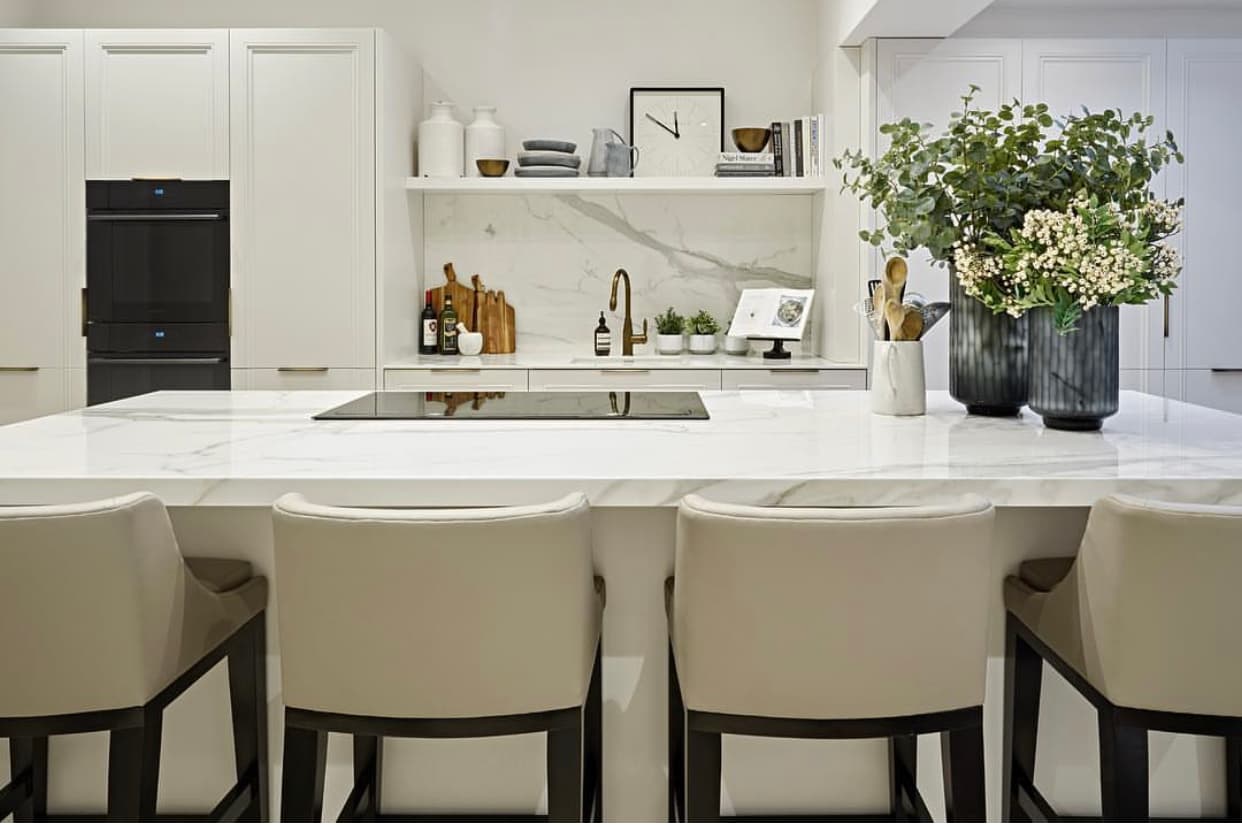
Bespoke Kitchen Design Ideas: Inspiration for Truly Individual Spaces
Explore bespoke kitchen design ideas from layout and material choices to island configurations, colour palettes, and period property adaptations. Inspiration for kitchens that are made, not chosen.
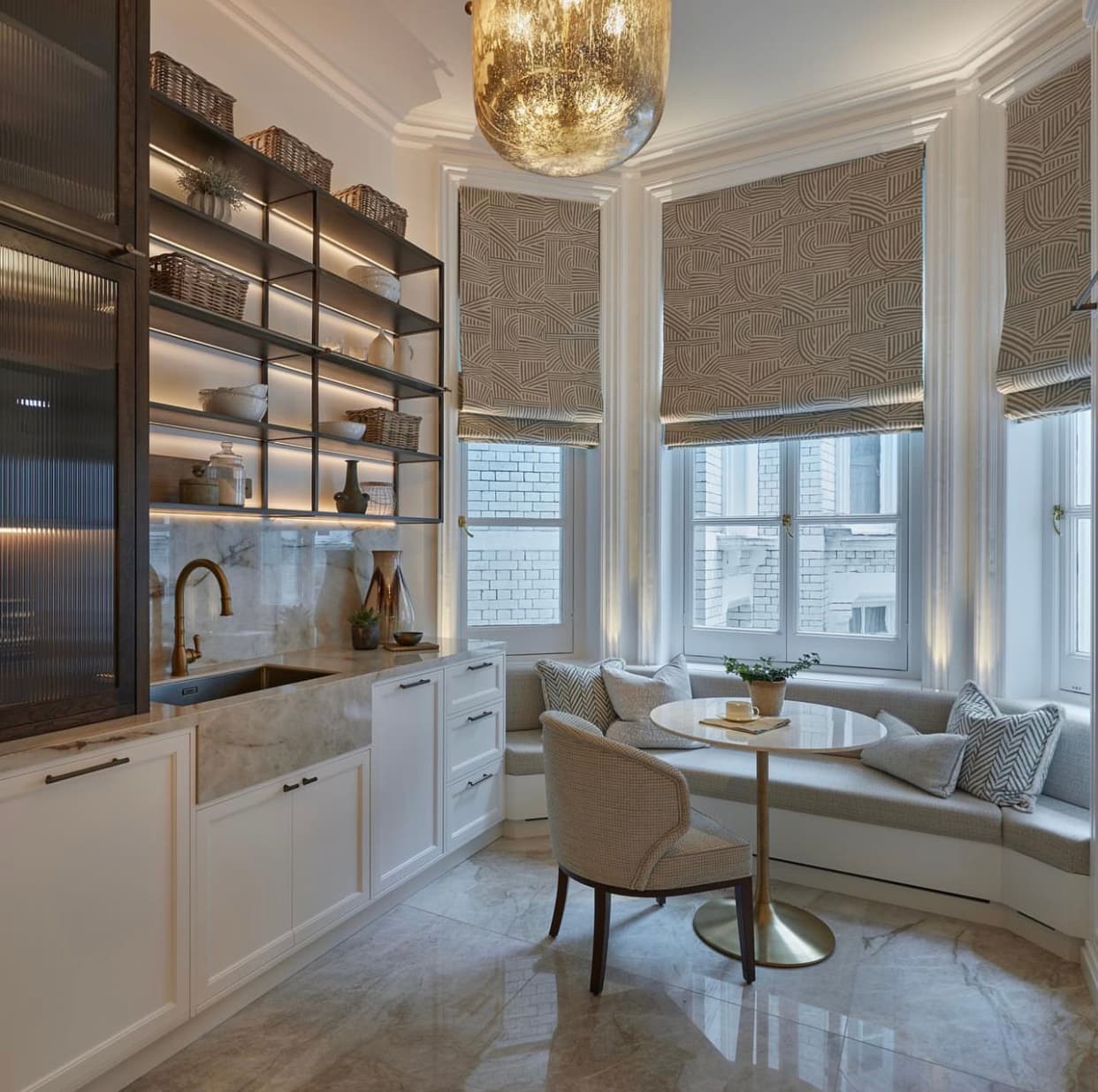
Banquette Seating Kitchen: The Art of Built-In Dining Done Properly
Explore how banquette seating transforms kitchen dining — from L-shaped corners and curved booths to storage-smart benches, upholstery choices, and dimensions that actually work. Inspiration for bespoke kitchens that invite you to sit down and stay.
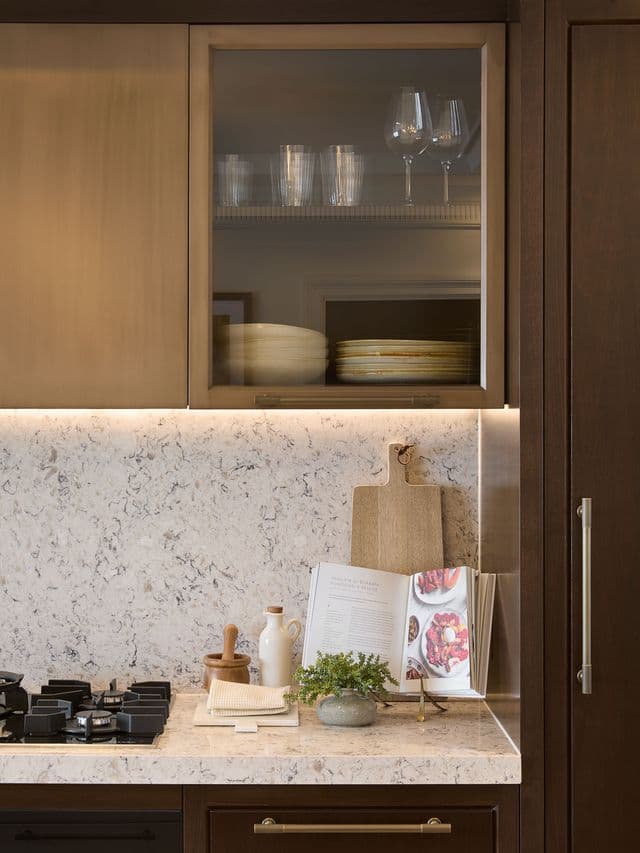
Arts and Crafts Kitchen Design: Where Handcraft Meets the Heart of the Home
Explore how the Arts and Crafts movement inspires truly bespoke kitchen design — from hand-forged ironmongery and English oak to William Morris colour palettes. A guide to creating kitchens that honour the handmade.