

Luxury Kitchen Design: The Definitive Guide to Getting It Right
What actually defines luxury in kitchen design — and how to achieve it without a single wrong note. A guide to proportions, materials, craftsmanship, and the decisions that separate the truly exceptional from the merely expensive.
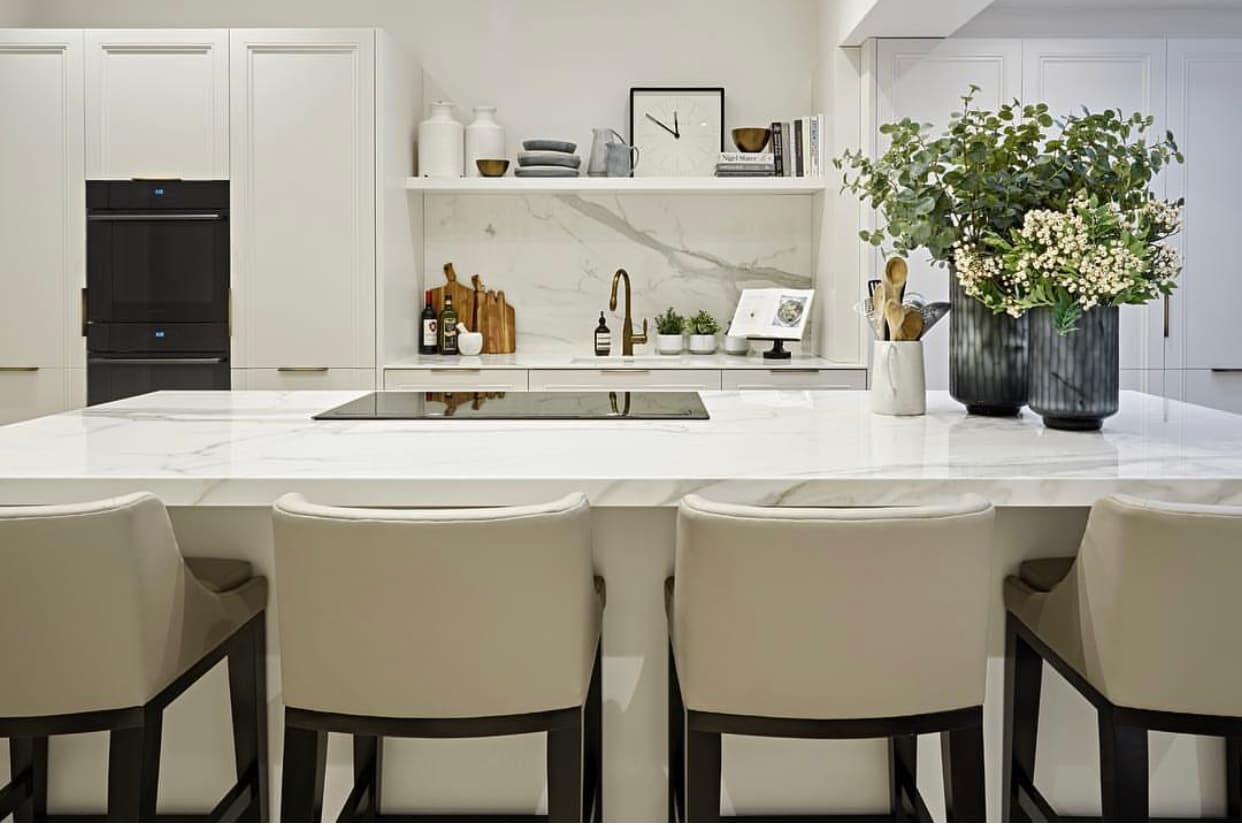
There is a particular kind of kitchen that stops you in the doorway. Not because anything in it is shouting for attention — quite the opposite. It stops you because everything is quietly, perfectly right. The proportions feel generous without excess. The materials invite you to touch them. The light falls exactly where it should. Nothing jars.
That is luxury kitchen design. And it has remarkably little to do with how much money you spend.
This is not to suggest that luxury kitchens are cheap — they aren't. But the price is a consequence of doing things properly, not the point of the exercise. We've seen eye-wateringly expensive kitchens that feel cold and disconnected, and we've seen more modestly budgeted projects that radiate quality from every surface. The difference is always design: the thinking, the proportions, the decisions made when nobody was looking.
At Albury House Kitchens, we design and build luxury kitchens for clients across Cambridge, Hampstead, Essex, and the M11 corridor. What follows is everything we've learned about what makes luxury kitchen design genuinely luxurious — and how to avoid the surprisingly common mistakes that undermine it.
What Actually Defines Luxury in Kitchen Design
Let's dispense with the obvious. Luxury kitchen design is not a particular style. It is not exclusively modern or traditional, painted or timber, marble or granite. It is not determined by the brand of your appliances or the price per square metre of your worktop.
Luxury, in the context of a kitchen, is the experience of a space that has been designed with intelligence, built with skill, and finished with care. It is the drawer that closes with a whisper. The worktop edge that feels right under your hand. The fact that every pot, every spice jar, every chopping board has a place that makes sense — not because you organised it that way, but because someone designed it that way.
The hallmarks of genuine luxury kitchen design include:
- Proportion and scale — everything feels balanced and intentional, neither cramped nor wasteful
- Material integrity — surfaces that age with grace, chosen for character as well as performance
- Invisible complexity — sophisticated engineering and storage that you feel rather than see
- Sensory pleasure — the kitchen appeals to touch, sight, and even sound
- Timelessness — the design will look as considered in fifteen years as it does today
If your kitchen ticks these boxes, it's a luxury kitchen. If it doesn't, no amount of expensive appliance upgrades will get you there.
The Principles of Luxury Kitchen Design
Every exceptional kitchen we've built has rested on the same foundational principles. These are not trends — they are the grammar of good design, and they apply whether you're drawn to a painted Shaker or a sleek contemporary handleless scheme.
Proportion and Scale
Proportion is the single most important — and most frequently neglected — element of luxury kitchen design. A room can be filled with the finest materials in the world and still feel wrong if the proportions are off.
What do we mean by proportion? It's the relationship between elements: the height of the cabinets relative to the ceiling, the width of the island relative to the room, the visual weight of upper and lower runs. It's the gap between the worktop and the wall units. It's the spacing of handles and the rhythm of drawer fronts.
In a bespoke kitchen, every one of these relationships is designed, not defaulted. Standard cabinets come in fixed increments — 600mm, 900mm, 1200mm — and the proportions are whatever they happen to be. In a luxury kitchen, the cabinetry is sized to create visual harmony with the architecture. If your ceiling is 2.8 metres, your tall cabinets should respond to that height. If your window sits asymmetrically, the design should acknowledge it, not pretend it isn't there.
This is why luxury kitchen design almost always means bespoke kitchen design. You cannot achieve perfect proportion with standard sizes any more than you can tailor a suit from off-the-peg measurements.
Light — Natural and Designed
Light transforms a kitchen more dramatically than any material choice. A beautifully lit kitchen feels warm, inviting, and effortlessly elegant. A poorly lit one — no matter how fine the cabinetry — feels flat.
Luxury kitchen lighting operates on at least three layers:
- Ambient light — the overall illumination of the room, ideally warm and dimmable
- Task light — focused illumination where you actually work: above worktops, within larder units, beneath wall cabinets
- Accent light — the layer that creates atmosphere: inside glass-fronted cabinets, beneath islands, highlighting architectural features
Natural light deserves equal attention. The orientation of your kitchen, the size and position of windows, and how daylight moves through the space across the day all influence the design. We've repositioned entire layouts to take advantage of morning light falling across a breakfast area, or to ensure the main prep zone benefits from the strongest natural illumination.
Getting light right is a design skill, not a purchasing decision. It requires thinking about the kitchen as a space to be experienced, not merely a collection of furniture.
Flow and Movement
A luxury kitchen feels spacious and intuitive to move through, even if the room itself is not particularly large. This comes down to flow — the way the layout guides your movement from one zone to the next.
Good flow means you never feel trapped behind a door or squeezed between an island and a wall. It means the dishwasher opens without blocking the walkway. It means guests can gather in the kitchen without standing in your workspace.
Achieving this requires honest conversation about how you actually use the room. At our initial consultation, we spend as much time discussing daily routines as we do discussing aesthetics. How many people cook at once? Do the children do homework in the kitchen? Do you entertain formally or casually? Where does the morning coffee ritual happen? These answers shape the layout more than any style preference.
Layout Strategies for Luxury Kitchens
The layout is the skeleton upon which everything else hangs. Get it wrong and no amount of beautiful cabinetry will compensate.
Islands — the Heart of the Room
The kitchen island has become almost ubiquitous in luxury kitchen design, and for good reason. A well-designed island provides additional prep space, informal seating, storage, and a natural gathering point. It anchors the room and defines the relationship between cooking and socialising.
But — and this is important — an island must earn its place. An island crammed into a room that's too small for it is worse than no island at all. You need a minimum of 1000mm clearance on all working sides, and ideally 1200mm. If your room can't accommodate that comfortably, a peninsula or a generous freestanding table may serve you better.
The best luxury kitchen islands we've designed have incorporated:
- Varied worktop heights — a lower prep zone and a raised bar for seating, creating visual interest and practical separation
- Integrated storage — deep drawers, open shelving, wine conditioning units, or a discreet sink
- Material contrast — a different stone, a timber waterfall end, or a fluted panel that distinguishes the island as a piece of furniture in its own right
Zone Thinking
Rather than the traditional working triangle, luxury kitchen design increasingly favours a zone-based approach. The kitchen is divided into functional areas — cooking, preparation, wet (sink and dishwasher), storage, and social — each designed to operate independently while connecting naturally.
Zone thinking works particularly well in larger kitchens and open-plan spaces, where the traditional triangle becomes stretched beyond usefulness. It also accommodates multiple cooks, which is far more common in real life than the single-chef model that kitchen planning was historically built around.
Material Choices That Signal Quality
Materials are where luxury kitchen design becomes tactile. The right choices create a kitchen that improves with age. The wrong ones create one that looks tired within five years.
Timber and Cabinetry
In a hand-built kitchen, the carcass construction matters as much as the door finish. At Albury House, we build our carcasses from solid timber and high-quality birch plywood — not the chipboard or MDF that even some expensive fitted kitchen brands rely upon. The difference in rigidity, longevity, and the way a drawer operates is immediately apparent.
For door finishes, the principal choice is between painted and natural timber. Both can be magnificent. Painted kitchens offer a refined, tailored quality — particularly in an in-frame construction where the door sits within a visible frame, casting subtle shadow lines that give the cabinetry depth and character. Natural timber — whether oiled oak, fumed elm, or walnut — brings warmth and individuality that paint cannot replicate.
Worktops and Stone
The worktop is the surface you interact with most, and it sets the material tone for the entire kitchen. This is where natural stone comes into its own. Marble, quartzite, and granite each bring a depth and character that engineered alternatives struggle to match.
Marble remains the archetypal luxury choice — its veining is unique to every slab, and it develops a patina over time that many owners come to love. If you're uncomfortable with patina, quartzite offers similar beauty with greater hardness and stain resistance. Our cost guide covers material pricing in detail.
Whatever you choose, select your actual slab in person. Photographs flatten the very qualities that make natural stone special.
Hardware and Ironmongery
Handles, hinges, and drawer runners are the touch points of a kitchen — the elements your hands find every day. Luxury kitchen hardware is defined by its weight, its action, and its finish.
Solid brass, burnished nickel, and unlacquered bronze all develop a beautiful patina that plated finishes cannot achieve. Drawer runners should be soft-closing and smooth enough that a fully loaded pan drawer glides with a fingertip. Hinges should be silent and precisely calibrated.
These details are small individually. Collectively, they are the difference between a kitchen that feels luxurious and one that merely looks it.
The Role of Craftsmanship
There is no shortcut to craftsmanship, and there is no substitute for it. A luxury kitchen is, at its core, a piece of furniture — and the quality of its making determines everything about how it performs, ages, and feels.
Hand-built cabinetry by skilled joiners offers several things that factory production cannot:
- Precision to the millimetre — every unit tailored to its exact position in your room
- Structural integrity — traditional joinery techniques that create furniture built to last decades, not years
- Finish quality — hand-applied paint or lacquer, sanded and recoated across multiple stages, achieving a depth that spray-only finishes lack
- Adaptability — the ability to solve unusual spatial challenges, accommodate period features, or integrate bespoke details that no factory line would entertain
At Albury House Kitchens, our joiners build and install every kitchen. There is no handoff between a factory and a separate fitting team. The person who built your larder unit is the person who levels it in your home. This continuity of craft is fundamental to the quality of the finished result.
Technology and Appliance Integration
A luxury kitchen should feel technologically effortless. The appliances are powerful and precise. The lighting responds to your needs. The heating, ventilation, and even the acoustic environment have been considered. But none of it intrudes.
Appliance Strategy
The appliance market at the upper end is genuinely excellent. Sub-Zero, Gaggenau, Miele, and Wolf all produce equipment that a professional chef would recognise as serious kit. The question is not which brand to choose but how to integrate appliances into the design so they serve you without dominating the room.
Key considerations include:
- Refrigeration — integrated column refrigerators and freezers concealed behind cabinetry panels create a seamless furniture aesthetic
- Cooking — induction hobs offer precise control and a flush, minimal surface; combination steam ovens are increasingly popular for their versatility
- Extraction — ceiling-mounted or downdraft extractors eliminate the need for a hood, preserving clean sightlines
- Dishwashing — two dishwashers have become surprisingly common in luxury kitchens, allowing one to run while the other is loaded
The golden rule is to plan appliance positions at the design stage, not after. Electrical and plumbing requirements, ventilation runs, and heat management all influence the cabinetry design. Trying to retrofit a steam oven into a layout designed for a conventional one is a recipe for compromise.
Smart Technology
Home automation can enhance a luxury kitchen — motorised shelving, integrated speakers, automated lighting scenes, charging drawers — but it should be invisible until summoned. The kitchen that needs an instruction manual has failed the brief.
We recommend building in infrastructure (wiring, conduit, networking) at the design stage even if you don't intend to use every feature immediately. Retrofitting smart technology into a finished kitchen is disruptive and expensive. Planning for it costs almost nothing.
Working with a Luxury Kitchen Designer
The relationship between client and designer is the most underrated element of a luxury kitchen project. A good designer doesn't simply draw what you ask for — they listen to what you need, challenge assumptions where necessary, and bring expertise you didn't know you were missing.
When choosing a luxury kitchen designer, look for:
- An end-to-end service — design, manufacture, and installation under one roof, not parcelled out to subcontractors
- A portfolio that demonstrates range — not just one style done repeatedly, but evidence of designing around different homes and different lives
- Transparency on process and price — a detailed quotation, a clear timeline, and no surprises
- Access to the workshop — if they build what they design, they should be happy for you to see where and how it's done
At Albury House, we welcome clients to our workshop throughout the build process. Watching your kitchen take shape in the hands of the people who designed it is one of the genuine pleasures of commissioning bespoke. It's also the best reassurance that you're getting what you're paying for.
If you're considering a luxury kitchen project, our consultation process is the natural starting point — a relaxed, no-obligation conversation about your space, your ambitions, and how we might bring them together.
Common Mistakes in Luxury Kitchen Design
Even well-funded projects go wrong when certain pitfalls aren't avoided. Here are the mistakes we see most frequently — and how to sidestep them.
Prioritising Appearance Over Function
A kitchen that photographs beautifully but frustrates you daily is not a luxury kitchen. It's a stage set. Every design decision should be tested against the question: how will this work at 7am on a Wednesday? The open shelving that looks wonderful in a magazine collects grease and dust. The handleless drawers with push-to-open mechanisms fail after two years of daily use. The pale grout between hand-made tiles stains within months.
Luxury is form and function, resolved together.
Following Trends Instead of Instincts
Trends have a shelf life. Your kitchen does not. The waterfall marble island is striking now; will it feel dated in ten years? The ultra-thin worktop is fashionable today; does it suit the proportions of your Victorian terrace? Design for your home and your life, not for this year's editorial calendar.
Underinvesting in the Carcass
Clients sometimes allocate their budget heavily towards visible surfaces — doors, worktops, appliances — while economising on the carcass construction that sits behind them. This is a false economy. A beautifully painted door hung on a chipboard box will not perform, will not last, and will not feel right. The carcass is the structure. Invest in it.
Neglecting the Ancillary Spaces
A luxury kitchen extends beyond the cooking zone. The utility room, the pantry, the boot room — these supporting spaces deserve the same quality of thought and construction as the kitchen itself. A superbly designed kitchen that opens onto a chaotic utility room undermines the whole scheme. If the budget requires phasing, plan the ancillary spaces now and build them later — but don't ignore them.
Rushing the Design Process
The most expensive mistake of all is insufficient time in design. Every hour spent refining a layout, questioning a material choice, or reconsidering a detail saves ten hours of regret later. At Albury House, we will not begin manufacturing until the design is right — not because we enjoy delays, but because we know from experience that patience at this stage produces the best kitchens.
The Quiet Confidence of a Well-Designed Kitchen
The finest luxury kitchens we've built share a curious quality: they don't announce themselves. You walk in, you feel immediately at ease, and it takes a moment to realise why. It's because everything — the height of the worktop, the warmth of the timber, the way the light catches the stone, the silence of the drawers — has been considered. Nothing was accidental. Nothing was standard.
That is what luxury kitchen design means to us. Not extravagance, but excellence. Not showing off, but showing care.
If you'd like to explore what a luxury kitchen could look like in your home, we'd be delighted to have the conversation. Get in touch to arrange a consultation, explore our portfolio for inspiration, or read more about what commissioning a bespoke kitchen involves.
Frequently Asked Questions
Thinking about a new kitchen?
Book Your Free ConsultationYou might also enjoy
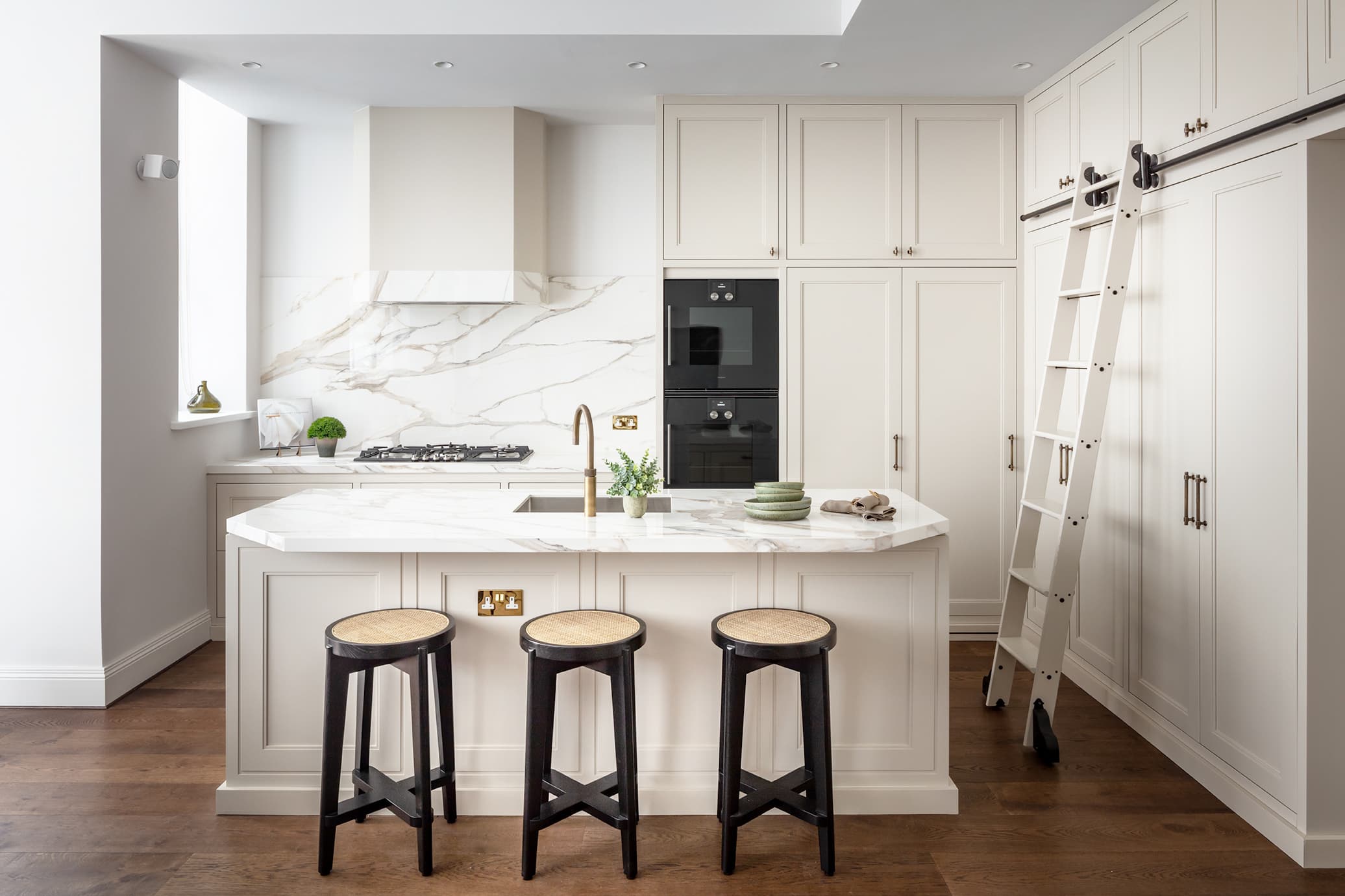
Bespoke Kitchen Cabinets: The Definitive Guide to Handmade Cabinetry
Everything you need to know about bespoke kitchen cabinets — from construction methods and timber selection to door styles, finishes, and the details that distinguish genuine craftsmanship from the merely expensive.
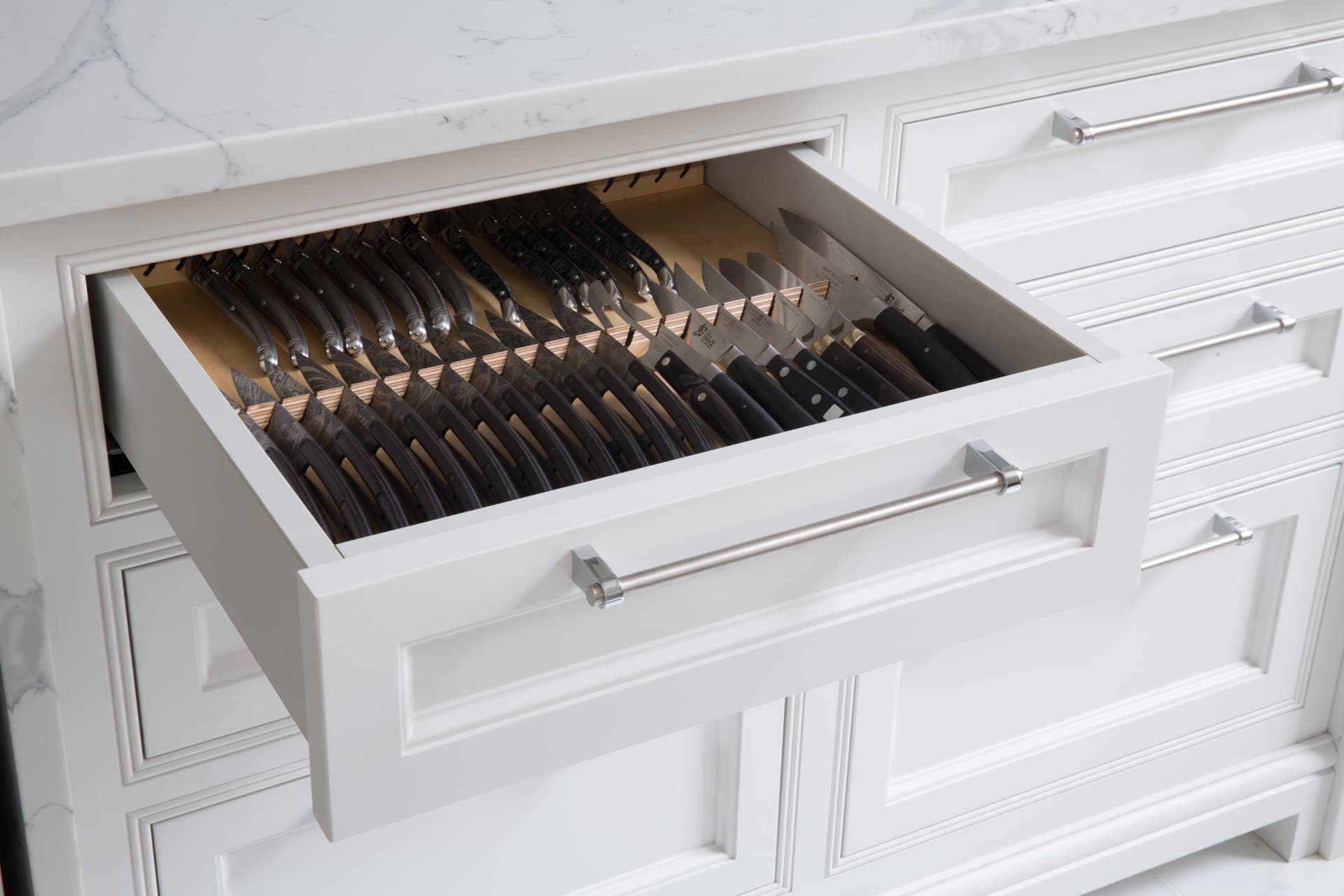
Bespoke Kitchen Joinery: The Craft Behind Cabinets That Last Generations
A detailed guide to the joinery techniques used in bespoke kitchen craftsmanship — from dovetail drawers and mortise-and-tenon frames to tongue and groove panels. Learn how to recognise quality joinery and why it determines how long your kitchen will last.
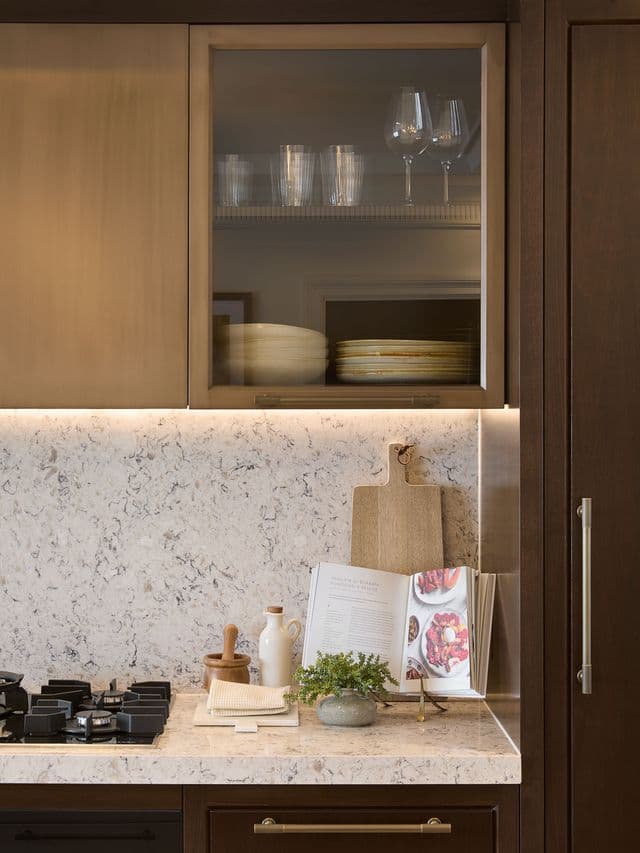
The Bespoke Kitchen Design Process: From Brief to Blueprint
How does a bespoke kitchen get designed? We walk through every stage of the design process — from developing the brief and spatial analysis to 3D visualisation, technical drawings, material specification, and sign-off.