

Arts and Crafts Kitchen Design: Where Handcraft Meets the Heart of the Home
Explore how the Arts and Crafts movement inspires truly bespoke kitchen design — from hand-forged ironmongery and English oak to William Morris colour palettes. A guide to creating kitchens that honour the handmade.
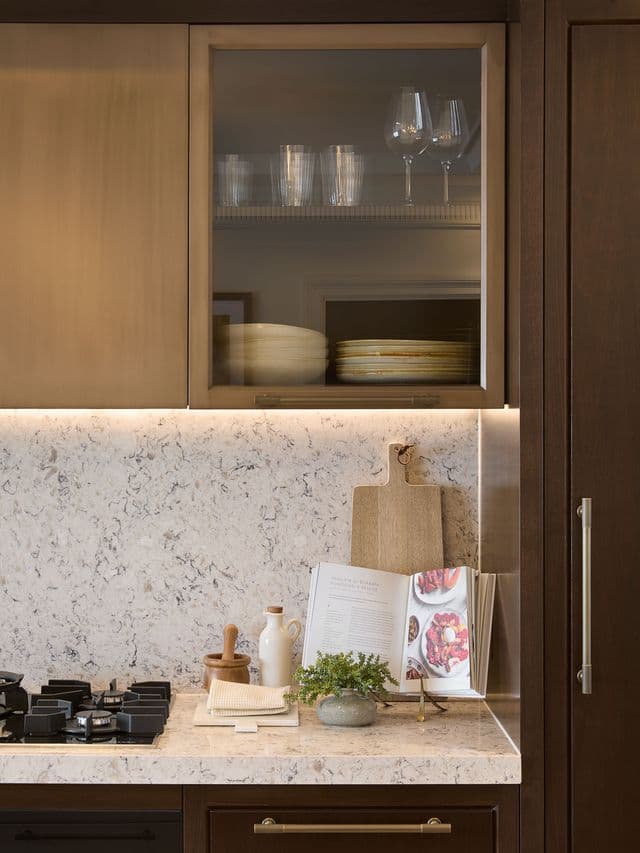
There is a particular irony in the modern kitchen industry. We live in an age of mass production so efficient that a kitchen can be manufactured, shipped, and installed in a matter of days — and yet the thing most people actually want, when they stop to think about it, is a kitchen that feels as though it was made by human hands.
William Morris understood this impulse more than a century ago. The Arts and Crafts movement he helped inspire was, at its heart, a rebellion against the soullessness of industrial manufacture — a call to return to the workshop, to honest materials, and to the quiet satisfaction of things made well by people who cared about making them.
It is a philosophy that translates to kitchen design with almost uncanny precision. And for those of us who build kitchens by hand, it feels less like a historical reference and more like a daily manifesto.
The Arts and Crafts Movement: A Brief Understanding
The Arts and Crafts movement emerged in Britain during the second half of the nineteenth century, gathering force through the 1880s and 1890s before spreading across Europe and to America. Its roots lay in the writings of John Ruskin and the formidable creative energy of William Morris — designer, poet, socialist, and quite possibly the most productively angry man in Victorian England.
Their argument was straightforward and powerful: the Industrial Revolution had severed the ancient bond between maker and object. Where once a craftsman conceived, shaped, and finished a piece of furniture with his own hands, the factory had reduced him to a minder of machines, endlessly reproducing identical items with no stake in their quality or beauty.
Morris and his circle proposed an alternative. They believed that beautiful objects should be made by hand, from natural materials, by skilled craftspeople who took pride and pleasure in their work. They believed that utility and beauty were not opposing forces but natural companions — that a well-made chair or a carefully thrown tile or a piece of honest joinery could be a work of art precisely because it served a purpose.
The movement gave us extraordinary things: Morris's iconic textile and wallpaper designs, the architecture of Philip Webb and Charles Voysey, the furniture of Ernest Gimson and the Barnsley brothers, the metalwork of the Guild of Handicraft. It also gave us a set of principles that have never really gone away — principles that feel, if anything, more relevant in an age of disposable flat-pack furniture and algorithmically optimised manufacturing.
Why the Arts and Crafts Philosophy Belongs in the Kitchen
Of all the rooms in a house, the kitchen has the strongest claim to the Arts and Crafts tradition. This is the room where craft and utility meet most directly. A kitchen is not a showpiece to be admired from a distance — it is a working space, used with hands and heat and water every day. Its beauty must be robust enough to survive contact with real life.
The Arts and Crafts insistence on fitness for purpose — on designing objects that work honestly and beautifully at the same time — is precisely the discipline that good kitchen design demands. A drawer that glides on hand-cut dovetails is not merely more attractive than one held together with staples and glue; it is stronger, quieter, and more satisfying to use. A worktop in oiled English oak develops a patina over years of use that no factory finish can replicate. A hand-forged latch has a weight and warmth in the hand that a pressed-metal alternative simply cannot match.
This is not sentimentality. It is the recognition that a kitchen made with care, from honest materials, by people who understand their craft, will outperform and outlast one that was not — and that the daily experience of using it will be immeasurably richer.
At Albury House Kitchens, we have always built kitchens this way. Not because it is fashionable, but because it is right. The Arts and Crafts movement merely gave a name and a philosophy to something that good craftspeople have always known.
Key Design Elements of an Arts and Crafts Kitchen
An Arts and Crafts kitchen design is not defined by a single motif or a particular door style. It is defined by an approach — a way of thinking about materials, construction, and beauty that runs through every detail. That said, certain elements recur with good reason.
Hand-Forged Ironmongery
If there is a single detail that most immediately signals an Arts and Crafts sensibility, it is the hardware. Hand-forged iron or blackened steel hinges, latches, and handles carry the unmistakable mark of the blacksmith's hammer — each piece subtly unique, warm to the touch, and possessed of a visual weight that cast or pressed alternatives cannot approach.
Thumb latches on larder cupboards, hand-forged strap hinges on pantry doors, and beaten-copper cup pulls on drawers are all deeply characteristic of the style. These are not decorative afterthoughts; they are functional elements elevated to objects of beauty through the skill of the maker's hand.
Visible Joinery and Honest Construction
The Arts and Crafts tradition celebrates the joint rather than hiding it. Exposed tenons, through-wedged mortises, hand-cut dovetails — these are not merely structural necessities but design features in their own right. A kitchen built in this spirit makes no attempt to disguise how it was made. The construction is the decoration.
This approach demands real skill. Joints that are meant to be seen must be cut with greater precision than those that will be concealed. It is a higher standard, not a shortcut — and the result is cabinetry that communicates quality at a glance. Our guide to what makes a bespoke kitchen explores how this level of craftsmanship distinguishes genuine bespoke work from its imitators.
Leaded Glass and Glazed Cabinets
Display cabinets with leaded-glass panels are a hallmark of Arts and Crafts design. The leading itself becomes a design element — simple geometric patterns or gently organic forms that echo the natural motifs beloved of Morris and his contemporaries. Behind the glass, open shelving in waxed timber displays ceramics, glassware, or collections of hand-thrown pottery with the quiet confidence of a well-curated room.
Hand-Carved Details
Where a Georgian kitchen might feature classical mouldings and a Victorian one elaborate fretwork, an Arts and Crafts kitchen favours carving that draws from the natural world: stylised leaves, sinuous stems, flowing forms that owe more to the hedgerow than the pattern book. These details are used sparingly — a carved corbel beneath a mantel shelf, a relief panel on the end of an island, a running motif along a plate rack — so that each one registers as something special rather than mere repetition.
Natural Timber Throughout
The Arts and Crafts movement revered timber as no other material. English oak, in particular, holds an almost sacred status — chosen for its strength, its figure, and the extraordinary way it mellows over decades of use. An Arts and Crafts kitchen typically makes timber the dominant material, using it for cabinetry frames, drawer fronts, worktops, open shelving, and structural details.
The timber should be allowed to speak. Heavy lacquers and opaque paints sit uncomfortably with the Arts and Crafts ethos; instead, the wood is oiled, waxed, or given a light wash that allows the grain to show through. The result is a kitchen that feels alive — one that changes subtly with the seasons and develops its own character over time.
Handmade Tiles
Machine-made tiles, however well-designed, lack the slight irregularity that makes a handmade tile so appealing. In an Arts and Crafts kitchen, splashbacks and sometimes entire walls are finished in hand-thrown or hand-pressed tiles — often in the rich, slightly uneven glazes that recall the work of William De Morgan or the Pilkington Tile Company.
A deep, crackled celadon green behind the range cooker. A row of relief tiles depicting oak leaves above the sink. A field of warm terracotta with hand-painted insets at intervals. These are the surfaces that give an Arts and Crafts kitchen its distinctive warmth and character.
The Arts and Crafts Colour Palette
Colour in an Arts and Crafts kitchen takes its cue directly from the natural world — and from the extraordinary palette that William Morris developed across his textile and wallpaper designs. This is not the bright, clean colour of the Georgian era or the muted neutrals of contemporary Scandinavian influence. It is something altogether richer and more complex.
Deep Reds and Warm Terracotta
Morris's famous Strawberry Thief pattern deploys a deep, warm red that appears throughout the Arts and Crafts tradition. In a kitchen, this translates to rich terracotta floor tiles, warm red-brown stained cabinetry, or a single painted dresser in a deep madder tone that anchors the room. These are not aggressive reds; they are the colours of autumn hedgerows and well-fired clay.
Forest Greens
Green is perhaps the defining colour of the Arts and Crafts movement — not the bright acid greens of modernity, but the deep, complex greens of English woodland. A kitchen in a rich bottle green or a muted sage carries an immediate sense of rootedness in the landscape. Paired with English oak and beaten copper, it is a combination of almost unfair beauty.
Golden Ochres and Honeyed Tones
The warm yellows of ochre, beeswax, and freshly sawn oak run through Arts and Crafts interiors like sunlight. In the kitchen, these tones emerge naturally from oiled timber surfaces, hand-thrown tiles in straw-coloured glazes, and the warm brass of hand-forged fittings. They create a sense of warmth and welcome that no amount of clever lighting can replicate.
Indigo and Soft Blues
Morris used a deep, rich indigo to extraordinary effect in many of his designs, and this colour translates beautifully to kitchen cabinetry. An Arts and Crafts kitchen in soft blue or deep indigo — paired with cream-coloured handmade tiles and a timber worktop — has a calm, scholarly quality that suits libraries and rectories and any home where the life of the mind is taken seriously.
Materials That Matter
The Arts and Crafts kitchen is, above all, a celebration of materials — chosen not for their novelty but for their integrity, their tactile quality, and their ability to age with grace.
English oak is the foundation. Quarter-sawn for stability and beauty, it provides cabinet frames, drawer fronts, worktops, and structural details with a material that has been the backbone of English furniture-making for centuries. Over time, oak develops a rich, honeyed patina that no factory finish can simulate.
Reclaimed timber carries its own history. Beams from barns, boards from dismantled buildings, wood that has already lived a long life and is ready to begin another — reclaimed timber brings a depth of character that new wood, however well-selected, cannot match. In an Arts and Crafts kitchen, where the celebration of material honesty is paramount, reclaimed elements feel entirely at home.
Handmade tiles — whether encaustic floor tiles in traditional geometric patterns or hand-glazed wall tiles in the rich, slightly irregular finishes of the craft pottery tradition — contribute enormously to the texture and character of the space. Every tile carries the subtle mark of the maker.
Beaten copper appears in sinks, splashbacks, range hoods, and decorative details. The warm, living surface of copper develops a patina that darkens and enriches over time, and its handworked quality — the gentle undulations of a hand-beaten surface — is deeply sympathetic to the Arts and Crafts ethos.
Natural stone — limestone, slate, or locally quarried sandstone — provides worktops, flooring, and hearth surrounds with the kind of geological permanence that grounds a kitchen in its place. These are materials that connect the house to the landscape it stands in.
For a deeper exploration of the joinery that underlies all of this, our guide to bespoke kitchen joinery sets out the traditional techniques we use in the workshop every day.
The Philosophical Alignment: Arts and Crafts and Bespoke Kitchen-Making
Here is what makes Arts and Crafts kitchen design so compelling — and so different from merely choosing a period style: the philosophy of the movement and the philosophy of genuine bespoke kitchen-making are, in essence, the same thing.
Both begin with the conviction that mass production, however efficient, cannot produce objects of the highest quality or the deepest satisfaction. Both insist on the primacy of the maker's skill — on the hand, the eye, and the judgement that come only from years at the bench. Both believe that honest materials, honestly worked, produce results that no simulation can equal.
When we build an Arts and Crafts kitchen at Albury House, we are not applying a style to a standard product. We are practising the very discipline that Morris and his contemporaries advocated: designing from first principles, selecting materials for their intrinsic quality, and building by hand with techniques that have been refined over generations.
This is the difference between a kitchen with Arts and Crafts styling and a kitchen that embodies the Arts and Crafts ethos. One is decoration; the other is integrity. The distinction matters, and it shows in every joint, every surface, and every moment of daily use.
Where an Arts and Crafts Kitchen Feels Most at Home
While the principles of Arts and Crafts design are universal, certain settings bring the style to life with particular resonance.
Hampstead Garden Suburb and North London
London's Hampstead Garden Suburb was conceived as an Arts and Crafts community, and its houses — designed by Edwin Lutyens, Raymond Unwin, and Barry Parker among others — remain some of the finest examples of the style in Britain. A bespoke Arts and Crafts kitchen in these homes is not a design choice; it is a homecoming. The same is true across the wider Hampstead and Highgate area, where luxury kitchen design often draws on this tradition.
Cambridge and the University Towns
The Arts and Crafts movement had deep intellectual roots, and its aesthetic has always felt at home in places of learning. The colleges, the Victorian and Edwardian suburbs, and the surrounding villages of Cambridgeshire provide a sympathetic setting for kitchens that value substance over show. The scholarly quality of the style — its bookishness, its preference for natural materials and muted tones — suits these homes beautifully.
Country Houses and Rectories
A large country kitchen — particularly one in a house with late-Victorian or Edwardian origins — is perhaps the most natural setting of all. The scale allows for generous proportions: a vast oak table at the centre, an Aga or range cooker set into an inglenook, open shelving laden with stoneware, and a larder with hand-forged latches. This is the English country kitchen at its most authentic and generous.
Period Properties Across the Home Counties
Many of the properties along the M11 corridor and throughout Essex, Hertfordshire, and Suffolk carry the hallmarks of Arts and Crafts influence — even those that don't wear it overtly. Exposed timber frames, brick and flint construction, steeply pitched roofs, and generous gardens all suggest a sympathy with handcraft and natural materials that an Arts and Crafts kitchen will honour and amplify. Our work with period property kitchens draws on precisely this understanding.
Beginning the Conversation
An Arts and Crafts kitchen is not something you select from a brochure. It is something you commission — a collaboration between maker and client that begins with your home, your daily life, and a shared understanding of what good design and honest craftsmanship can achieve.
At Albury House Kitchens, we have been building kitchens by hand for families across Cambridge, Hampstead, Essex, and the M11 corridor for years. The Arts and Crafts tradition is not something we study from a distance; it is woven into the way we work.
If the idea of a kitchen built on these principles appeals to you — a kitchen where every detail is considered, every material is chosen for its integrity, and every joint is cut by hand — we would be delighted to hear from you.
Get in touch to arrange a consultation. We will visit your home, understand your space, and begin to explore what an Arts and Crafts kitchen could mean for the way you live.
Frequently Asked Questions
Thinking about a new kitchen?
Book Your Free ConsultationYou might also enjoy
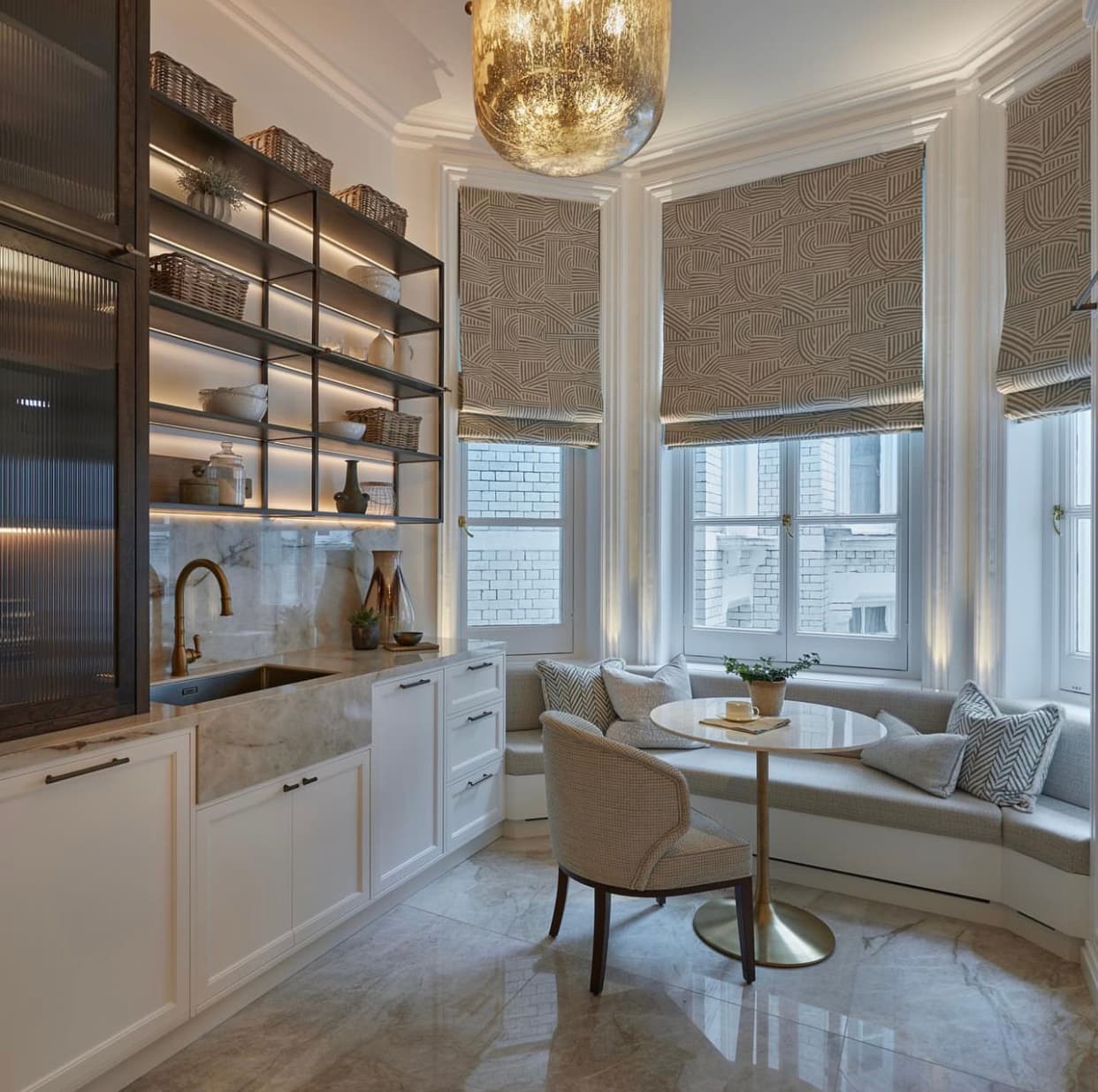
Banquette Seating Kitchen: The Art of Built-In Dining Done Properly
Explore how banquette seating transforms kitchen dining — from L-shaped corners and curved booths to storage-smart benches, upholstery choices, and dimensions that actually work. Inspiration for bespoke kitchens that invite you to sit down and stay.
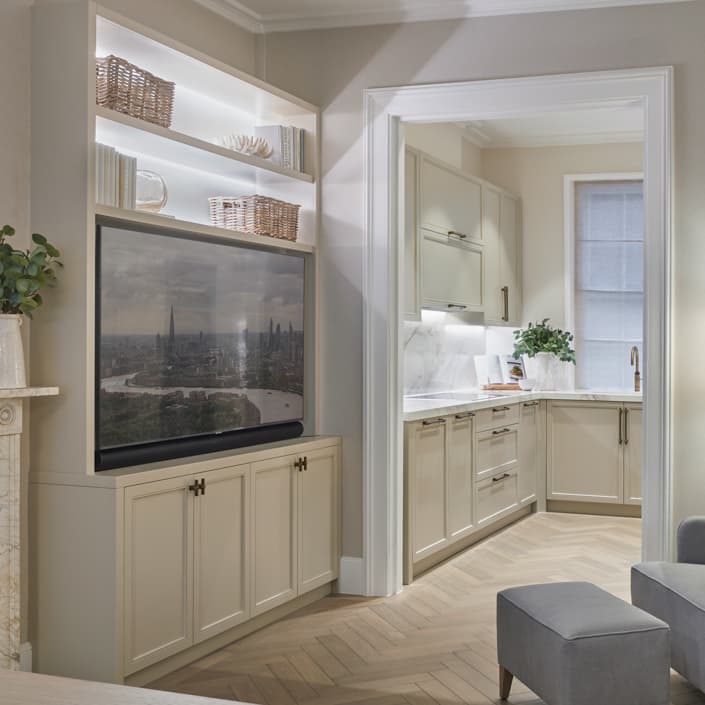
Barn Conversion Kitchen Design: Bespoke Kitchens for Extraordinary Spaces
Designing a kitchen for a barn conversion demands a bespoke approach. From double-height ceilings and exposed trusses to acoustic management and island design, discover how Albury House Kitchens creates luxury kitchens that honour agricultural architecture whilst delivering modern performance.
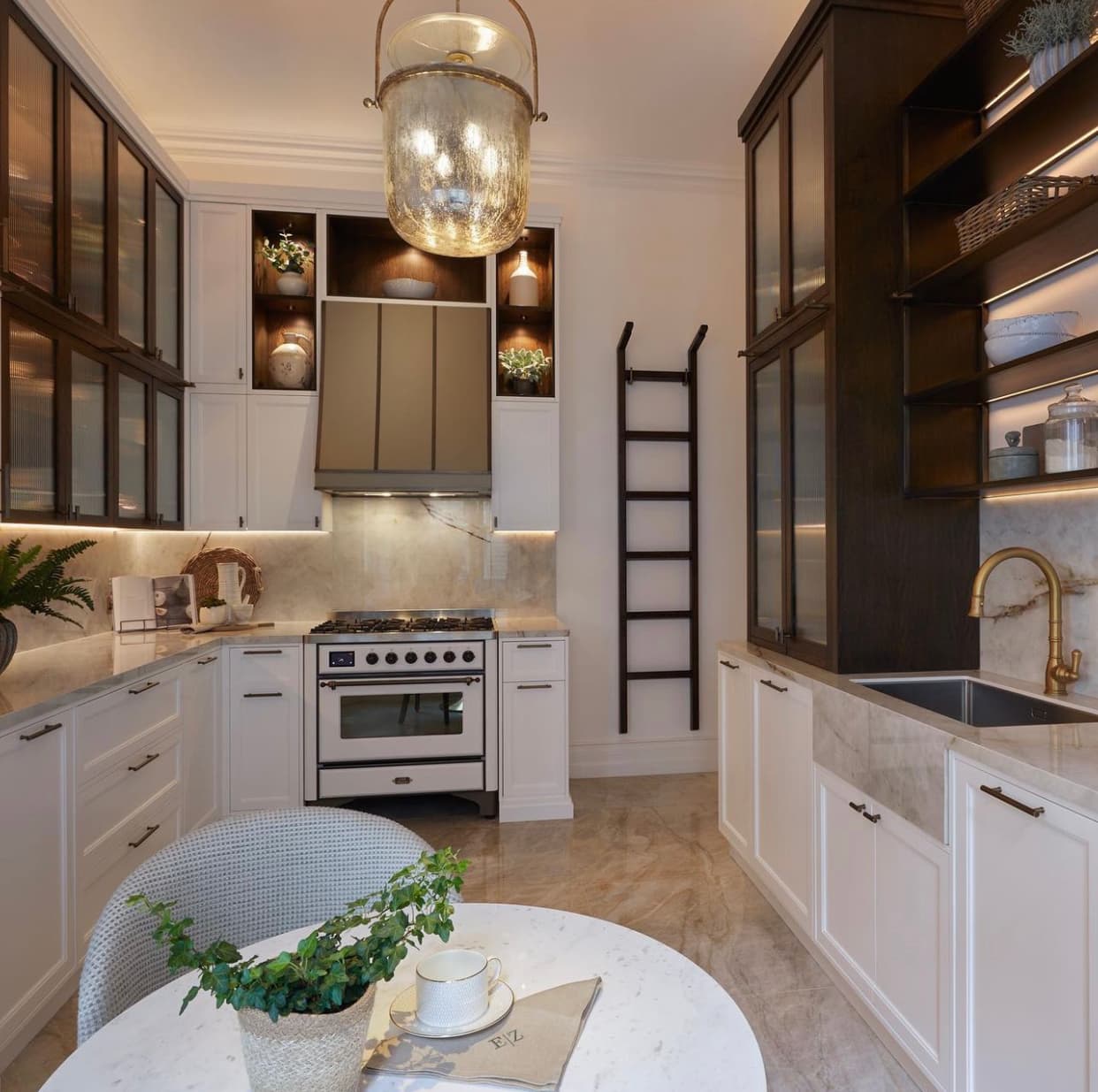
Bespoke Shaker Kitchen Design: The Enduring Appeal of the Finest Kitchen Style
Discover why the bespoke shaker kitchen remains the most sought-after style in luxury kitchen design. From its humble origins to contemporary interpretations, explore colours, worktops, hardware, and island ideas for your shaker kitchen.