

Banquette Seating Kitchen: The Art of Built-In Dining Done Properly
Explore how banquette seating transforms kitchen dining — from L-shaped corners and curved booths to storage-smart benches, upholstery choices, and dimensions that actually work. Inspiration for bespoke kitchens that invite you to sit down and stay.
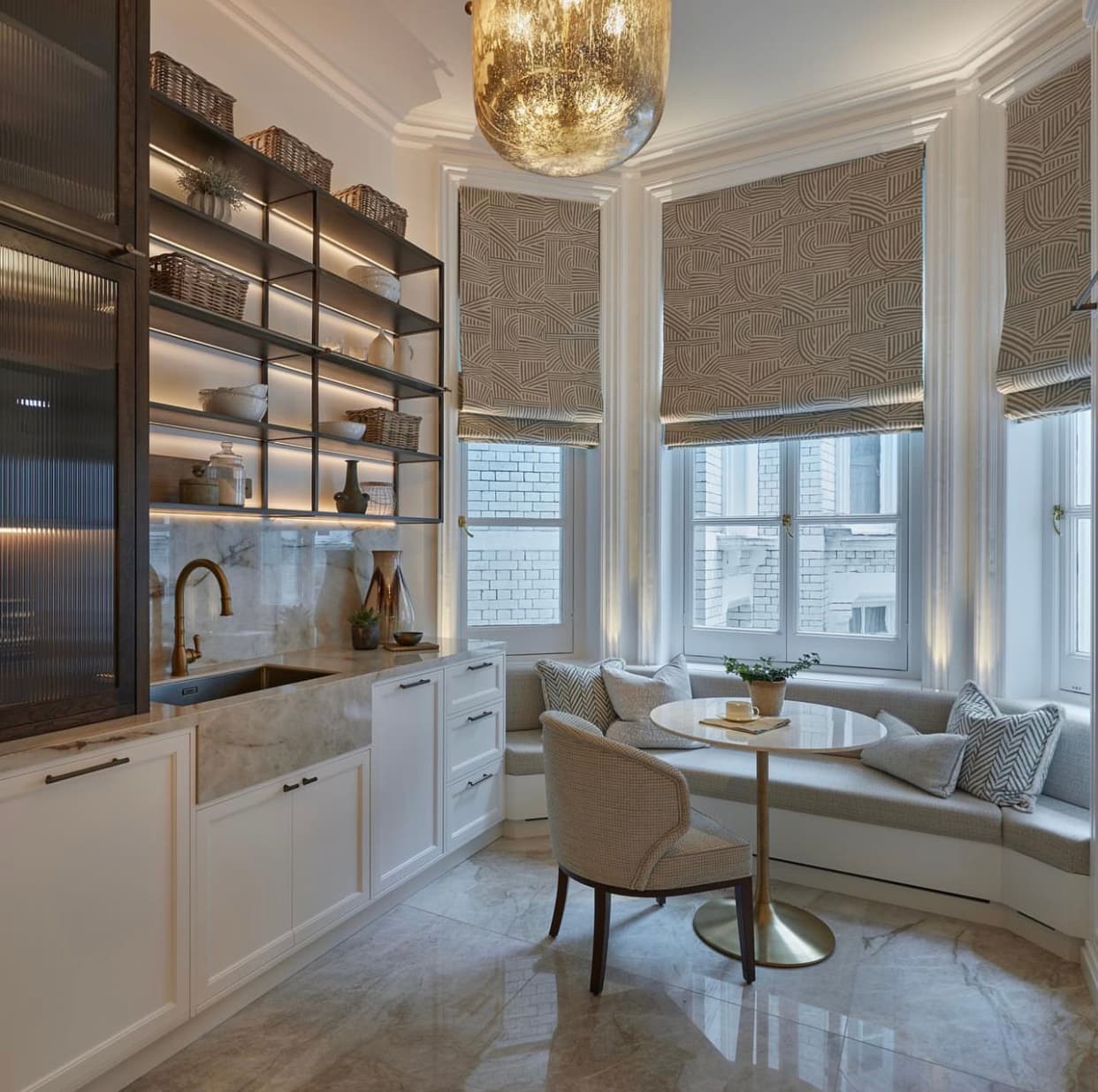
There is a particular kind of meal that only happens when people are sitting close together. Not a dinner party — too formal. Not a grab-and-go breakfast — too hurried. Something in between. A slow Saturday brunch where the papers are spread across the table. A weeknight supper where the children are tucked into the corner and nobody is in any rush to leave. A glass of wine with friends while someone finishes cooking, the conversation drifting comfortably between the table and the hob.
This is the meal that banquette seating was made for. And it is the meal that modern kitchen design, for all its emphasis on islands and bar stools, has been quietly neglecting.
A well-designed banquette seating kitchen brings back something valuable: a proper place to sit down, eat together, and linger. Not perched on a stool at a breakfast bar, but settled into a comfortable, upholstered seat with your back supported and a table in front of you. It is dining made intimate, informal, and — rather importantly — built into the architecture of the room itself.
Why Banquette Seating Works in a Kitchen
The appeal of a kitchen banquette is partly romantic and partly ruthlessly practical. Start with the practical.
Space Efficiency That Earns Its Keep
A banquette seats more people in less floor space than freestanding chairs around a table. The arithmetic is straightforward: a bench pushed against a wall eliminates the clearance you'd need behind each chair for pulling in and out. In a space where every centimetre is contested — and in most kitchens, it is — that saving of 150 to 200mm in depth is significant.
A corner banquette is even more efficient. By wrapping seating into the angle of two walls, you can comfortably seat six where a conventional table and chairs might manage four. The corner seat itself — the spot everyone argues over — is a bonus seat that exists only because of the geometry.
For smaller kitchens, galley layouts, or open-plan rooms where the dining area must coexist with circulation space, a banquette is not merely a nice idea. It is often the only way to include a proper dining table without the room feeling cramped.
Sociability by Design
There is something about a banquette that changes how people behave at the table. The closeness of the seating, the slight enclosure of a high-backed bench, the way the table becomes a shared surface rather than a barrier — all of it encourages a different, more convivial kind of dining.
Children sit still longer when they are tucked into a banquette (walls on two sides help). Guests lean in rather than lean back. The cook, standing at the island or the hob, is naturally drawn into the conversation because the banquette faces the kitchen rather than turning its back on it.
In an age of open-plan living where the kitchen is expected to be the social heart of the home, a banquette provides something that an island with stools cannot: a place that feels genuinely like sitting down to eat, rather than perching on the edge of someone else's workspace.
Comfort That Chairs Cannot Match
A properly upholstered banquette is, quite simply, more comfortable than a dining chair. The padded seat, the supportive backrest, the option to tuck a cushion behind you and settle in — it is closer to sitting on a sofa than on a chair, which is precisely why people stay longer at a banquette table. That lingering is not a design flaw. It is the entire point.
Styles of Banquette Seating
The beauty of commissioning a bespoke banquette is that it can be designed to suit any kitchen, any architecture, and any way of living. There is no off-the-shelf compromise. That said, most banquette designs fall into a handful of satisfying configurations.
The L-Shaped Corner Banquette
The classic. Two benches meeting at right angles in the corner of a room, with a table positioned into the L. This is the most space-efficient arrangement and arguably the most sociable, because everyone seated on the banquette is angled towards the centre of the table and towards each other.
In a bespoke kitchen, the L-shaped banquette can be scaled to fit any corner — from a snug breakfast nook beneath a window to a generous dining area that anchors one end of an open-plan room. The corner junction itself can be squared off (simple, more storage below) or gently curved (softer, more inviting, slightly trickier to construct).
The Straight Bench
A single bench against a wall, with chairs or a second bench opposite, is the simplest banquette arrangement and often the most versatile. It works beautifully in narrower spaces — along a kitchen wall, beneath a run of windows, or against the back of an island — where a full corner arrangement would overwhelm the room.
A straight bench also suits a more relaxed, unfitted aesthetic. Paired with a robust farmhouse table and a collection of mismatched chairs opposite, it strikes a balance between built-in permanence and easy informality.
The Curved Booth
If you have ever lingered over a late dinner in a good restaurant and thought I wish my kitchen felt like this, the curved booth is your answer. A semicircular or gently bowed bench wrapping around a circular or oval table creates an intimate, enveloping arrangement that is absurdly comfortable and undeniably atmospheric.
Curved banquettes demand more floor space and considerably more craft to build — the backrest must be formed on a jig, the upholstery cut and sewn to follow the curve without puckering — but the result is a piece of bespoke furniture that elevates the kitchen from a functional room to a destination.
The Window Seat Banquette
Building a banquette beneath a window is one of those ideas that feels obvious in retrospect. You gain seating, you gain natural light flooding the table, and you gain that particular pleasure of sitting in a window and watching the garden while you eat.
In period properties with deep reveals and low sills, a window seat banquette can feel as though it has always been part of the house. The seat depth often works out naturally from the wall thickness, and the window framing provides a ready-made sense of enclosure. We have built window seat banquettes in Georgian rectories, Edwardian villas, and converted barns — and in each case the result feels inevitable rather than imposed.
Upholstery: Choosing Fabrics That Live Well
The upholstery on a kitchen banquette is doing serious work. It must be comfortable, beautiful, and able to withstand the full catastrophe of family mealtimes — spilled juice, smeared Bolognese, the occasional felt-tip pen incident, and years of daily use. Choosing the right material is not a decorative decision. It is an engineering one.
Full-Grain Leather
Leather is the classic banquette upholstery for good reason. It wipes clean with a damp cloth, it resists staining, and it develops a rich patina over time that makes the banquette look better as it ages. A well-chosen leather — supple enough to be comfortable, thick enough to be durable — will outlast any fabric by a considerable margin.
Colour matters. Dark tan, cognac, and chocolate browns are forgiving and age beautifully. Black leather can look severe in a kitchen setting unless the room has enough warmth elsewhere. Paler leathers are gorgeous when new but demand more diligent care.
Performance Fabrics
The revolution in performance textiles over the past decade has made fabric banquettes genuinely practical for kitchen use. Modern performance fabrics are engineered to repel liquids, resist staining, and clean easily — often with just water and a cloth — while looking and feeling indistinguishable from conventional upholstery textiles.
Look for fabrics with a high Martindale rub count (40,000 or above for kitchen use) and inherent stain resistance rather than topical treatments that wear off over time. The best performance fabrics offer the texture and colour range of natural textiles with the resilience of something you can actually live with.
Linen and Natural Fabrics
We would be dishonest if we said linen banquettes were practical for a busy kitchen. They are not. Linen creases, stains, and ages in ways that are charming on a sofa but alarming on a breakfast bench.
That said, linen and linen-blend fabrics are extraordinarily beautiful, and in the right context — a formal dining end of a kitchen-dining room, a household without young children, or where loose covers can be removed and laundered — they bring a softness and a warmth that performance fabrics cannot quite replicate. The choice, as always, depends on how you actually live.
Storage Underneath: The Hidden Advantage
One of the most persuasive arguments for banquette seating is what happens beneath the seat. Every centimetre of a banquette bench is potential storage — and in a kitchen, there is no such thing as too much storage.
The simplest approach is a hinged lift-up seat, creating a deep cavity ideal for items you need but not daily: table linen, serving dishes, seasonal crockery, children's art supplies, or the slow cooker that earns its keep twice a month. Gas-strut hinges make lifting the seat effortless and hold it open while you rummage.
For more frequently accessed items, pull-out drawers built into the front face of the bench are more practical. Full-extension soft-close runners — the same quality we use throughout our bespoke cabinetry — ensure smooth operation and full access to the drawer's depth.
In an Albury House banquette, the internal storage is as carefully considered as the visible cabinetry. Drawer interiors are lined. Dividers are fitted where useful. The hinge mechanisms are chosen for longevity. The seat, when closed, shows nothing of the engineering beneath it. That is rather the point.
Table Pairing: Getting the Proportions Right
A banquette without the right table is like a frame without a painting. The table must suit the banquette in height, in depth, and in character — and it must leave enough clearance for people to sit down and get out without performing gymnastics.
Dimensions That Work
The ideal table height for banquette dining is 740mm to 760mm — standard dining height. Resist the temptation to pair a banquette with a higher, bar-height table. The whole point of the banquette is relaxed, settled dining, and bar-height seating undermines that entirely.
Table width matters too. For a single-sided banquette with chairs opposite, a table of 800mm to 900mm depth works well. For an L-shaped or U-shaped banquette, a slightly narrower table — 700mm to 800mm — keeps the centre of the table reachable from all sides.
Allow at least 300mm between the front edge of the banquette seat and the table leg. This gives enough room to slide in and out without the table feeling jammed against the bench. A pedestal or trestle table base, rather than four legs, makes access considerably easier and is worth serious consideration.
Style and Material
The table should feel like it belongs with the banquette without matching it slavishly. A solid oak table with a banquette upholstered in leather has an honest, convivial quality. A marble or stone-topped table against a linen-covered bench feels more refined. A painted or lacquered table can introduce a contrasting colour that ties the banquette into the wider kitchen palette.
In bespoke kitchens, we often design the table as part of the commission — the same timber, the same finish, the same language of detail — so that the banquette and table read as a single, considered piece of furniture rather than two separate purchases that happen to occupy the same corner.
Integrating a Banquette With Your Kitchen Island
One of the most effective contemporary uses of banquette seating is to integrate it directly with the kitchen island. Rather than positioning the banquette in a separate corner, the bench is built into one end or side of the island, creating a seamless transition from working kitchen to casual dining.
This arrangement has several advantages. It keeps the dining area within the social orbit of the kitchen — the cook is an arm's length from the table, and conversation flows naturally. It consolidates the room's furniture into a single, purposeful composition rather than scattering pieces across an open-plan space. And it makes the island itself more interesting, giving it two distinct identities: working surface on one side, dining nook on the other.
The key detail is a change in level or material that signals the transition. A dropped worktop at dining height where the banquette meets the island. A shift from stone to timber. A curved end panel that wraps the bench into the island's form. Without this articulation, the banquette can feel like an afterthought bolted onto the island. With it, the two elements become a single, legible piece of design.
For further ideas on island design that goes beyond the conventional, our guide to kitchen island ideas explores the full range of possibilities.
Dimensions and Ergonomics: The Numbers That Matter
Getting the dimensions right is the difference between a banquette that people love to sit in and one that people tolerate. These are not matters of opinion — they are matters of anatomy.
Seat height: 450mm to 480mm from the finished floor to the top of the seat cushion. This aligns comfortably with a standard 740mm to 760mm dining table.
Seat depth: 450mm to 500mm from the front edge to the backrest. Shallower than this and you feel perched. Deeper and shorter adults cannot reach the backrest comfortably.
Backrest height: 850mm to 1,000mm from the floor gives proper back support and a sense of enclosure. Higher backs — up to 1,200mm — create a more booth-like, intimate feeling.
Backrest angle: A gentle recline of 5 to 10 degrees from vertical. Perfectly upright is uncomfortable for any length of time. Much more reclined and dining becomes awkward.
Table clearance: A minimum of 300mm between the seat front edge and the nearest table leg. More is better if space permits.
Width per person: Allow 600mm per seated adult as a minimum. 650mm to 700mm is considerably more comfortable, particularly for longer meals.
These dimensions are starting points. In a bespoke commission, we adjust them to suit you — literally. If you are taller than average, we raise the seat height and deepen the seat. If the banquette is primarily for children's mealtimes, we might lower it. The beauty of bespoke is that nothing is standard, because no family is standard.
Banquette Seating in Period Properties
Banquette seating and period properties are natural companions, though for reasons that might not be immediately obvious. It is not merely an aesthetic sympathy — though a deep-buttoned leather bench in a Georgian kitchen is undeniably handsome. It is practical.
Period properties often have architectural features — chimney breasts, alcoves, window bays, uneven walls — that make standard furniture arrangements frustrating. A freestanding table and chairs placed in a room with a projecting chimney breast wastes the space either side of it. A bespoke banquette, built to follow the room's contours and tuck into its recesses, turns those quirks into assets.
In a farmhouse kitchen with a low ceiling and exposed beams, a banquette beneath the window feels as settled and permanent as the Aga. In an Edwardian house with a generous bay, a curved bench following the window line creates a dining area that could not exist any other way. In a Victorian terrace where the narrow side-return extension meets the original house, a slim banquette along the junction makes the most of every inch.
The materials and details matter here. Tongue-and-groove panelling on the bench back, matching the room's existing wainscoting. A plinth detail that echoes the skirting board profile. Timber finished in the same paint as the kitchen cabinetry, so the banquette feels like part of the architecture rather than an addition to it. These are the details we attend to in every Albury House kitchen — the kind of craft that makes a new piece of furniture feel as though it has always been there.
The Breakfast Nook, Reimagined
The breakfast nook has a slightly unfashionable reputation — all checked curtains and sticky-tabled nostalgia. But strip away the cliché and the underlying idea is brilliant: a compact, dedicated dining area within the kitchen, just large enough for family meals, snug enough to feel like a retreat within the larger room.
In a contemporary bespoke kitchen, the breakfast nook is reborn as something altogether more refined. An L-shaped banquette in a corner of the kitchen-diner, with built-in storage below and a pendant light above, creates a defined dining zone without the formality of a separate dining room. Upholstered in a muted performance fabric, with a slim-legged oak table and the morning light falling across it, this is a space that works as hard at supper as it does at breakfast.
The nook also solves a perennial problem in open-plan design: how to create intimacy within a large room. A banquette arrangement, particularly one with a higher backrest, carves out a sense of enclosure and belonging. You are in the room but also slightly apart from it — a feeling that is surprisingly difficult to achieve with freestanding furniture alone.
Combining Banquette Seating With Open-Plan Living
In open-plan kitchen-living rooms, the banquette plays a dual role. It serves as a dining area, obviously — but it also acts as a spatial device, defining where the kitchen ends and the living area begins without resorting to walls or awkward half-height partitions.
A banquette with a solid, panelled back — positioned so that the backrest faces the living area — creates a natural room divider that is both functional and attractive. On the kitchen side, it is a dining seat. On the living side, it reads as a low wall or the back of a built-in settee. Some of our clients add shallow shelving or a narrow console surface to the living-room side of the backrest, making it work from both directions.
The banquette also provides welcome contrast in an open-plan space. Where the kitchen is all hard surfaces — stone, steel, ceramic — the upholstered banquette introduces softness and texture. Where the room's proportions are horizontal and expansive, the banquette's enclosure creates a pocket of vertical intimacy. These contrasts make large rooms more interesting to be in, and they make the kitchen feel less like a showroom and more like a place where people actually live.
Beginning the Conversation
A banquette is one of those elements that benefits enormously from being designed into the kitchen from the outset rather than added as an afterthought. The position of services, the floor finish beneath the bench, the lighting above the table, the relationship between banquette, island, and circulation — all of these are best resolved on the drawing board rather than on site.
If the idea of a banquette seating kitchen appeals — whether as a cosy breakfast nook, a generous family dining area, or an island-integrated booth — we would welcome the chance to explore it with you. Our design consultations begin with how you eat, how you entertain, and how your kitchen needs to perform across the whole of a day, not just the moments that photograph well.
Get in touch to begin the conversation. We will bring the tape measure.
Frequently Asked Questions
Thinking about a new kitchen?
Book Your Free ConsultationYou might also enjoy
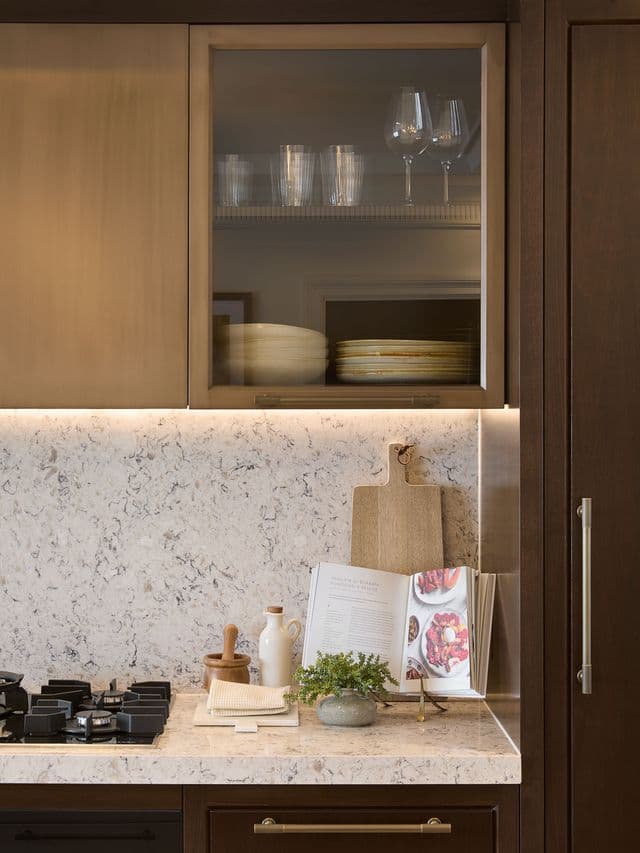
Arts and Crafts Kitchen Design: Where Handcraft Meets the Heart of the Home
Explore how the Arts and Crafts movement inspires truly bespoke kitchen design — from hand-forged ironmongery and English oak to William Morris colour palettes. A guide to creating kitchens that honour the handmade.
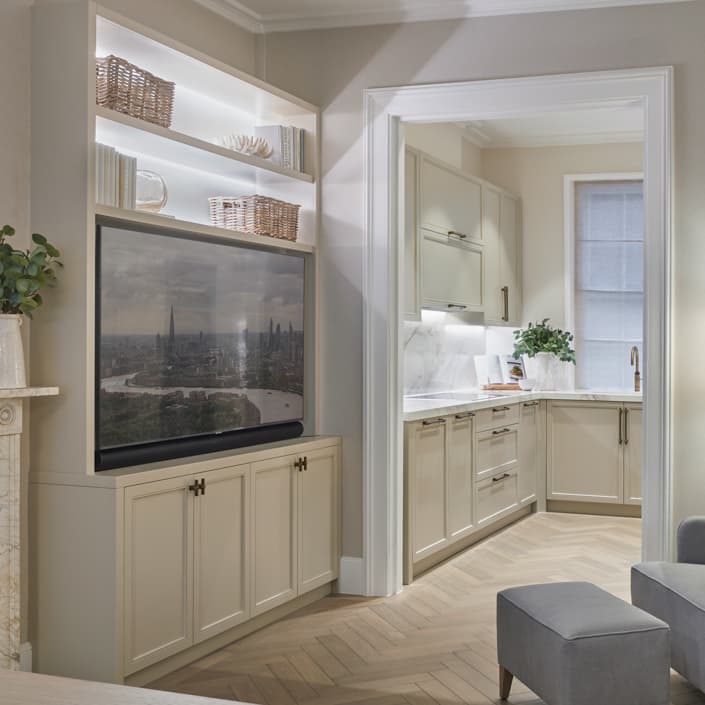
Barn Conversion Kitchen Design: Bespoke Kitchens for Extraordinary Spaces
Designing a kitchen for a barn conversion demands a bespoke approach. From double-height ceilings and exposed trusses to acoustic management and island design, discover how Albury House Kitchens creates luxury kitchens that honour agricultural architecture whilst delivering modern performance.
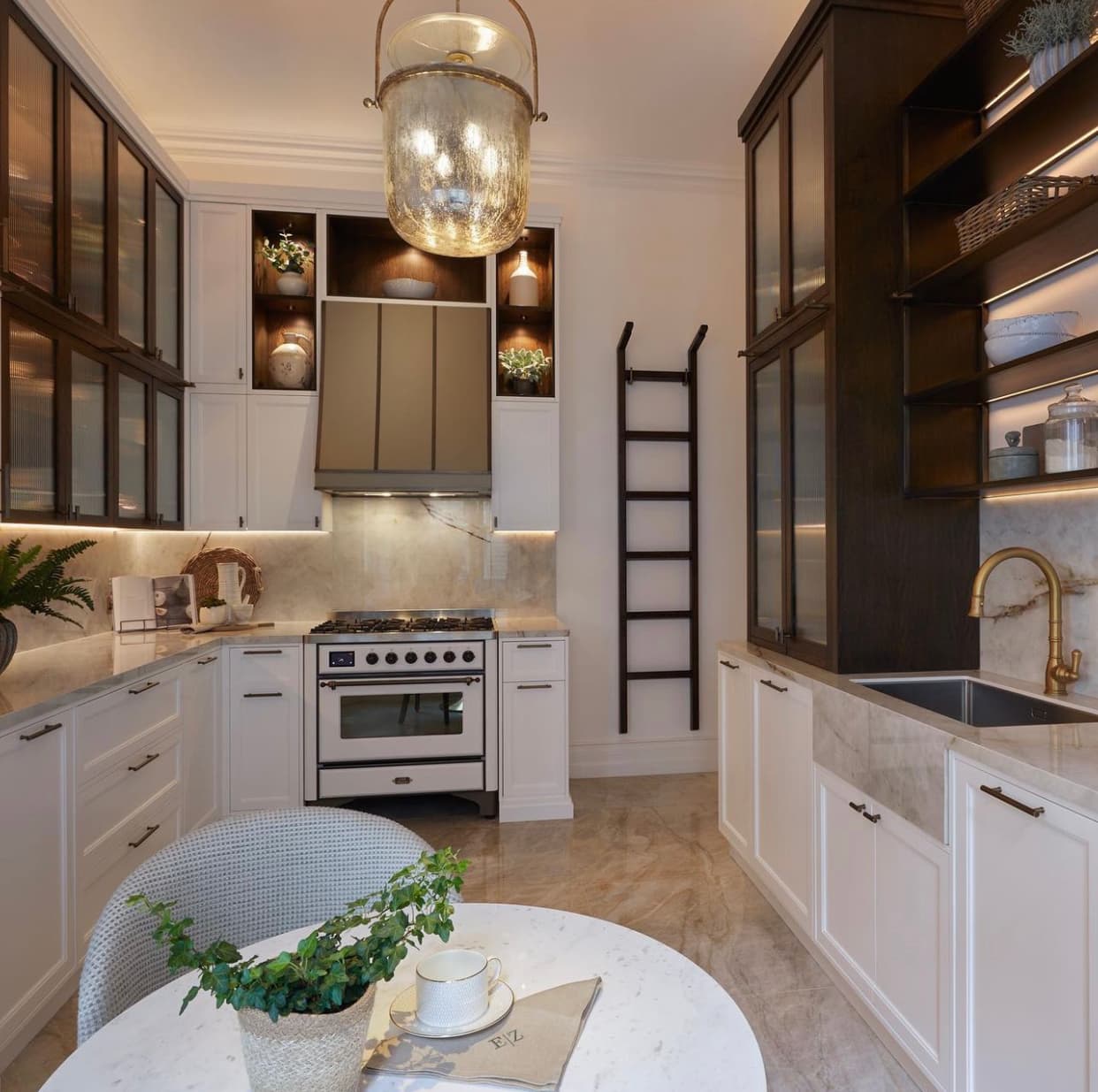
Bespoke Shaker Kitchen Design: The Enduring Appeal of the Finest Kitchen Style
Discover why the bespoke shaker kitchen remains the most sought-after style in luxury kitchen design. From its humble origins to contemporary interpretations, explore colours, worktops, hardware, and island ideas for your shaker kitchen.