

Luxury Kitchen Island Design: The Art of Getting the Centrepiece Right
A comprehensive guide to luxury kitchen island design — from proportion and workflow to materials, seating, storage, lighting, and knowing when an island isn't the answer. Drawn from years of designing bespoke islands for homes across Cambridge, Hampstead, and Essex.
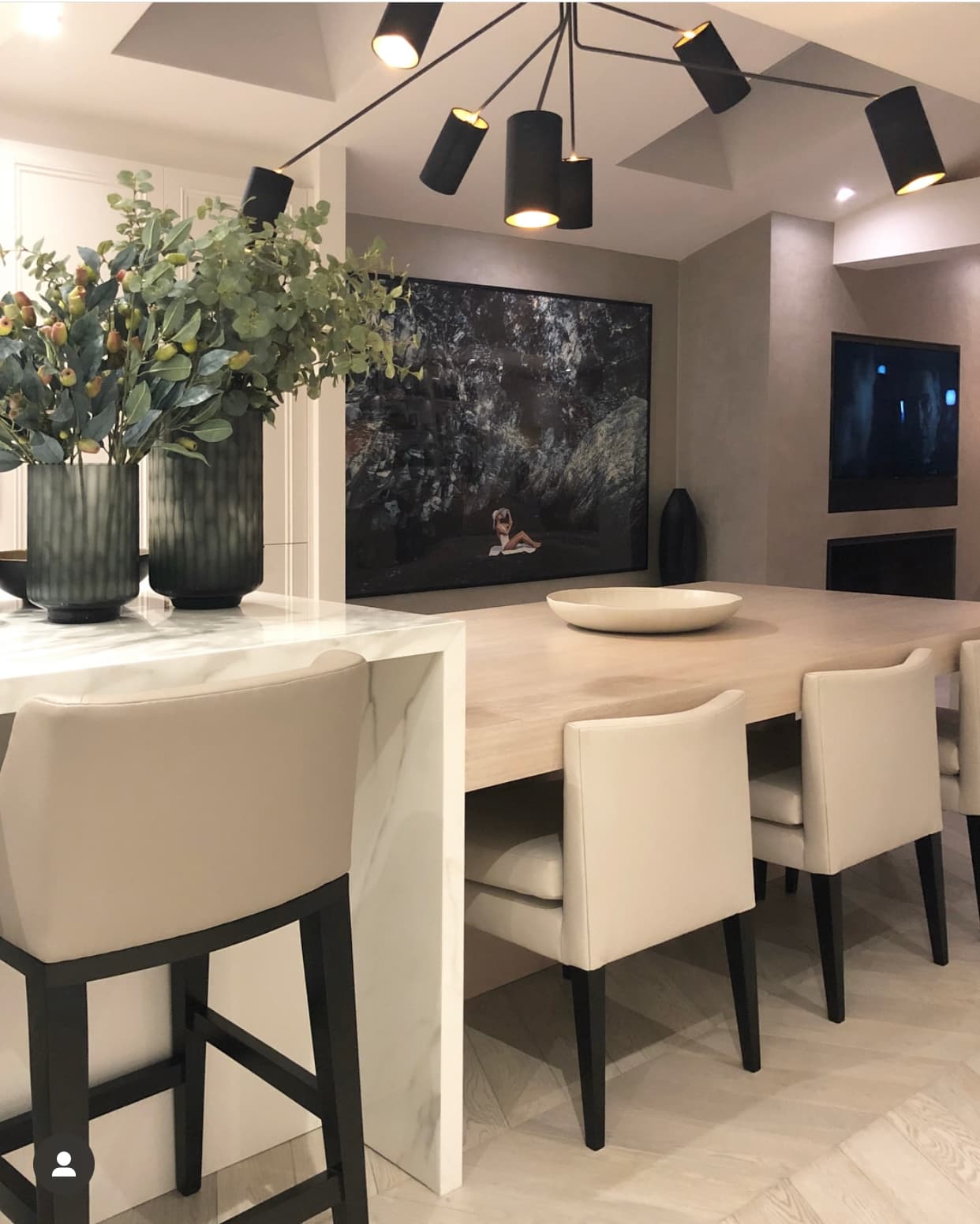
There is a moment in almost every kitchen design consultation when the conversation turns to the island. Eyes light up. Magazine pages are produced. Pinterest boards materialise. The island, it seems, has become the single most desired element in a luxury kitchen — the piece that people dream about, argue over, and occasionally get spectacularly wrong.
And that's rather the point of this piece. A well-designed kitchen island is genuinely transformative. It anchors the room, defines how you cook and entertain, and becomes the place where family life gravitates. But a poorly considered island — one that's too large, too small, badly positioned, or stuffed with features it doesn't need — can undermine an otherwise beautiful kitchen.
Getting it right requires thinking about proportion, purpose, materials, and workflow before you think about aesthetics. So let's do exactly that.
Why the Island Matters So Much
The kitchen island occupies a unique position in domestic architecture. It is simultaneously a work surface, a social hub, a storage solution, and a visual centrepiece. No other single element in the home is asked to do so much.
In a luxury kitchen, the island's importance is amplified further. It's typically the first thing you see when you enter the room. It sets the material and tonal palette. It determines whether the kitchen feels generous and welcoming or cramped and awkward. And because it's visible from all sides — unlike perimeter cabinetry, which has the kindness of a wall behind it — every detail is exposed.
This is why luxury kitchen island design demands more careful thought than any other element in the room. The margins between magnificent and merely adequate are surprisingly slim.
Proportion and Space: The Non-Negotiable Starting Point
Before you choose a single material or fitting, you need to know whether your kitchen can actually support an island — and if so, what size.
The arithmetic is unforgiving. You need a minimum of 1,000mm clearance between the island and any facing cabinetry or wall on all working sides. Where two people will regularly pass each other — between the island and the main run of units, for instance — you want 1,200mm. Less than this, and the kitchen will feel pinched the moment more than one person is in it.
Then there's the island itself. For a prep island with no seating, 900mm depth is workable. For an island with bar seating on one side, you'll need 1,050mm to 1,200mm of depth to accommodate the overhang and legroom. Length depends on function, but most islands in the kitchens we design for clients across Cambridge, Hampstead, and Essex fall between 1,800mm and 2,800mm.
The golden rule is one that no amount of enthusiasm can override: the island must be proportionate to the room. An island that fills more than about 10 to 15 percent of the floor area will almost certainly feel overbearing. And a kitchen where you're forever squeezing past the island to reach the fridge is a kitchen that will slowly drive you mad, however beautiful the stonework.
If you're unsure, an experienced designer will resolve this in the first site visit. It's one of the reasons we always begin with the room, never the catalogue. Our design process is built around understanding your space before committing to any configuration.
Four Types of Luxury Kitchen Island
Not all islands are created equal, and clarity about what you're asking your island to do will shape every decision that follows.
The Prep Island
The purest form. A generous worktop, ample storage beneath, and nothing else. No sink. No hob. No seating. Just an honest, uncluttered work surface for chopping, rolling, assembling, and the hundred other tasks that constitute actual cooking.
Prep islands work beautifully in kitchens where the perimeter already handles cooking and washing up. They're also the easiest to get right, because the demands are simple: a durable worktop, well-planned storage, and enough space to work comfortably.
Don't underestimate the luxury of clear, uninterrupted worktop space. In a world where islands are routinely laden with sinks, hobs, pop-up extractors, and integrated charging stations, a prep island is a quietly radical choice.
The Cooking Island
Here, the hob — and sometimes an integrated downdraft or ceiling extractor — takes centre stage. Cooking islands suit confident cooks who want to face the room while they work. They're theatrical, sociable, and undeniably impressive when done well.
The practical considerations are substantial. Extraction must be exceptionally effective, because a hob in the middle of an open-plan space will distribute cooking odours with merciless efficiency if the ventilation isn't right. Services need to be routed through the floor, which affects both cost and the feasibility of retrofitting into an existing kitchen. And the worktop material around the hob must withstand serious heat — which rules out some otherwise lovely options.
We've designed cooking islands with induction hobs, gas burners, teppanyaki plates, and dedicated wok burners. Each demands a different approach to ventilation, worktop protection, and spatial planning. It's genuinely specialist work, and it's worth getting right.
The Entertaining Island
The entertaining island is designed primarily for gathering. It features generous seating — typically four to six stools — possibly a wine fridge or drinks preparation area, and enough worktop space for platters, bottles, and the general glorious chaos of hosting.
These islands often have a dual personality: a working side with storage, a prep sink, or serving space, and a social side with an overhang for seating. The contrast between the two sides can be a wonderful design opportunity. We've paired painted cabinetry on the kitchen side with fluted timber panels on the seating side, creating an island that reads as furniture from the dining area and as a working kitchen from the cook's perspective.
If you entertain regularly, this is the island type that will repay your investment most generously. For more ideas on how islands integrate into broader kitchen design, have a look at our bespoke kitchen design ideas.
The Statement Sculptural Island
Some islands exist primarily to be extraordinary. A monolithic block of book-matched marble. A cantilevered design that appears to float. A curved island that defies the straight lines of the surrounding cabinetry. A bronze-clad base beneath a live-edge timber top.
Statement islands are the haute couture of kitchen design — pieces that transcend function and become the architectural centrepiece of the home. They require bold clients, generous budgets, and the kind of making skills that live somewhere between cabinetry and fine art.
They're not for everyone, and they're not always practical. But when the space, the client, and the maker align, the results can be genuinely breathtaking.
Material Choices for the Luxury Island
If the perimeter cabinetry of a luxury kitchen is its backbone, the island is its jewellery. Material choices here carry disproportionate visual weight, because the island is seen from all angles and is typically the focal point of the room.
Worktop Materials
The island worktop is an opportunity to introduce a material that contrasts with, or elevates, the perimeter worktops. Common approaches include:
- Natural stone on the island, engineered stone on the perimeters — letting the island claim the room's most dramatic material while keeping the working surfaces practical and low-maintenance
- A single slab of book-matched marble — where two sequential slices of the same stone are opened like a book to create a symmetrical pattern. Stunning, and unique to your kitchen
- Timber island tops in oiled oak or walnut — warm, tactile, and beautiful with age, though best suited to prep islands rather than cooking islands
- Quartzite or granite for heavy-duty cooking islands — where heat resistance and durability are paramount
- Brushed stainless steel sections — for serious cooks who want a professional-grade work surface integrated into a domestic design
Our luxury kitchen design guide covers worktop materials in greater depth, including how each option ages and performs over years of daily use.
Waterfall Edges
The waterfall edge — where the worktop material cascades vertically down the end of the island to the floor — has become one of the defining details of contemporary luxury kitchen island design. It transforms the worktop from a surface into a sculptural element and shows off the full depth and character of the material.
Waterfall edges are at their most dramatic in heavily veined natural stones, where the pattern flows from horizontal to vertical in an unbroken sweep. They also work beautifully in solid timber, engineered stone, and even concrete.
The practical benefit is worth noting too. A waterfall end protects the island's most vulnerable edge from knocks, scuffs, and spills. It's one of those rare details that is both more beautiful and more sensible than the alternative.
Cabinetry Finishes: Fluted Panels, Contrast Colours, and Furniture Details
The sides and ends of a luxury island deserve as much attention as the top. Because the island is visible from all directions, its cabinetry is on full display.
Design choices that elevate an island include:
- Fluted or reeded panels on the seating side, adding texture and visual interest that catches the light
- A contrasting colour to the perimeter cabinetry — a deeper tone, a different timber, or a bold accent that sets the island apart as a distinct piece of furniture
- Furniture-style details such as turned legs at the corners, a plinth that recesses to create a floating effect, or end panels shaped to suggest a freestanding sideboard
- Open shelving on one or both ends for cookbooks, ceramics, or display pieces — a lovely way to soften the mass of a large island
The goal is to make the island feel considered from every angle. In a bespoke kitchen, there's no reason for the back of the island to be an afterthought.
Storage and Seating: Making the Island Work Hard
A luxury island should be as hardworking as it is handsome. The interior matters as much as the exterior.
Storage
The island offers prime real estate for the kitchen's most frequently used items. Deep pan drawers, pull-out spice racks, integrated waste and recycling bins, and bespoke drawer inserts for utensils all belong here. Because the island sits at the centre of the workflow, everything stored within it is within arm's reach of the main working area.
We often design one side of the island for the cook — deep drawers for pans and baking trays, perhaps a built-in knife block — and the opposite side for the family. This might include a shelf for children's snack boxes at a reachable height, a drawer for table linens, or a cabinet for the crockery used at the island's own seating.
Seating
Island seating is one of the great pleasures of kitchen life — a place where children do homework, guests perch with a glass of wine, and the morning paper is read over coffee. Getting it right is largely a matter of dimensions.
For comfortable bar-height seating (typically 900mm to 1,000mm from the floor), you need a worktop overhang of at least 250mm and preferably 300mm. Allow 600mm of width per seat as a minimum — 700mm is more generous. And ensure there's enough depth beneath the overhang for knees. It sounds straightforward, but we regularly see islands where the seating overhang is too shallow, the stools don't fit properly, and the whole arrangement feels cramped.
A waterfall end can solve the awkward question of what happens at the end of the overhang, giving the seating section a clean, architectural termination.
Lighting Over Islands: Setting the Mood
Lighting is the detail that can make or break the atmosphere around a kitchen island. Too bright and clinical, and the island becomes an operating table. Too dim, and you can't see what you're chopping.
The most successful island lighting schemes combine task lighting with ambient character:
- Pendant lights are the classic choice — hung in a row of two, three, or five (odd numbers tend to look better) at approximately 700mm to 800mm above the worktop. Scale matters enormously: pendants that are too small will look timid over a generous island, and oversized fixtures can feel oppressive
- Linear suspension lights — a single, slender bar of light — suit contemporary kitchens and create a clean, architectural line above the island
- Recessed downlights provide functional illumination without visual clutter, though they lack the warmth and character of decorative fixtures
- A combination approach — perhaps pendants for ambience with discreet downlights for task illumination — gives you the most flexibility
All island lighting should be on a separate circuit with a dimmer. The difference between full brightness for food preparation and a soft glow for evening entertaining is the difference between a kitchen and a room you genuinely want to spend time in. For a deeper treatment of this subject, our kitchen lighting design guide covers the full picture.
The Island Sink vs Island Hob Debate
This is the question that generates more discussion in our design studio than almost any other. Should the island house a sink, a hob, or neither?
The Case for an Island Sink
A prep sink in the island keeps the cook facing the room — towards the dining table, the garden doors, the children. It creates a natural workflow: prep at the island, cook at the perimeter hob, with the main sink nearby for washing up. It also makes the island a self-contained prep station, with water on hand for rinsing vegetables and filling pans.
The drawback is that a sink — even a small prep sink — consumes valuable worktop space and creates a visual interruption in what might otherwise be a clean, unbroken surface. Washing-up debris in an island sink is also on full display in open-plan spaces, which suits some households better than others.
The Case for an Island Hob
An island hob is dramatic and sociable. You cook facing your guests. The sizzle and theatre of the hob become part of the room's energy. Modern induction hobs with integrated extraction — downdraft or vented — have made island cooking far more practical than it was even five years ago.
The challenges are extraction (which must be powerful and effectively ducted), heat management (the worktop and anyone seated nearby), and the routing of gas or heavy-duty electrical supply through the floor.
The Case for Neither
Here is the option that people overlook most frequently, and it may be the wisest. An island with no plumbing and no electrical services beyond a discreet socket or two is simpler to install, less expensive to build, offers maximum worktop flexibility, and can be positioned with complete freedom because it isn't tethered to underfloor services.
A services-free island also ages better. It can be modified, moved, or even replaced without disturbing the kitchen's infrastructure. For many homes, this is the most elegant solution.
When Not to Have an Island
This might be the most valuable section in this entire piece.
Not every kitchen needs an island. Not every kitchen can support one. And an island installed in a space that's too small will make the kitchen worse, not better — no matter how exquisite the materials or how clever the design.
You should think carefully before committing to an island if:
- Your kitchen is narrower than about 3,600mm — once you account for standard-depth perimeter units on both sides (600mm each) and minimum clearances (1,000mm either side of the island), there's simply not enough room for an island of useful depth
- The island would obstruct the main route through the kitchen — an island should enhance traffic flow, not block it. If people will need to walk around the island to get from one side of the room to the other, reconsider
- You're installing an island because you think you should — this is more common than you might expect. If your kitchen works beautifully without one, don't fix what isn't broken
- A peninsula would work better — a peninsula (an island attached to the wall or perimeter cabinetry at one end) delivers many of the same benefits with a smaller footprint and a more efficient use of space
The bravest design decision is sometimes the simplest one. A kitchen without an island — where the space is used for a generous dining table, an armchair by the Aga, or simply room to breathe — can be every bit as luxurious as one with a six-figure stone centrepiece.
Getting Your Island Right
The kitchen island is where ambition and reality must be reconciled. It's the element that demands the most rigorous thinking about how you actually live — how you cook, how you entertain, how your family moves through the space, and what you need within arm's reach.
A truly bespoke island is not chosen from a catalogue. It is designed from first principles for your room, your habits, and your aesthetic. It is built to tolerances that make it feel like furniture. And it is finished with materials and details that reward attention from every angle.
If you're considering a luxury kitchen island and want to explore what's possible in your space, we'd welcome the conversation. You can get in touch here or browse our portfolio to see how we've approached island design for homes across the M11 corridor and beyond.
The best islands, like the best kitchens, start with honest questions and end with rooms that feel entirely, unmistakably right.
Frequently Asked Questions
Thinking about a new kitchen?
Book Your Free ConsultationYou might also enjoy
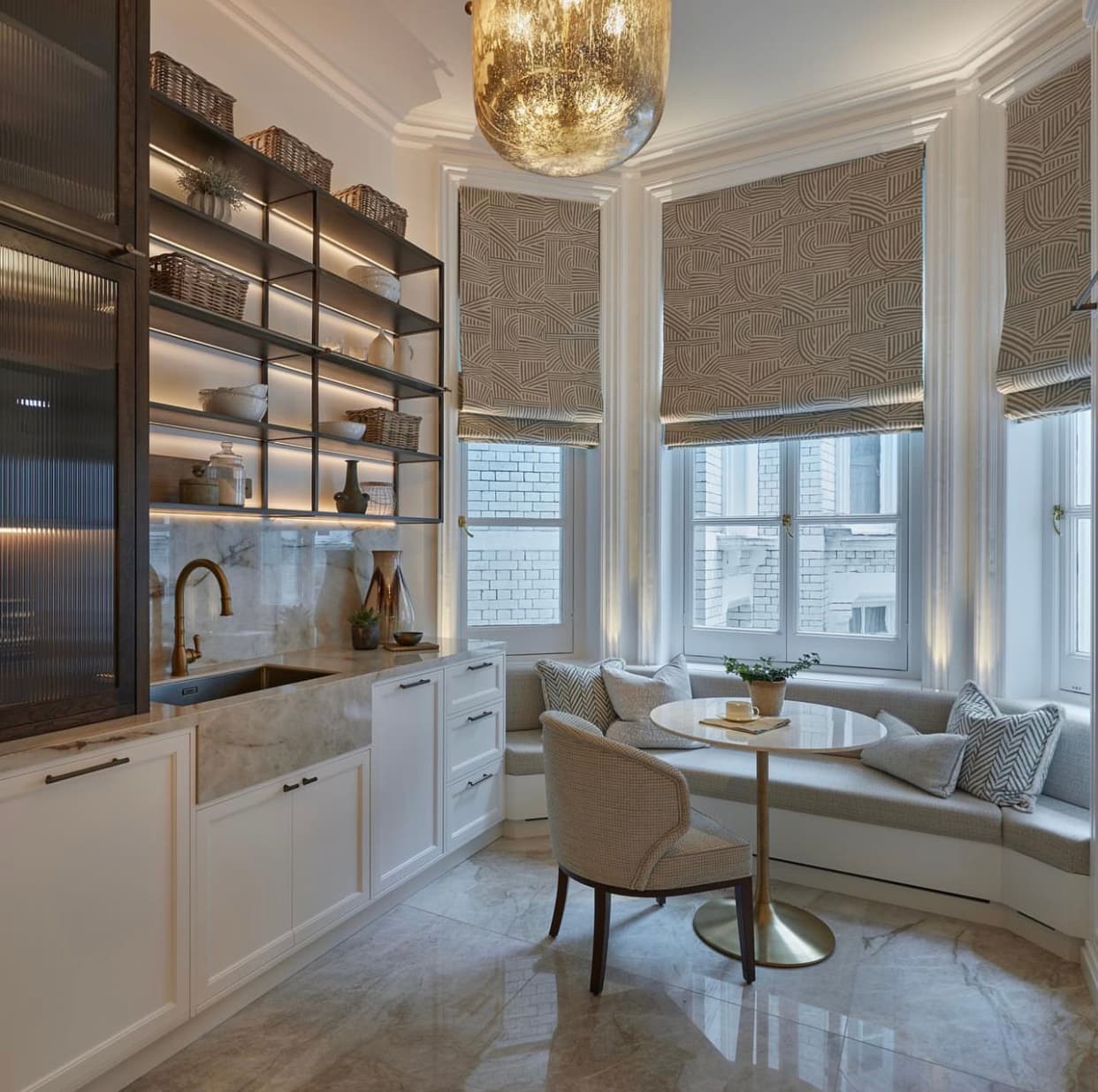
Banquette Seating Kitchen: The Art of Built-In Dining Done Properly
Explore how banquette seating transforms kitchen dining — from L-shaped corners and curved booths to storage-smart benches, upholstery choices, and dimensions that actually work. Inspiration for bespoke kitchens that invite you to sit down and stay.
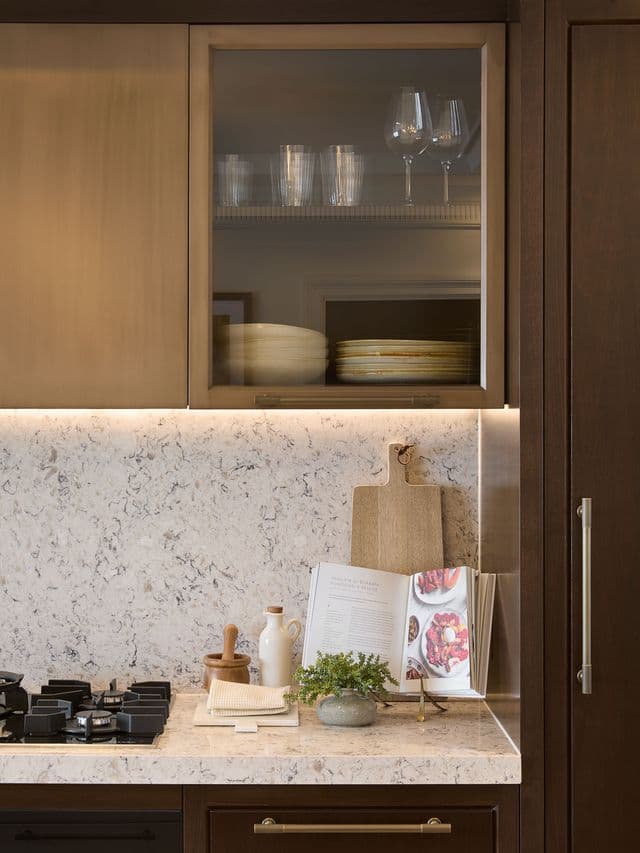
Arts and Crafts Kitchen Design: Where Handcraft Meets the Heart of the Home
Explore how the Arts and Crafts movement inspires truly bespoke kitchen design — from hand-forged ironmongery and English oak to William Morris colour palettes. A guide to creating kitchens that honour the handmade.
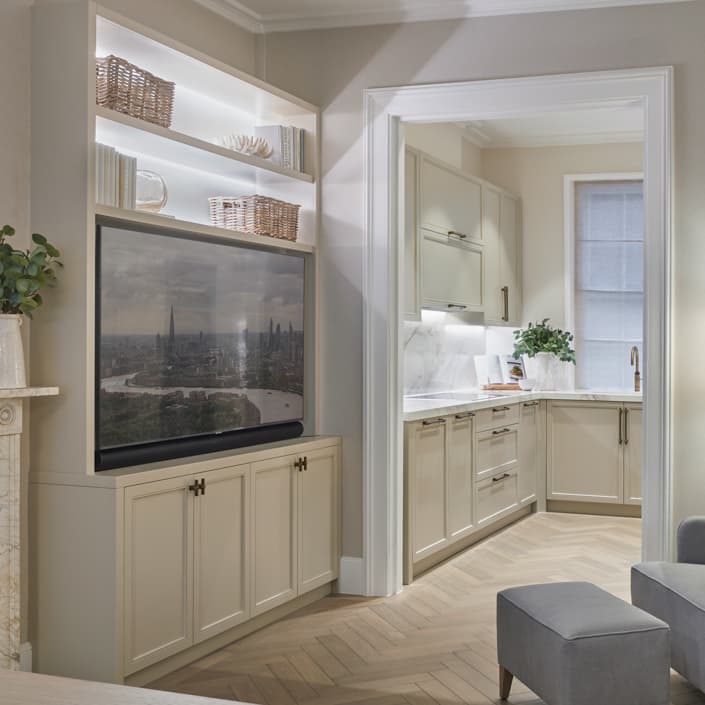
Barn Conversion Kitchen Design: Bespoke Kitchens for Extraordinary Spaces
Designing a kitchen for a barn conversion demands a bespoke approach. From double-height ceilings and exposed trusses to acoustic management and island design, discover how Albury House Kitchens creates luxury kitchens that honour agricultural architecture whilst delivering modern performance.