

Bespoke Shaker Kitchen Design: The Enduring Appeal of the Finest Kitchen Style
Discover why the bespoke shaker kitchen remains the most sought-after style in luxury kitchen design. From its humble origins to contemporary interpretations, explore colours, worktops, hardware, and island ideas for your shaker kitchen.
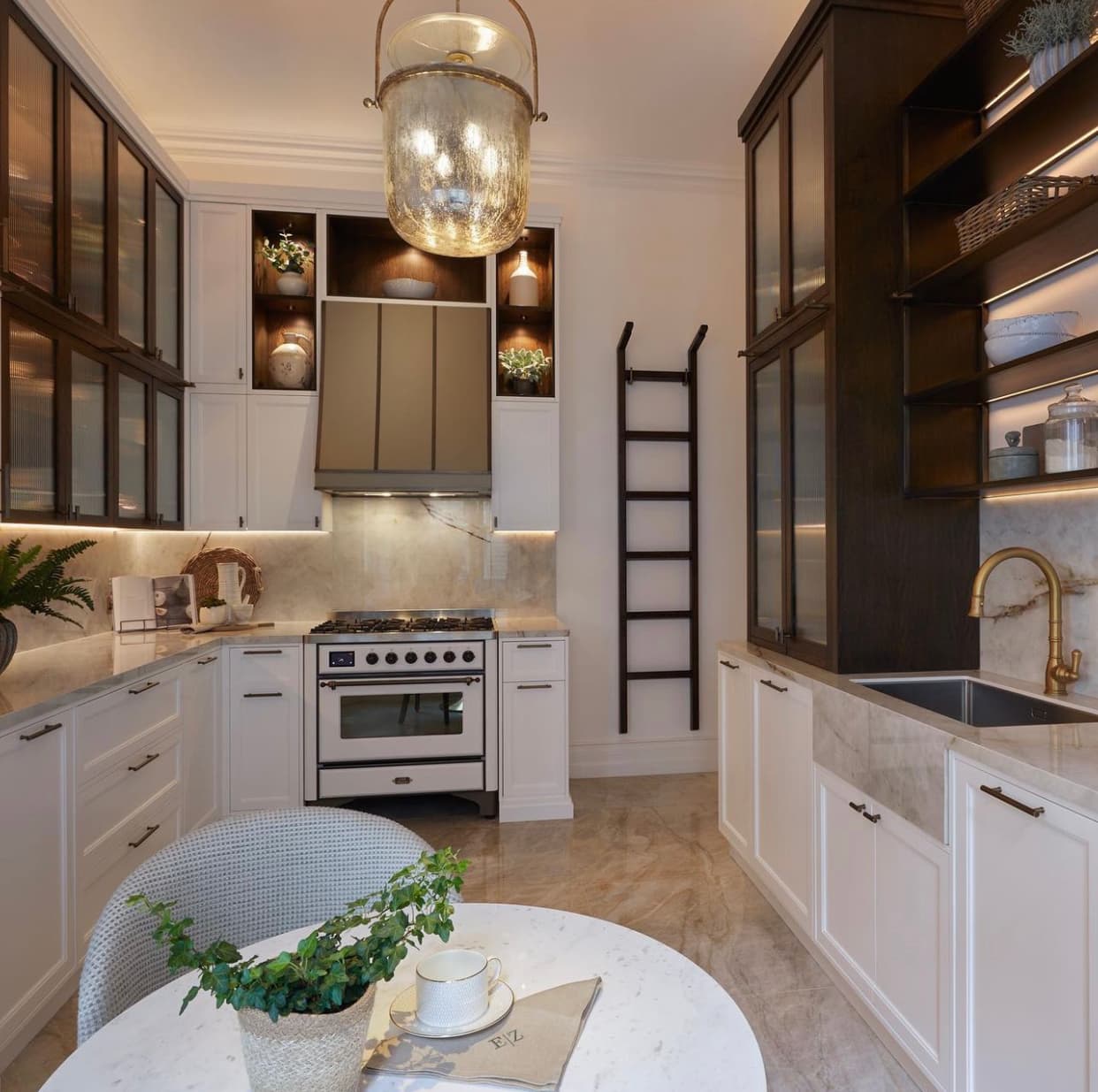
There is a reason the shaker kitchen has outlasted every trend the design world has thrown at it. While handleless slabs have their moment and ornate Victorian detailing drifts in and out of fashion, the shaker door — that beautifully plain, framed-and-panelled rectangle — has been quietly getting on with the job for more than two centuries.
It is not hard to see why. A bespoke shaker kitchen offers something rare in design: a style so fundamentally well-proportioned, so honestly constructed, that it feels at home in a Georgian townhouse in Hampstead and a converted barn in rural Essex with equal conviction. It neither shouts nor apologises. It simply works.
At Albury House Kitchens, we build more shaker kitchens than any other style. Not because we steer clients towards them, but because when people see what a handmade shaker kitchen can be — when the proportions are right, the timber is beautiful, and every joint is precise — they rarely want anything else.
This guide explores what makes the shaker style so enduring, and how a bespoke approach elevates it from familiar to extraordinary.
A Brief History of the Shaker Style
The shaker kitchen takes its name from the United Society of Believers in Christ's Second Appearing — more commonly known as the Shakers — a religious community that flourished in eighteenth- and nineteenth-century America. Founded on principles of simplicity, utility, and honest craftsmanship, the Shakers believed that making something well was itself an act of devotion.
Their furniture reflected this philosophy completely. Every piece was stripped of unnecessary ornament. Joints were exposed rather than hidden. Materials were chosen for durability and fitness for purpose, not for show. The famous shaker peg rail — a simple board with turned pegs — allowed entire rooms to be cleared for worship by hanging chairs on the wall. It was functional design at its most elegant.
The shaker door that we recognise today — a flat centre panel set within a square or rectangular frame — emerged from this tradition. It was straightforward to construct, pleasing in proportion, and strong enough to last generations. There was nothing superfluous about it, and nothing missing either.
What the Shakers understood, perhaps instinctively, is that simplicity is not the same as plainness. A well-made shaker door has a quiet rhythm to it: the shadow line where frame meets panel, the gentle hierarchy of rail and stile, the satisfying precision of a properly fitted joint. It is minimalism before minimalism had a name.
What Defines a Bespoke Shaker Kitchen
A shaker kitchen is defined by its door, but a bespoke shaker kitchen is defined by everything behind it. The distinction matters enormously.
The shaker door itself follows a consistent grammar: a flat or very slightly raised centre panel sits within a frame formed by two vertical stiles and two horizontal rails, joined at the corners with a mortise-and-tenon or a cope-and-stick joint. The frame typically has a small inner profile — sometimes a simple bead, sometimes a gentle chamfer — but never anything elaborate.
In a bespoke context, this familiar form becomes a starting point rather than a constraint. The proportions of the frame can be adjusted to suit the scale of your room. The profile can be refined to complement the architectural mouldings in your home. The panel can be flat, slightly raised, or even replaced with glass for display cabinets. Every dimension is considered afresh.
Beyond the door, a bespoke shaker kitchen distinguishes itself through:
- Custom carcass dimensions — cabinets built to your ceiling height, your alcove width, your precise requirements rather than modular increments
- Handmade joinery — dovetailed drawers, mortise-and-tenon frames, and solid timber construction throughout
- Considered storage — bespoke internals designed around how you actually cook and live, from spice drawers sized to your collection to pull-out pantry systems engineered for your weekly shop
- Architectural integration — cabinetry that works with the character of your home, whether that means scribing around original cornicing or building into a Victorian chimney breast
This is the difference between choosing a shaker kitchen and commissioning one. For a deeper look at the bespoke process itself, our guide to commissioning a bespoke kitchen covers every stage from first conversation to installation day.
Why the Shaker Style Endures
Kitchen trends are cyclical. The heavy oak and granite of the early 2000s gave way to high-gloss white, which yielded to industrial concrete and steel, which softened into the Scandinavian-tinged minimalism that dominated the 2010s. Through all of it, the shaker kitchen has remained the most popular bespoke kitchen style in Britain, and arguably the world.
Several qualities explain this extraordinary staying power.
Proportional honesty. The shaker door's geometry is inherently balanced. The frame-and-panel construction creates a pleasing visual rhythm that works at almost any scale — from a small galley to a vast open-plan family kitchen. There is nothing arbitrary about it.
Material versatility. A shaker kitchen can be painted in virtually any colour, stained to show natural grain, or left in raw timber for an artisan aesthetic. The same fundamental door shape looks entirely different in chalky white paint, deep heritage green, or oiled walnut.
Architectural neutrality. Because the shaker style avoids both ornament and aggressive minimalism, it sits comfortably alongside almost any architecture. It does not fight a period property's mouldings, nor does it feel dated in a clean-lined contemporary extension.
Timelessness without boredom. A shaker kitchen installed twenty years ago still looks entirely appropriate today. It will look appropriate twenty years hence. This is not a style that dates — and for a room that represents a significant investment, that matters a great deal.
Traditional Versus Contemporary Shaker
One of the shaker style's great strengths is its ability to move between traditional and contemporary registers without losing its identity. The underlying structure remains the same; what changes is the detail, the palette, and the surrounding context.
The Traditional Shaker Kitchen
A traditional bespoke shaker kitchen leans into the style's heritage. Think warm, muted paint colours — soft whites, gentle creams, sage greens, and the kind of blues that appear in eighteenth-century American interiors. Hardware tends towards classic forms: knob handles in burnished brass or pewter, perhaps cup pulls on drawers. Worktops might be honed marble or thick-edged timber. The overall impression is one of warmth, permanence, and quiet good taste.
Traditional shaker kitchens often feature details that nod to the period without slavishly reproducing it: a generous mantel shelf above the range cooker, tongue-and-groove panelling to dado height, open shelving for displaying well-loved ceramics. These are kitchens that feel as though they've always been there — which, in a characterful period home, is exactly the point.
The Contemporary Shaker Kitchen
A contemporary shaker kitchen strips the style back further, playing up its geometry and clean lines while reducing decorative detail to a minimum. The frame-and-panel door remains, but the profile might be sharper, the proportions sleeker, and the palette more restrained — perhaps a single tone of soft grey or a bold, saturated dark blue.
Hardware choices shift towards slimmer, more linear forms: T-bar pulls, edge pulls, or even integrated finger grooves that preserve the door's flat plane. Worktops tend towards engineered stone or ultra-thin porcelain. The effect is crisp and current, but with the substance and warmth that a purely handleless kitchen can sometimes lack.
This is where bespoke design truly comes into its own. A skilled designer can pitch a shaker kitchen at precisely the right point on the traditional-to-contemporary spectrum for your home and your taste — and that fine calibration is almost impossible to achieve with a factory-made kitchen.
Colour Palettes for a Bespoke Shaker Kitchen
Colour is one of the most powerful tools in shaker kitchen design, precisely because the door itself is so restrained. With no elaborate mouldings or decorative carving to compete, the paint finish becomes the dominant visual statement.
Heritage and Neutral Tones
The natural home of the shaker kitchen: soft whites (not brilliant white — think Wimborne White, Pointing, or Strong White), warm greys, and stone tones. These palettes work beautifully in period properties and create a sense of calm spaciousness in any setting. A two-tone approach — lighter uppers, slightly deeper lowers — adds gentle definition without drama.
Greens and Blues
No colour family pairs more naturally with shaker cabinetry than green. From the palest sage to a rich forest, green grounds a kitchen in a way that feels organic and timeless. Blues follow a similar logic: a muted duck egg for coastal lightness, a deep navy for evening-lit drama. Both sit beautifully against natural stone and timber, which is partly why the combination endures.
Dark and Dramatic
A bespoke shaker kitchen in charcoal, deep plum, or saturated black can be breathtaking — particularly in a space with generous ceiling height and good natural light. Dark shaker cabinetry has a gravity and sophistication that lighter schemes cannot match. The framed panel detail prevents large expanses of dark paint from feeling flat, as the shadow lines introduce subtle texture and depth.
Natural Timber
For those who prefer the warmth and character of wood grain, a shaker kitchen in oiled oak, walnut, or ash is a compelling option. The frame-and-panel construction shows off the timber's figure beautifully, and the kitchen develops a rich patina over years of use. This approach works particularly well in country kitchen settings where a painted finish might feel too polished.
Worktop Pairings That Sing
The worktop is where your hands meet the kitchen every day, and in a shaker design — where the cabinetry is deliberately understated — the worktop carries real visual weight. Getting this pairing right is essential.
Marble and quartzite bring luminous depth and a sense of luxury that few materials can match. A honed Carrara or Calacatta marble against pale shaker cabinetry is one of the great combinations in kitchen design. Quartzite offers similar beauty with considerably greater durability for those who prefer a surface that tolerates daily life without anxiety.
Granite in leathered or honed finishes (rather than the high-polish look of decades past) pairs handsomely with both traditional and contemporary shaker schemes. Dark granites against pale cabinetry create striking contrast, while lighter stones maintain a softer, more unified feel.
Engineered quartz offers the broadest practical appeal: consistent colour, excellent durability, and minimal maintenance. For a bespoke shaker kitchen that will be used hard by a busy family, a well-chosen quartz worktop is a thoroughly sensible decision without sacrificing beauty.
Solid timber — typically oak, iroko, or walnut — brings a warmth and tactile honesty that stone cannot replicate. Many of our clients choose timber for the island and stone for the perimeter runs, creating a natural distinction between the social heart of the kitchen and the working areas.
Porcelain slabs have emerged as a sophisticated alternative, offering extraordinary consistency, heat resistance, and an almost impossibly thin edge profile that suits contemporary shaker kitchens beautifully.
For more on how these material decisions fit into the broader design picture, our bespoke kitchen design ideas guide explores the full spectrum of possibilities.
Hardware: The Jewellery of a Shaker Kitchen
If the worktop is where your hands meet the kitchen, the hardware is what they reach for first. In a shaker design, where the door itself is purposefully plain, the choice of handles and knobs carries disproportionate influence over the kitchen's character.
Knob handles are the classic shaker choice — small, round, and typically mounted at the top corner of base unit doors and the bottom corner of wall units. In burnished brass, aged bronze, or polished nickel, a simple knob feels entirely right on a traditional shaker door.
Cup pulls on drawers are another enduring pairing. There is something deeply satisfying about the weight and feel of a well-made cup pull — it invites the hand in rather than requiring a grip. In unlacquered brass, they develop a beautiful patina over time that shaker purists find irresistible.
T-bar and slim pull handles shift the tone towards contemporary. A slim, brushed-nickel pull on a dark grey shaker door creates a crisp, current feel without abandoning the style's fundamental warmth.
Edge pulls and integrated handles push the shaker into more emphatically modern territory. A routed finger pull along the top edge of a door preserves the clean plane of the panel while making hardware almost invisible.
The key principle is consistency of intent. A bespoke shaker kitchen should feel considered, and that means the hardware needs to speak the same language as the paint, the stone, and the proportions. Our bespoke kitchen cabinets guide explores how cabinetry details and hardware choices work together.
Designing a Shaker Kitchen Island
The kitchen island has become the centrepiece of modern kitchen design, and the shaker style lends itself to island design with particular grace. The framed-and-panelled construction wraps beautifully around an island's exposed sides, creating visual interest that a flat slab simply cannot offer.
A bespoke shaker kitchen island can serve multiple functions, and the beauty of a bespoke approach is that each function can be designed into the piece from the outset rather than retrofitted.
Seating and socialising. An overhanging worktop on one side creates a breakfast bar or casual dining area. The overhang depth, the number of seats, and the leg room beneath can all be tailored precisely — no awkward compromises.
Preparation and cooking. A hob set into the island, paired with a downdraft extractor, creates a sociable cooking arrangement where the chef faces the room. Bespoke design allows the extraction, services, and storage to be integrated seamlessly.
Storage. Deep pan drawers, open shelving for cookbooks, integrated wine storage, or a built-in microwave cavity — a bespoke island can accommodate whatever your household needs without appearing cluttered.
Display and character. The end panels of a shaker island offer a wonderful opportunity for architectural detail: decorative panelling, open niches for display, or even a small bookshelf for cookery books. These are the touches that transform a kitchen island from functional furniture into a room-defining piece.
The proportions of an island matter enormously, and this is an area where bespoke design earns its keep. The height, the depth, the overhang, the relationship to the surrounding cabinetry and the room itself — all of these need careful calibration to feel right. An island that is too large overwhelms; one that is too small looks apologetic.
Shaker Kitchens in Period Properties and Modern Homes
In Period Properties
A bespoke shaker kitchen is arguably at its most natural in a period property. The style's Georgian-era origins mean it shares a visual vocabulary with the architecture of many British homes built from the eighteenth century onwards — simple mouldings, honest materials, and a deep respect for proportion.
In a period setting, the bespoke advantage is the ability to integrate cabinetry with existing architectural features. Cornicing can be matched or sympathetically complemented. Cabinetry can be designed to work around original fireplaces, alcoves, and uneven walls that would defeat a standard fitted kitchen. The result is a kitchen that feels as though it has grown from the house rather than been imposed upon it.
For listed buildings and conservation areas, this sensitivity is not merely aesthetic — it can be a planning requirement. A bespoke maker who understands period architecture can navigate these constraints with confidence.
In Modern and Contemporary Homes
It might seem counterintuitive, but the shaker style is equally at home in modern architecture. The clean geometry of the frame-and-panel door shares more DNA with contemporary design than most people realise — both prize clean lines, honest construction, and an absence of gratuitous decoration.
In a modern setting, a bespoke shaker kitchen might be specified with a flatter profile, a sharper frame edge, and a more restrained palette. Ceiling-height cabinetry, integrated appliances, and minimalist hardware push the design firmly into contemporary territory while retaining the warmth and tactile quality that pure minimalism can lack.
The shaker style's ability to bridge these worlds is precisely why it endures. It is not nostalgic, and it is not fashion-forward. It exists in a space of quiet, timeless quality — which is, after all, exactly what a kitchen should aspire to.
Making It Yours
The beauty of commissioning a bespoke shaker kitchen is that every decision — from the width of the frame to the patina of the hardware — is yours to make. Not from a menu of predetermined options, but from genuine, open-ended possibility shaped by your home, your life, and the guidance of people who have been making kitchens by hand for a very long time.
If you are considering a bespoke shaker kitchen for your home, we would love to hear from you. Our consultations are relaxed, unhurried, and entirely without obligation. We will visit your home, understand your space, and begin to explore what a handmade shaker kitchen could look like in your life.
Get in touch to start the conversation. We are based in the heart of the M11 corridor, working with clients across Cambridge, North London, Hampstead, and Essex — though our kitchens have found homes considerably further afield.
You can also explore completed projects in our portfolio to see how bespoke shaker kitchens come to life in real homes.
Frequently Asked Questions
Thinking about a new kitchen?
Book Your Free ConsultationYou might also enjoy
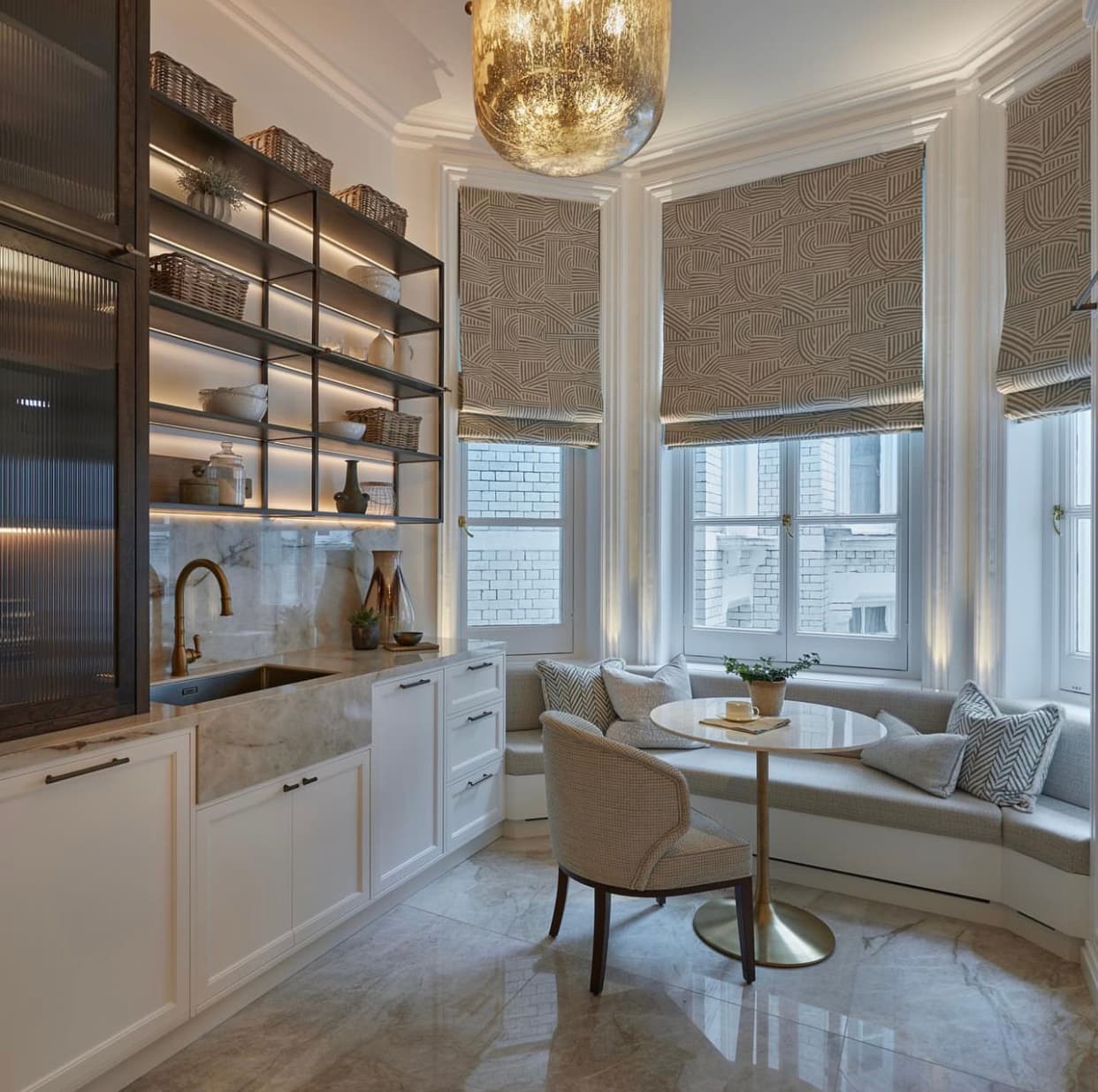
Banquette Seating Kitchen: The Art of Built-In Dining Done Properly
Explore how banquette seating transforms kitchen dining — from L-shaped corners and curved booths to storage-smart benches, upholstery choices, and dimensions that actually work. Inspiration for bespoke kitchens that invite you to sit down and stay.
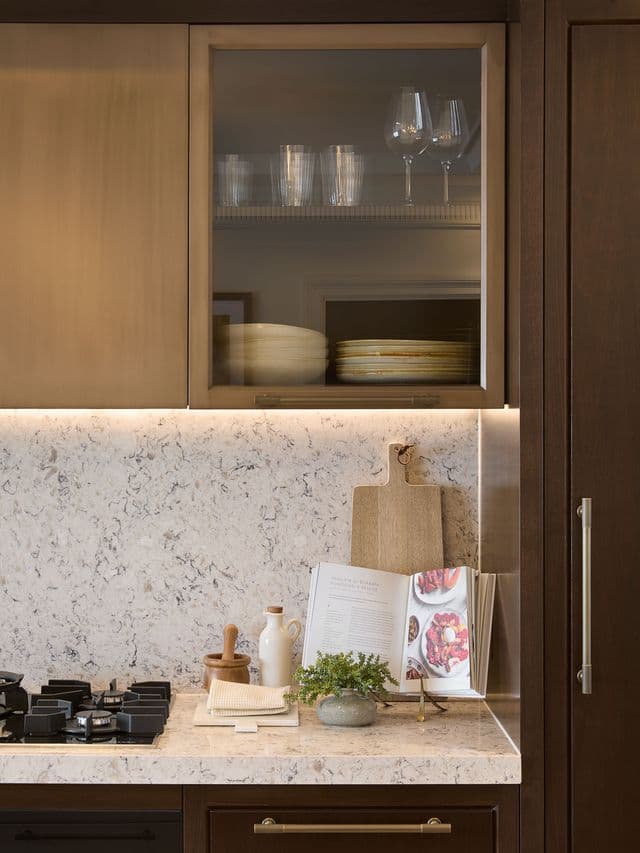
Arts and Crafts Kitchen Design: Where Handcraft Meets the Heart of the Home
Explore how the Arts and Crafts movement inspires truly bespoke kitchen design — from hand-forged ironmongery and English oak to William Morris colour palettes. A guide to creating kitchens that honour the handmade.
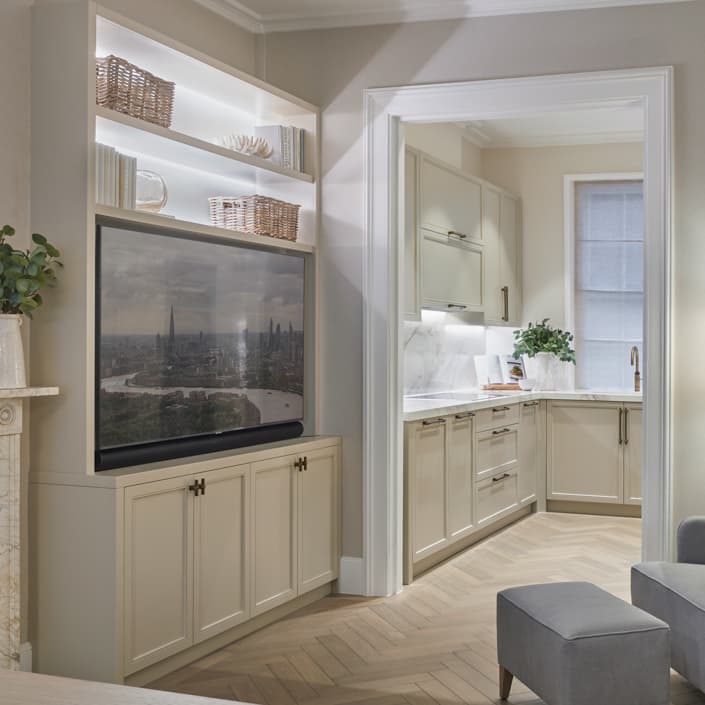
Barn Conversion Kitchen Design: Bespoke Kitchens for Extraordinary Spaces
Designing a kitchen for a barn conversion demands a bespoke approach. From double-height ceilings and exposed trusses to acoustic management and island design, discover how Albury House Kitchens creates luxury kitchens that honour agricultural architecture whilst delivering modern performance.