

Sustainable Luxury Kitchen Design: Why Bespoke Is the Greenest Choice You Can Make
Why a handmade bespoke kitchen is inherently more sustainable than its mass-produced alternatives. From FSC-certified timber and low-VOC finishes to the 'buy once' philosophy, we explore what genuine sustainability looks like in luxury kitchen design.
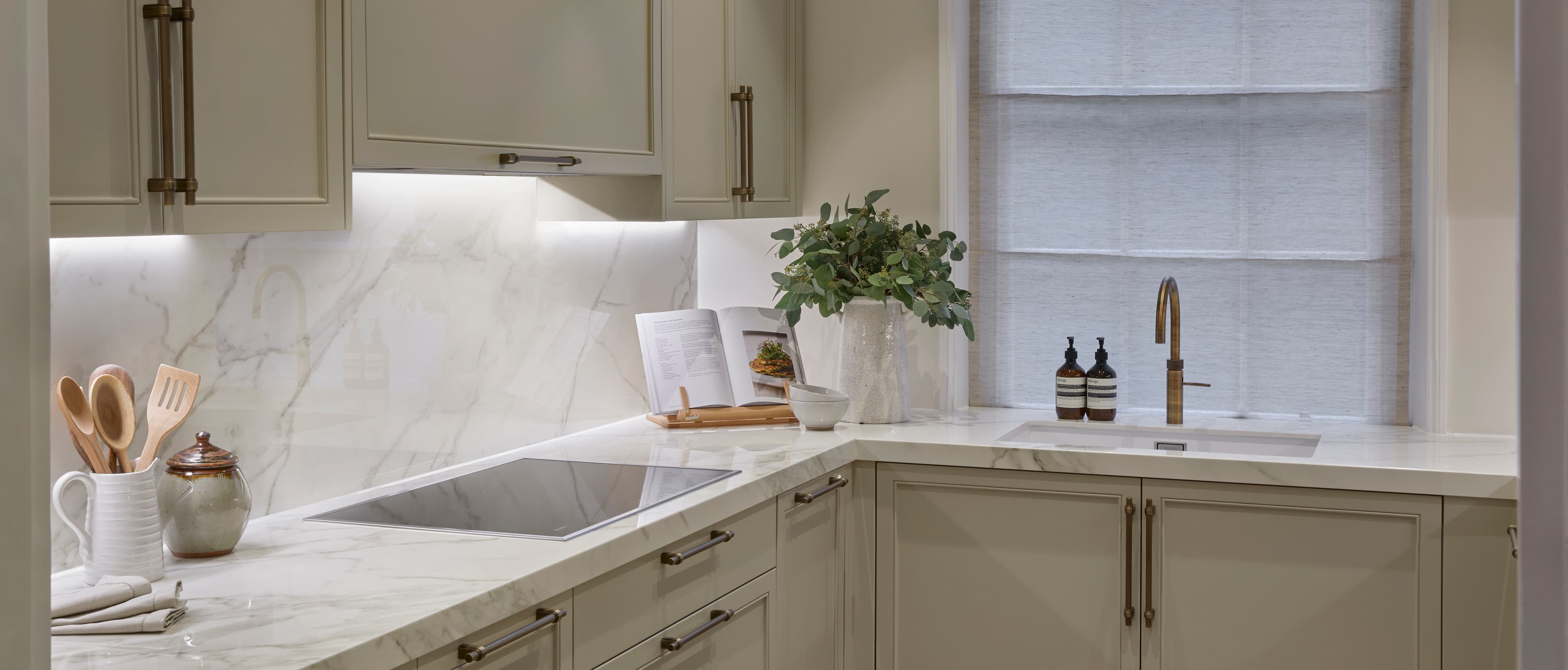
There is a certain irony in the way the kitchen industry talks about sustainability. Vast factories that stamp out tens of thousands of chipboard carcasses per week will tell you, with apparent sincerity, that their new range features an eco-friendly door finish. A multinational retailer will celebrate its carbon-neutral showroom whilst selling kitchens designed to be replaced every decade. The word 'sustainable' has been stretched so thin it barely means anything at all.
And yet sustainability genuinely matters — in kitchen design as much as anywhere else. The built environment accounts for roughly 40 per cent of the UK's carbon emissions, and the kitchens within those buildings consume more resources, more energy, and more raw materials than any other single room. If you're investing in a new kitchen, the environmental implications of your choices are real and worth understanding honestly.
Here's the thing that rarely gets said: a properly made bespoke kitchen is, by its very nature, one of the most sustainable choices you can make. Not because it carries a particular label or ticks a particular box, but because the way it's designed, built, and used addresses the root causes of waste that the mass-market kitchen industry has never had much incentive to solve.
The Sustainability Argument for Bespoke
The kitchen industry has a replacement problem. The average mass-produced fitted kitchen in Britain lasts somewhere between ten and fifteen years before it's torn out and sent to landfill. The carcasses are chipboard — essentially wood particles bound with formaldehyde resin — and once the surfaces delaminate or the hinges give way, there's very little to be done except start again. This is not a flaw in the system. It is the system. The business model depends on you coming back.
A bespoke kitchen built from solid hardwood or high-quality birch plywood, with proper joinery and well-made fittings, will last forty years, fifty years, or longer. We have seen kitchens from the mid-twentieth century — built by workshops not so different from ours — still in daily use, their frames as sound as the day they were fitted. The doors may have been repainted, the worktops replaced, the appliances updated. But the bones of the kitchen endure.
This is the most significant sustainability advantage of bespoke, and it's the one that requires no certification, no label, and no marketing. A kitchen that lasts three times as long as its alternative uses a third of the resources over its lifetime. That arithmetic is difficult to argue with.
Built to Repair, Not Replace
There's a second dimension to this longevity that matters enormously. A bespoke kitchen is built to be repaired.
A drawer front that suffers a knock can be stripped back and refinished. A hinge that wears after twenty years of service can be replaced without disturbing the cabinet. A worktop that develops a patina — or a stain that the client would rather not live with — can be resanded or honed. These are the routine acts of maintenance that keep a well-made kitchen in service across decades, and they're only possible because the kitchen was built from materials that respond to skilled hands.
Try doing that with a chipboard carcass wrapped in vinyl foil. When the foil lifts, the carcass beneath it has no second act. It goes in a skip.
Repairability is not a minor virtue. In an era when we're encouraged to think about the circular economy — designing products for longevity, maintenance, and eventual reuse — the bespoke kitchen has been practising these principles for centuries. It just hasn't felt the need to mention it.
No Waste from Standard Sizes
Every mass-produced kitchen involves compromise. Standard carcasses come in fixed increments — typically 100mm steps — and when those increments don't match the room, the gaps are filled with filler panels. Those filler panels are made from the same chipboard, wrapped in the same foil, and they serve no functional purpose whatsoever. They exist because the kitchen wasn't made for the room.
A bespoke kitchen has no filler panels. Every cabinet is built to the precise dimensions of the space, which means every millimetre of material serves a purpose. There's no offcut waste from squeezing standard modules into non-standard rooms. The material that enters the workshop leaves as kitchen. That's a better use of resources by any measure.
Sustainable Timber Sourcing
Timber is the foundation of any kitchen worth the name, and how that timber is sourced matters profoundly. The global hardwood trade has a complicated history, and not all of it is honourable. Illegal logging, habitat destruction, and unverifiable supply chains remain genuine problems in parts of the industry.
The answer is not to avoid timber — it remains one of the most sustainable building materials available when sourced responsibly, since trees absorb carbon as they grow and well-managed forests are replanted in perpetuity. The answer is to know exactly where your timber comes from.
FSC, PEFC, and What They Mean
The two certification schemes that matter internationally are FSC (Forest Stewardship Council) and PEFC (Programme for the Endorsement of Forest Certification). Both set rigorous standards for forest management: replanting, biodiversity protection, workers' rights, and community engagement. Timber bearing either certification has been independently audited from forest to workshop, with a documented chain of custody at every stage.
At Albury House, we source our hardwoods and plywood from FSC and PEFC-certified suppliers. This isn't something we've adopted recently to ride a trend. It's something we've done for years, because it's the right way to buy timber.
British-Grown Hardwoods
There's a further option that deserves more attention than it receives: British-grown timber. English oak, ash, sweet chestnut, and elm are all magnificent cabinet-making timbers, and using them reduces transport miles to a fraction of what imported hardwoods require. A kitchen built from oak felled in Essex and milled in Suffolk has a rather different carbon footprint to one built from timber shipped from North America or Southeast Asia.
The Grown in Britain certification scheme identifies timber sourced from sustainably managed British woodlands, and we use it wherever the design and species requirements allow. There's something quietly satisfying about a kitchen whose principal material grew within an hour's drive of the workshop that shaped it.
Low-VOC Finishes and Paints
The finish on your kitchen cabinets matters for more than just aesthetics. Conventional solvent-based lacquers and paints release volatile organic compounds — VOCs — that contribute to indoor air pollution and can irritate the respiratory system. In a room where you prepare food and spend significant portions of your day, that's worth taking seriously.
The industry has made real progress here. Water-based paints and lacquers have improved enormously over the past decade, and the best modern formulations offer durability and depth of finish that rivals their solvent-based predecessors. Low-VOC and zero-VOC paints are now available in the full spectrum of colours and sheens, and we've adopted them as our standard specification.
Natural oil finishes — linseed, tung, hardwax — offer another route for clients who prefer an open-grain, tactile surface on their timber. These finishes contain no synthetic chemicals at all, they're pleasant to apply, and they can be refreshed by the homeowner with nothing more than a cloth and a tin of oil. For solid wood kitchen cabinets in a more relaxed, country-kitchen idiom, they're difficult to beat.
The point is not that every finish must be entirely natural — sometimes a hard lacquer is the right answer for durability and maintenance. The point is that you should know what's being applied to your kitchen and what it releases into the air you breathe.
Natural Stone Versus Engineered Materials
The worktop question is one where sustainability gets genuinely complicated, and where honest answers are more useful than comfortable ones.
Natural stone — granite, marble, quartzite — is a finite resource extracted from the earth. There's no getting around that. Quarrying has environmental impacts: energy consumption, habitat disturbance, transport weight. But natural stone is also extraordinarily durable. A granite worktop will outlast the building it sits in. It requires no petrochemical binders, no polymer resins, and at the end of its life it can be recut, repurposed, or returned to the ground as inert aggregate.
Engineered quartz surfaces — the ubiquitous 'quartz worktops' — are roughly 90 per cent ground quartz bound with polymer resins. They're consistent, hard-wearing, and available in an extraordinary range of colours and patterns. But the manufacture is energy-intensive, the resin content complicates recycling, and when an engineered worktop reaches the end of its life, it cannot biodegrade.
Ultra-compact porcelain (Dekton, Neolith, and similar) is fired at temperatures exceeding 1,200 degrees Celsius. The raw materials are natural, but the energy required to produce them is substantial.
None of these is a perfect choice. But the sustainability calculation isn't just about manufacture — it's about lifespan. A natural stone worktop that serves a kitchen for half a century has a lower lifetime environmental impact per year than an engineered surface replaced every fifteen. Durability is its own form of sustainability.
Energy-Efficient Appliances
No discussion of sustainable kitchen design is complete without addressing the machines within it. Appliances account for a significant share of a kitchen's lifetime energy consumption, and the differences between efficient and inefficient models are not trivial.
The good news is that the luxury appliance market has moved decisively towards efficiency. Induction hobs use roughly half the energy of gas equivalents. Modern combi-steam ovens cook faster and at lower temperatures. A-rated refrigeration now maintains temperature with a fraction of the energy required a decade ago.
When we specify appliances for a project, energy performance is a core consideration alongside functionality and aesthetics. It would be rather odd to build a kitchen from sustainably sourced timber and then fill it with appliances that waste electricity. Brands such as Gaggenau, Miele, and Bora have made genuine engineering commitments to efficiency, and their products reflect it.
Reducing Waste in Manufacture
The workshop itself matters. A bespoke maker has fundamentally different waste characteristics to a factory producing thousands of identical units.
Our timber offcuts find second lives. Shorter lengths become drawer components or shelf supports. Shavings and sawdust go to local biomass or are collected for animal bedding. Paint and lacquer waste is disposed of through licensed specialist channels. Packaging — always a quietly enormous source of waste in the fitted kitchen world — is minimal when you're delivering a kitchen in your own vehicles to a site twenty miles away rather than shipping flat-pack boxes across the country.
This isn't a grand environmental programme. It's simply what happens when a small workshop pays attention to what it uses and where the rest goes. The contrast with factory production — where waste is an accepted percentage of throughput, calculated into the unit cost and quietly sent to landfill — is considerable.
The Buy Once Philosophy
There's a phrase we come back to often in conversations with clients: buy once. It applies to kitchens more than almost any other purchase in a home.
The mathematics are straightforward. A mass-produced fitted kitchen costing £15,000, replaced every twelve years, will cost £45,000 over a thirty-six-year period — plus three rounds of disruption, three skips of waste, and three sets of installation costs. A bespoke kitchen costing £60,000, built to last those same thirty-six years with periodic maintenance, costs less in total and produces a fraction of the waste.
This isn't an argument against affordability. Not everyone can invest in a bespoke kitchen, and there are good fitted kitchens that serve their owners well. But for those who can and are weighing the value of the investment, the sustainability case reinforces the financial one. What makes a bespoke kitchen worth the investment is not just the quality of daily experience — it's the intelligence of not paying three times for something you could have bought once.
Local Sourcing and Reduced Transport
The environmental cost of moving things around is easy to overlook and surprisingly significant. A kitchen manufactured in a factory in Germany or Italy, shipped to a UK distribution centre, delivered to a regional depot, and finally transported to your home has accumulated a considerable carbon footprint before a single screw is driven.
A kitchen made in a workshop along the M11 corridor and delivered directly to a home in Essex, Hertfordshire, or Cambridgeshire has a rather different profile. Our timber comes predominantly from British and European suppliers. Our ironmongery is sourced from established European manufacturers with transparent supply chains. Our paint is mixed in England. The finished kitchen travels, at most, an hour or two in our own van.
This is one of the quieter advantages of choosing a local bespoke kitchen maker. The supply chain is short, visible, and accountable. You can visit the workshop, meet the people building your kitchen, and see exactly where and how it's being made. That transparency is a form of sustainability in itself.
The Circular Economy: Refurbish, Don't Replace
The concept of the circular economy — designing products to be maintained, repaired, and eventually repurposed rather than discarded — has gained considerable traction in recent years. It's worth noting that bespoke kitchen makers have been doing this since long before anyone coined the phrase.
A well-built bespoke kitchen can be refurbished rather than replaced. Doors can be stripped and repainted in a new colour when tastes change. Drawers can be relined. Hardware can be updated. A kitchen that began life as a hand-painted Shaker in Farrow & Ball's Pavilion Gray can emerge, twenty years later, as a deep sage green with brass hardware and a new stone worktop — at a fraction of the cost and environmental impact of a full replacement.
Even at the end of its practical life in one home, a bespoke kitchen has residual value. Solid hardwood cabinetry can be salvaged, repurposed, or recycled. Natural stone worktops can be recut for a different application. These are materials with genuine second lives — unlike chipboard and vinyl, which have no next chapter.
As the conversation around kitchen design trends in 2026 increasingly acknowledges, the most forward-thinking design isn't about novelty. It's about resilience.
Greenwashing: What to Watch For
We would be doing you a disservice if we didn't address this directly. The sustainability conversation in the kitchen industry contains a good deal of noise, and not all of it is honest.
Be cautious of claims that sound impressive but lack specificity. 'Eco-friendly materials' could mean almost anything. 'Sustainably sourced timber' without a named certification is a statement of aspiration, not fact. 'Carbon-neutral delivery' is admirable but rather misses the point if the kitchen itself is chipboard destined for landfill in twelve years.
The things worth asking are concrete. Where is the timber from, and is it FSC or PEFC certified? What are the carcasses made of — solid wood, plywood, or chipboard? What paint system do you use, and what are its VOC levels? How do you manage waste in your workshop? How long, realistically, will this kitchen last?
A maker who can answer these questions with specifics is one whose sustainability credentials are grounded in practice. One who deflects into generalities — 'we're committed to the environment' — may well mean it, but meaning it and demonstrating it are different things entirely.
Certifications That Actually Matter
For clients who want to make informed choices, the following certifications are independently audited and genuinely meaningful:
FSC (Forest Stewardship Council) — The international gold standard for responsible forest management. Covers environmental, social, and economic criteria. Chain-of-custody certification tracks timber from forest to finished product.
PEFC (Programme for the Endorsement of Forest Certification) — The world's largest forest certification system, particularly strong in European forestry. Equally rigorous, with a focus on small and family-owned forest operations.
Grown in Britain — Certifies timber sourced from sustainably managed British woodlands. Supports local forestry, reduces transport emissions, and promotes woodland biodiversity.
ISO 14001 — An international standard for environmental management systems. Confirms that a business has documented processes for managing its environmental impact, waste, and resource use. Not specific to kitchens, but meaningful when held by a manufacturer.
EU Ecolabel / Nordic Swan — Relevant for paints, finishes, and some building materials. Confirms low environmental impact across the product lifecycle.
These are the marks that mean something. If a kitchen company claims sustainability but holds none of them, it's worth asking why.
Making the Choice
Sustainable luxury kitchen design is not a contradiction in terms. In fact, there may be no better example of how quality and sustainability align. The same principles that make a bespoke kitchen beautiful — honest materials, expert craftsmanship, meticulous attention to detail — are precisely the principles that make it last. And lasting is the most sustainable thing any object can do.
If you're considering a kitchen that will serve your home for decades, that uses materials you can trust, and that reflects a thoughtful approach to how things are made and where they come from, we'd welcome the conversation. You can get in touch with our design team to discuss your project, or explore more of our thinking on the return of real wood in kitchen design.
The greenest kitchen, it turns out, is simply a very good one.
Frequently Asked Questions
Thinking about a new kitchen?
Book Your Free ConsultationYou might also enjoy
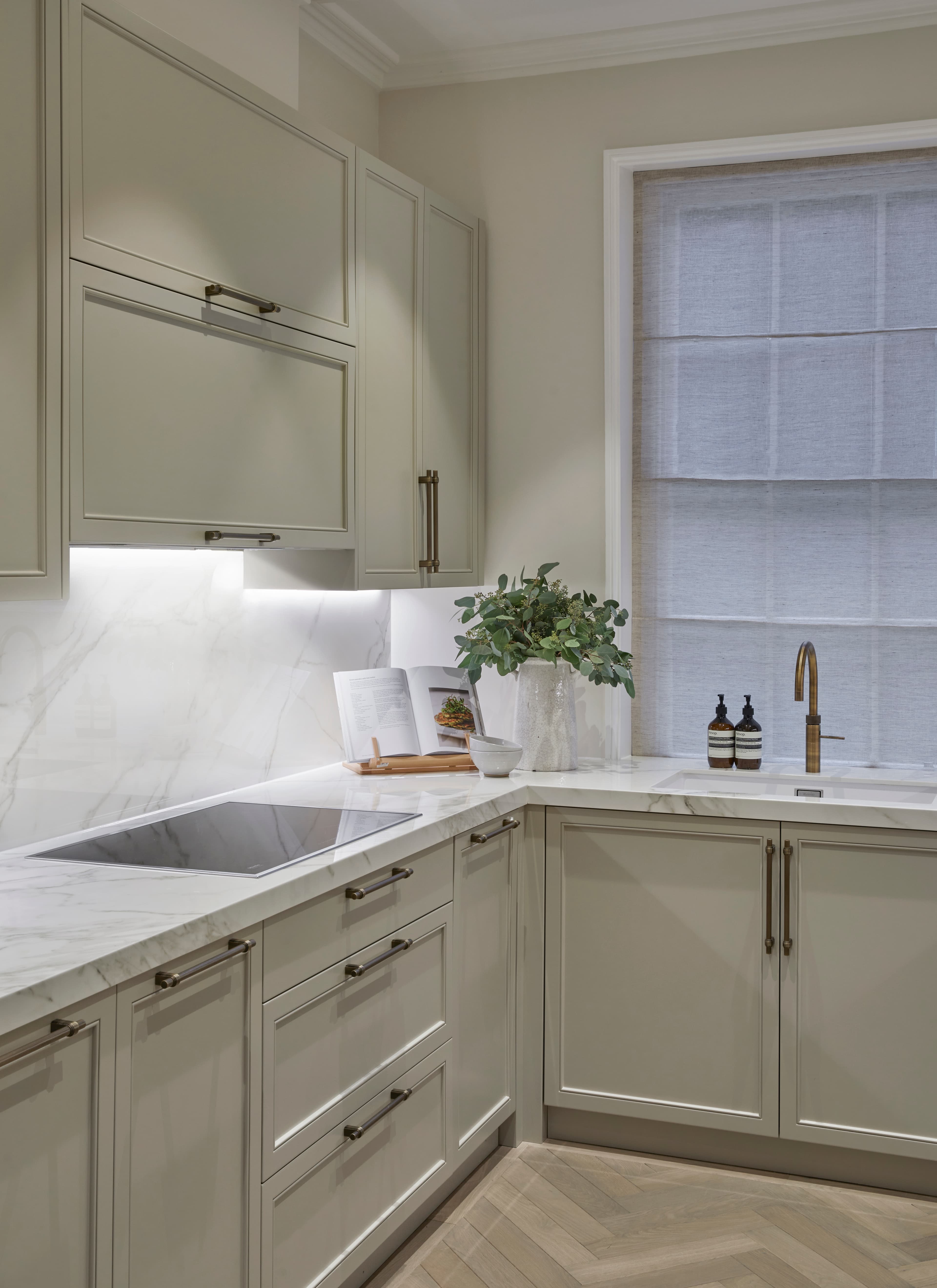
Earthy Kitchen Colours 2026: The Palette Shift Every Luxury Kitchen Needs
Why cool greys are fading and earthy, saturated kitchen colours are defining 2026. From sage green and terracotta to deep plum and burnt umber — how to choose, test, and live with the new warm palette in a bespoke kitchen.
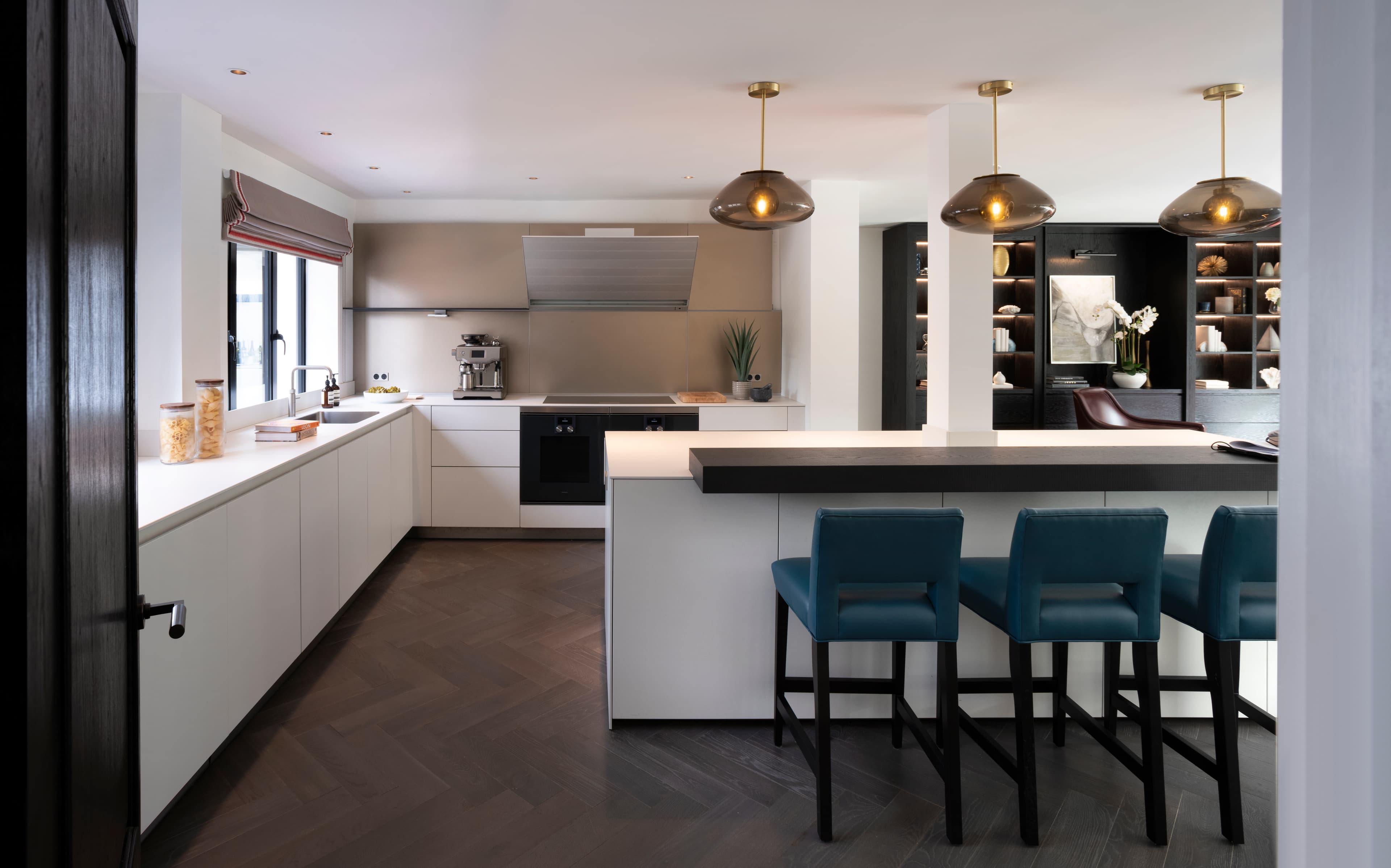
Kitchen Design Trends 2026: The Definitive Guide to What's Shaping Luxury Kitchens This Year
The 10 kitchen design trends defining 2026 — from the return of real wood and earthy colour palettes to sculptural islands, hidden sculleries, and the quiet triumph of handcraft over mass production. An authoritative guide from Albury House Kitchens.
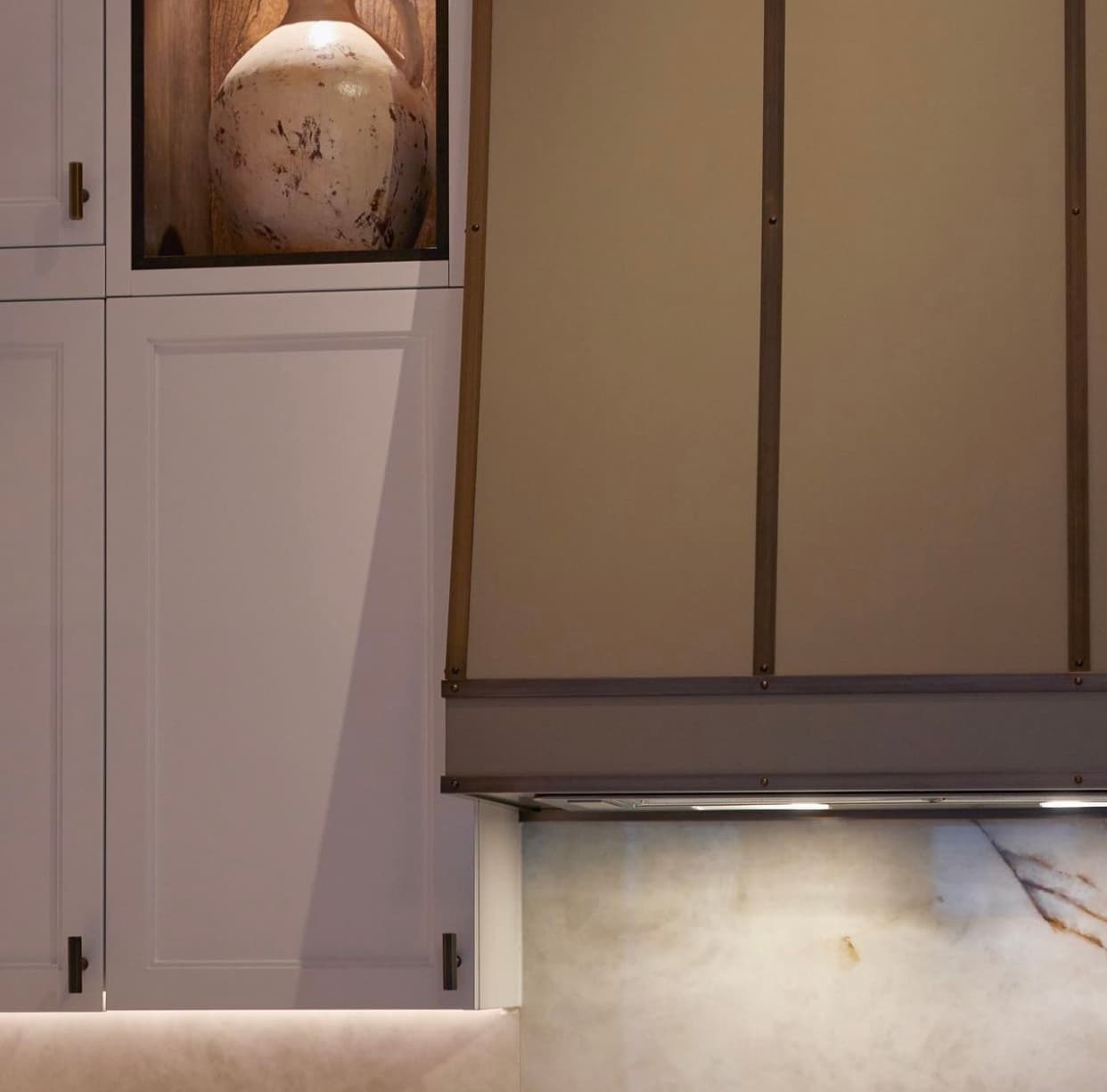
Matte Kitchen Finishes: Why the Quiet Surfaces Are Having Their Moment
The definitive guide to matte finishes in luxury kitchen design — from matt lacquer cabinetry and honed stone worktops to brushed brass hardware and limewash paint. How to use texture, sheen, and restraint to create a kitchen that feels as good as it looks.