

Natural Stone Kitchen Worktops: The Definitive UK Guide
Everything you need to know about natural stone kitchen worktops in the UK — marble, granite, quartzite, slate, and limestone. Honest guidance on selection, maintenance, finishes, and living with real stone from the craftspeople who work with it daily.
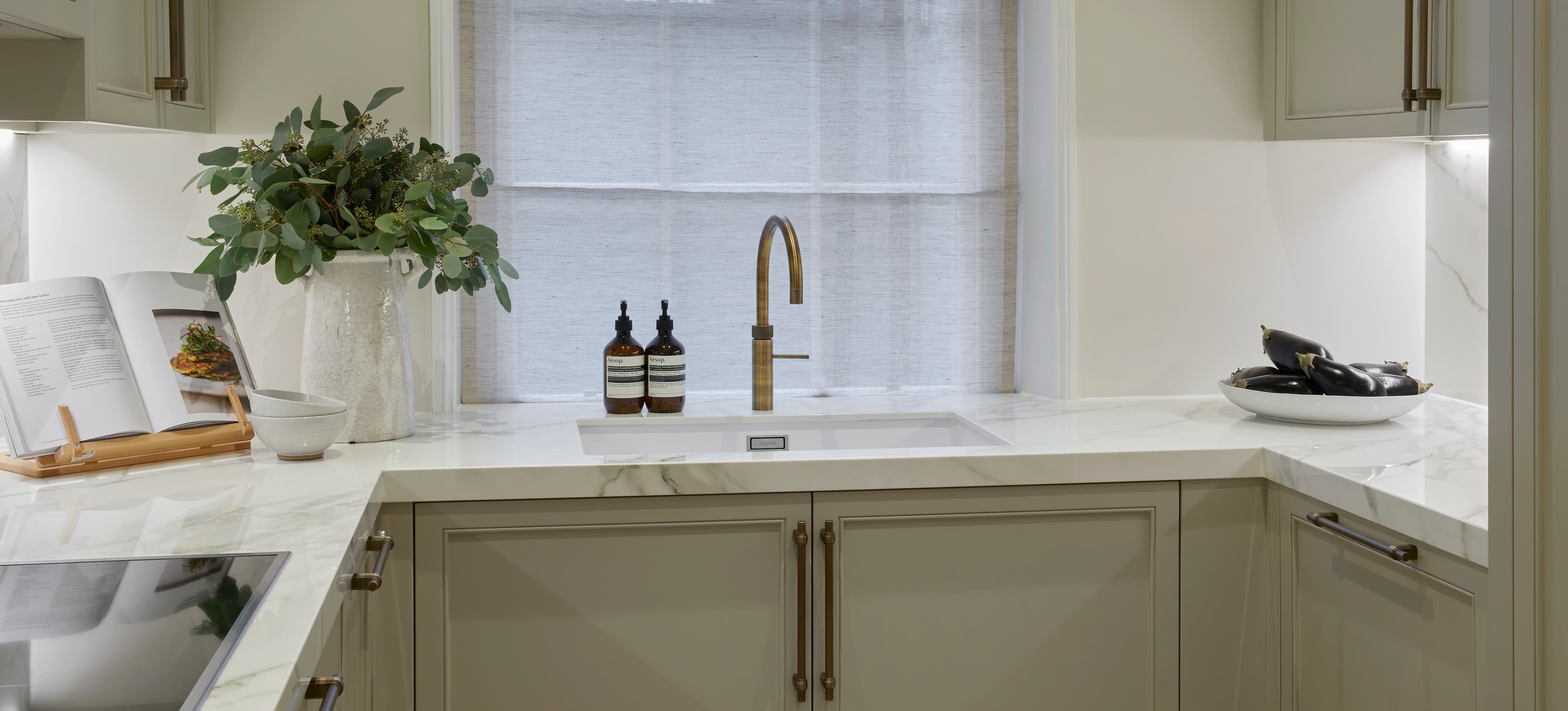
There is something about placing your hand on a slab of natural stone that no engineered material has ever quite managed to replicate. A coolness. A weight. A sense that this surface was formed over millions of years, deep inside the earth, and has arrived in your kitchen with a character entirely its own.
Natural stone kitchen worktops remain, for many homeowners, the pinnacle of what a kitchen surface can be. Not because they are the most practical — they aren't, and anyone who tells you otherwise is selling something. But because they offer a quality of beauty, depth, and individuality that manufactured alternatives, however clever, simply cannot match.
At Albury House Kitchens, we work with natural stone daily. We have fitted Carrara marble in Georgian townhouses and quartzite in contemporary barn conversions. We have seen clients fall in love with a single slab and design their entire kitchen around it. We have also talked clients out of stone when it wasn't right for them, because the honest answer is sometimes the uncomfortable one.
This guide covers everything you need to know about natural stone kitchen worktops in the UK: what each stone offers, how it behaves, what it costs, and — perhaps most importantly — what it is actually like to live with day after day.
Marble: The Stone That Needs No Introduction
Marble is the stone against which all others are measured. It is soft, porous, prone to etching, impractical by almost every objective standard — and yet it remains the most coveted worktop material in luxury kitchen design. There is a reason for that, and the reason is beauty.
Marble is a metamorphic limestone, recrystallised under heat and pressure to produce the translucent, veined surface that has captivated builders, sculptors, and kitchen designers for millennia. The three Italian marbles dominate the market, though they are far from the only options.
Carrara
Quarried from the Apuan Alps in Tuscany — the same quarries that supplied Michelangelo — Carrara is the most widely available and affordable of the premium Italian marbles. It is characterised by soft, feathery grey veining on a white to blue-grey ground. The veining is typically subtle and evenly distributed, which makes it forgiving in larger layouts where slab joins are inevitable.
Carrara is the workhorse of the marble world, and we mean that as a compliment. It is consistent, elegant, and versatile enough to suit everything from a traditional country kitchen to a pared-back contemporary scheme. If you are considering marble for the first time, Carrara is an excellent place to begin.
Calacatta
Rarer, bolder, and significantly more expensive than Carrara. Calacatta is quarried from the same region but in far smaller quantities, and the visual difference is immediately apparent. Where Carrara whispers, Calacatta makes a statement: dramatic, sweeping veins in gold, warm grey, or occasionally green, set against a brighter, cleaner white ground.
No two Calacatta slabs are remotely alike. Selecting one is closer to choosing a work of art than specifying a building material — which is precisely why we always recommend visiting the stone yard in person. Photographs do not do it justice, and the slab that looks perfect on a screen may be entirely wrong once you see it at full scale.
Statuario
The rarest of the three and the most prized. Statuario has an almost ethereal quality: a luminous, bright white ground with crisp, clearly defined grey veining that tends to be bolder and more architectural than Carrara. It has a clarity and purity that is genuinely breathtaking in the right setting.
Statuario is also the most expensive and the most difficult to source in consistent quality. If your heart is set on it, expect to wait, and expect to pay accordingly. But if the budget allows, there is nothing quite like it.
Appearance: Unrivalled depth and translucency. Every slab is unique. The veining tells a geological story millions of years in the making.
Durability: Marble is relatively soft (3 on the Mohs scale) and porous. It will scratch, etch from acidic substances, and can stain if spills are neglected. It is not the stone for someone who wants a pristine, unmarked surface.
Maintenance: Seal with a quality impregnating sealer at least once a year — twice if the kitchen sees heavy use. Clean with a pH-neutral stone cleaner. Wipe acidic spills promptly. Accept that the surface will change over time.
Price range: £5,000–£25,000+ depending on variety, slab quality, and layout complexity. Carrara sits at the lower end; Statuario and rare Calacatta at the top.
Best suited to: Traditional, transitional, and refined contemporary kitchens where the worktop is the focal point. Especially effective in bespoke kitchen designs where understated cabinetry allows the stone to do the talking.
Granite: The Quiet Powerhouse
Granite has been somewhat unfairly treated in recent years. Its overwhelming popularity in the 1990s and 2000s — the era of the ubiquitous black granite island — left it carrying a faint whiff of the commonplace. This is a disservice to what remains an outstanding natural stone.
Granite is an igneous rock, formed from cooled magma, and it is extraordinarily hard — 6 to 7 on the Mohs scale, compared to marble's 3. It is virtually impervious to scratching, shrugs off heat that would crack other surfaces, and comes in a range of colours and patterns that extends far beyond the familiar blacks and beiges.
The key, as with so much in kitchen design, is selection. The commodity granites that populate every budget kitchen showroom are perfectly serviceable but unremarkable. The more interesting varieties — Patagonia with its swirling movement, Blue Bahia with its iridescent feldspars, Titanium with its vast, dramatic sweeps — are as visually exciting as any natural stone on the market.
Appearance: Enormously varied. From tight, uniform speckling to bold, sweeping figuring. Colours range from pure black through grey, blue, green, brown, red, and white. The more dramatic varieties rival marble for visual impact.
Durability: Exceptional. Granite is one of the hardest natural stones available for worktop use. It resists scratches, tolerates heat from pans, and stands up to the rigours of a busy kitchen without complaint.
Maintenance: Seal every one to two years with an impregnating sealer. Clean with a pH-neutral cleaner. Granite is forgiving, but sharp impacts can chip exposed edges — handle your Le Creuset with a degree of care.
Price range: £4,000–£15,000+ depending on variety, rarity, and layout. Standard granites are among the more affordable natural stone options; rare figured varieties command premium prices.
Best suited to: Kitchens that need to work hard every day. Family kitchens where durability is non-negotiable. Contemporary and industrial-leaning schemes where a bold, figured granite can serve as a dramatic counterpoint to sleek cabinetry.
Quartzite: The Natural Alternative to Engineered Quartz
If there is a stone that deserves more attention than it currently receives, it is quartzite. Despite the confusingly similar name, quartzite and engineered quartz are entirely different materials. Quartzite is a natural metamorphic rock — sandstone that has been subjected to intense heat and pressure until its quartz grains recrystallise into an interlocking mosaic of extraordinary hardness.
The result is a stone that combines the visual drama of marble with durability that exceeds granite. Quartzite typically registers 7 on the Mohs scale, making it one of the hardest natural stones available. It offers the veining, movement, and translucency that people love about marble, with a resilience that marble simply cannot match.
Popular varieties include Taj Mahal (a warm, golden-veined cream), Sea Pearl (a soft grey with gentle movement), and Super White (which, despite the name, is a quartzite rather than a marble, and causes no end of confusion in stone yards). Exotic quartzites such as Cristallo and Azul Macaubas can be genuinely show-stopping.
Appearance: Ranges from subtle and refined to breathtakingly dramatic. Many quartzites have a translucent quality when backlit. Veining tends to be organic and flowing, often comparable to the finest marbles.
Durability: Outstanding. Harder than granite, highly scratch-resistant, and less porous than marble. Quartzite does not etch from acids in the way that marble does, though it is not entirely immune — some varieties are more porous than others.
Maintenance: Seal annually. Clean with a pH-neutral stone cleaner. Quartzite is less demanding than marble but still benefits from prompt attention to spills, particularly on lighter-coloured varieties.
Price range: £6,000–£20,000+ depending on variety and availability. Premium quartzites are comparable in cost to fine marbles, reflecting both their beauty and the difficulty of working with such a hard material.
Best suited to: Clients who want the visual impact of marble with greater peace of mind. Contemporary and transitional kitchens. Open-plan living spaces where the kitchen worktop is always on display.
Slate: The Understated Alternative
Slate is something of an unsung hero among natural stones. It is quiet, textural, and deeply characterful — qualities that make it a superb choice for certain kitchen styles, even if it will never generate the breathless excitement that marble does.
As a fine-grained metamorphic rock, slate has a natural cleft texture that can be left riven for a rustic appearance or honed to a smooth, matte finish. It is most commonly found in deep charcoal, black, and dark grey, though green and purple varieties exist for those seeking something less conventional.
Slate is less porous than marble and naturally resistant to staining, though it is softer than granite and can scratch. The scratches, however, tend to blend into the stone's natural texture rather than standing out — a quality that makes slate one of the more forgiving stones to live with.
Appearance: Subtly textured and richly tonal. The natural cleft surface has a tactile, organic quality. Honed slate has a soft, chalky elegance that pairs beautifully with timber and painted cabinetry.
Durability: Good. Harder than marble and limestone, though softer than granite and quartzite. Naturally resistant to water and staining. Can scratch, but marks are less visible than on polished surfaces.
Maintenance: Seal periodically — slate is less porous than marble, so annual sealing is usually sufficient. Some owners prefer to oil their slate worktops to enrich the colour, though this is a matter of taste rather than necessity.
Price range: £3,000–£8,000 for a typical kitchen layout, making it one of the more accessible natural stone options.
Best suited to: Country kitchens, farmhouse schemes, and understated contemporary designs. Particularly effective alongside timber cabinetry, Aga cookers, and the kind of heritage kitchen design that values character over flash.
Limestone: Warmth in Stone
Limestone is the gentle cousin of the natural stone family. Where granite is uncompromisingly hard and marble gloriously dramatic, limestone is warm, soft, and quietly elegant. It has a muted, chalky appearance with subtle fossil inclusions and a tactile quality that makes it one of the most pleasant stones to touch.
The colour palette leans towards creams, buffs, taupes, and soft greys — warmer and earthier than marble. Popular varieties include Jura (a fossil-rich German limestone), Moleanos (a Portuguese cream), and the various English limestones that carry a particular resonance for heritage properties.
Limestone is, however, the most demanding of the common worktop stones. It is soft, porous, and highly susceptible to etching from acids. It stains more readily than marble and requires diligent sealing and care. For the right client in the right kitchen, it is magnificent. For a busy family kitchen where red wine is poured with abandon, it may not be the wisest choice.
Appearance: Warm, organic, and understated. Subtle fossil patterns and gentle tonal variation. The antithesis of anything showy.
Durability: The softest and most porous of the stones covered here. Susceptible to scratching, staining, and etching. Not suitable for high-traffic areas unless you are genuinely comfortable with patina.
Maintenance: Seal at least twice a year with a high-quality impregnating sealer. Clean with a pH-neutral stone cleaner and avoid all acidic products. Limestone requires the most attentive care of any kitchen stone.
Price range: £4,500–£12,000 depending on variety, origin, and layout.
Best suited to: Period properties, country houses, and designs where warmth and softness are paramount. Pairs beautifully with hand-painted cabinetry, brushed brass hardware, and the quiet luxury of a kitchen that does not need to shout.
Selecting Your Slab: Visit the Yard
This cannot be overstated: always, without exception, visit the stone yard to select your slab in person. Natural stone is, by definition, natural — every slab is different, and the variation can be significant even within the same block.
Photographs are unreliable. Screens distort colour. Small samples give you no sense of how the veining will flow across a three-metre island. The only way to choose a slab with confidence is to see it at full scale, ideally standing upright and wet (stone yards will typically pour water on a slab to simulate how it will look when sealed).
At Albury House Kitchens, we accompany our clients to the stone yard as a matter of course. It is one of the most enjoyable parts of the design process — and one of the most important. The slab you choose will define the character of your kitchen for decades. It deserves more than a casual glance at a thumbnail image.
Honed vs Polished Finishes
The finish you choose affects not only the appearance of your stone but also how it behaves in daily use.
Polished is the high-gloss, mirror-like finish that most people associate with marble. It brings out the maximum depth and colour of the stone, creating a luminous, reflective surface. It is undeniably beautiful — but it shows every fingerprint, watermark, and etch. On marble, where etching is inevitable, a polished finish essentially advertises every encounter with a lemon.
Honed is a smooth, matte finish with no reflective sheen. It has a softer, more tactile quality that many people find more inviting to touch. Crucially, honed surfaces disguise etching and everyday wear far more effectively than polished ones. A honed marble worktop will develop a gentle patina over time rather than a collection of conspicuous marks.
For marble in particular, we generally recommend a honed finish. The stone remains beautiful — arguably more beautiful, in a quiet, understated way — and the practical benefits in a working kitchen are considerable. Polished finishes come into their own on harder stones like granite and quartzite, where etching is not a concern.
There are also intermediate options: leathered (or antiqued) finishes, which add a subtle texture to the stone's surface, closing the pores slightly and giving the stone a soft, dimpled feel. Leathered granite, in particular, is superb — it hides fingerprints, adds visual interest, and feels wonderful under the hand.
Edge Profiles and Thickness
The edge of your worktop is the detail you see most often and touch most frequently. It deserves proper consideration.
Common edge profiles for natural stone include:
- Square (eased) — clean, minimal, contemporary. The edges are softened just enough to remove sharpness. The default choice for modern kitchens and the profile that allows the stone to speak for itself.
- Pencil round — a gentle rounding that softens the edge without adding ornamentation. Versatile and elegant. Works well in both traditional and contemporary schemes.
- Bullnose — a fully rounded edge, half-circle in profile. Traditional and forgiving — less likely to chip than square edges and comfortable to lean against.
- Ogee — an S-curve profile with classical proportions. Suits traditional and period kitchens. Adds visual richness but can feel fussy in a contemporary setting.
- Mitred — the edge is cut at 45 degrees and joined to create the appearance of a much thicker slab. Essential for waterfall ends and increasingly popular for island edges where a substantial look is desired.
Thickness: 20mm vs 30mm
Natural stone worktops are most commonly available in 20mm and 30mm thicknesses. The choice is partly structural, partly aesthetic.
20mm is lighter, less expensive, and perfectly adequate for most kitchen layouts. It requires robust support (typically a plywood sub-frame) and can look slightly thin on a large island if not detailed carefully. A mitred edge can give 20mm stone the appearance of 40mm or more.
30mm is the heavier, more substantial option. It has a visual weight and presence that 20mm cannot match, particularly on islands and cantilevered breakfast bars where the edge is fully exposed. It is also more forgiving structurally — it can span greater distances without support. The additional material cost is significant, but the visual payoff is considerable.
For most of our projects, we specify 30mm for islands and prominent runs, and 20mm (often with a mitred edge) for subsidiary worktops where the full thickness is not visible.
Sealing and Ongoing Care
All natural stone is porous to some degree, and all natural stone benefits from sealing. The process is neither complicated nor especially time-consuming, but it is important.
Impregnating sealers are the standard for kitchen worktops. They penetrate below the surface of the stone, filling the pores with a resin that repels water and oil without altering the stone's appearance. A properly sealed stone worktop will bead water rather than absorbing it.
Sealing frequency depends on the stone and the level of use:
- Granite and quartzite: Once a year, or every 18 months for harder varieties.
- Marble: Once or twice a year, depending on use. High-traffic areas may benefit from more frequent treatment.
- Limestone: At least twice a year. Limestone is the most porous of the common kitchen stones and requires the most diligent sealing regime.
- Slate: Once a year is usually sufficient. Slate is naturally less porous than marble and limestone.
Daily care is straightforward: wipe surfaces with a soft cloth and a pH-neutral stone cleaner. Avoid acidic cleaning products, bleach, and anything abrasive. Treat your stone as you would treat a good piece of furniture — with respect, but without anxiety.
The Patina Debate: Living With Natural Stone
This is the conversation that matters most, and it is the one that most worktop guides skip. Natural stone changes. It develops marks, scratches, etches, and stains. Over time, a marble worktop will look different from the day it was installed. The question is not whether this will happen — it will — but how you feel about it.
For some homeowners, this is part of the appeal. A marble worktop that has been cooked on, leaned against, and lived with for a decade has a depth of character that no new surface can possess. The small etches from lemon preparation, the faint ring from a wine glass, the subtle softening of the polish where hands have rested — these are not blemishes but evidence of a life well lived.
For others, the idea of marks on an expensive surface is genuinely distressing. If you know — honestly know — that a stain on your worktop will keep you awake at night, natural stone may not be right for you. And there is absolutely no shame in that. Engineered alternatives have reached a point where they offer remarkable beauty with virtually zero maintenance, and we discuss these at length in our complete worktop materials guide.
The key is honesty — with yourself, and with your kitchen designer. At Albury House Kitchens, we have this conversation early and without judgment. A kitchen should bring you joy, not anxiety. The right material is the one that matches both your aesthetic aspirations and your temperament.
Waterfall Edges
A waterfall edge is a continuous run of stone that flows over the end of a cabinet or island, dropping vertically to the floor. The veining of the worktop continues unbroken down the side, creating a seamless, monolithic effect.
It is one of the most striking details in contemporary kitchen design, and it is also one of the most technically demanding. The mitre joint where the horizontal and vertical slabs meet must be cut with precision — any misalignment in the veining is immediately visible and almost impossible to correct.
Waterfall edges work best with dramatically veined stones — a bold Calacatta marble or a figured quartzite — where the continuation of the pattern creates genuine visual impact. On a uniform, tight-grained granite, the effect is less dramatic and the investment harder to justify.
The cost implication is considerable: a waterfall end typically requires an additional full slab (or the better part of one), plus specialist fabrication. But in the right kitchen, it is extraordinary.
Book-Matching
Book-matching is the practice of opening two adjacent slabs from the same block like the pages of a book, so that the veining mirrors itself across the join. The effect is symmetrical, dramatic, and — when done well — genuinely breathtaking.
It is most commonly used on islands, where two slabs sit side by side, and on splashbacks, where the worktop veining continues up the wall in a mirror image. Book-matching requires careful slab selection, precise cutting, and expert fabrication. It is not inexpensive, but it transforms a worktop from a surface into a centrepiece.
Not every stone lends itself to book-matching. The technique works best with boldly veined marbles and quartzites, where the symmetry creates an obvious and satisfying pattern. Subtle, evenly veined stones gain less from the treatment.
Natural Stone Worktops at a Glance
| Marble | Granite | Quartzite | Slate | Limestone | |
|---|---|---|---|---|---|
| Hardness (Mohs) | 3 | 6–7 | 7 | 3–4 | 3 |
| Heat resistance | Moderate | Excellent | Excellent | Good | Moderate |
| Scratch resistance | Low | High | Very high | Moderate | Low |
| Porosity | High | Low–moderate | Low–moderate | Low | High |
| Etching risk | High | Very low | Low | Low | High |
| Sealing frequency | 1–2x yearly | Yearly | Yearly | Yearly | 2x yearly |
| Typical cost (kitchen) | £5k–£25k+ | £4k–£15k+ | £6k–£20k+ | £3k–£8k | £4.5k–£12k |
| Maintenance level | High | Low–moderate | Moderate | Low–moderate | High |
| Best for | Focal points, pastry areas | Everyday durability | Drama with resilience | Country character | Period warmth |
Choosing the Right Stone for Your Kitchen
If you have read this far, you will have gathered that choosing a natural stone worktop is not simply a matter of picking the one that looks nicest in a photograph. It is a decision that involves aesthetics, practicality, temperament, and budget — and the right answer is different for every household.
A few guiding principles:
If durability is your priority, granite and quartzite are your friends. Both are hard, forgiving, and will shrug off the demands of a busy kitchen without complaint.
If beauty is your priority and you accept the care involved, marble — particularly Carrara or Calacatta — will give you something that no other surface can match. Just be honest about whether you can live with patina.
If you want the best of both worlds, quartzite may be the answer. It offers natural drama with superior hardness, though it comes at a price.
If warmth and character matter more than spectacle, slate and limestone offer something quieter and deeply appealing, particularly in traditional and period settings.
If you are uncertain, come and talk to us. We have been working with natural stone for decades, and the most useful thing we can do is listen to how you live, understand what matters to you, and guide you to the stone that will make your kitchen feel like home.
For a broader view of all worktop materials — including engineered quartz, sintered stone, solid timber, and more — our luxury kitchen worktops guide covers the full landscape. And if you are at the earlier stages of planning, our kitchen design guide and bespoke kitchen cost guide may help you think about the bigger picture.
When you are ready to begin, we would love to hear from you. Get in touch and we will arrange a conversation — no obligation, no hard sell, just honest advice from people who love what they do.
Frequently Asked Questions
Thinking about a new kitchen?
Book Your Free ConsultationYou might also enjoy
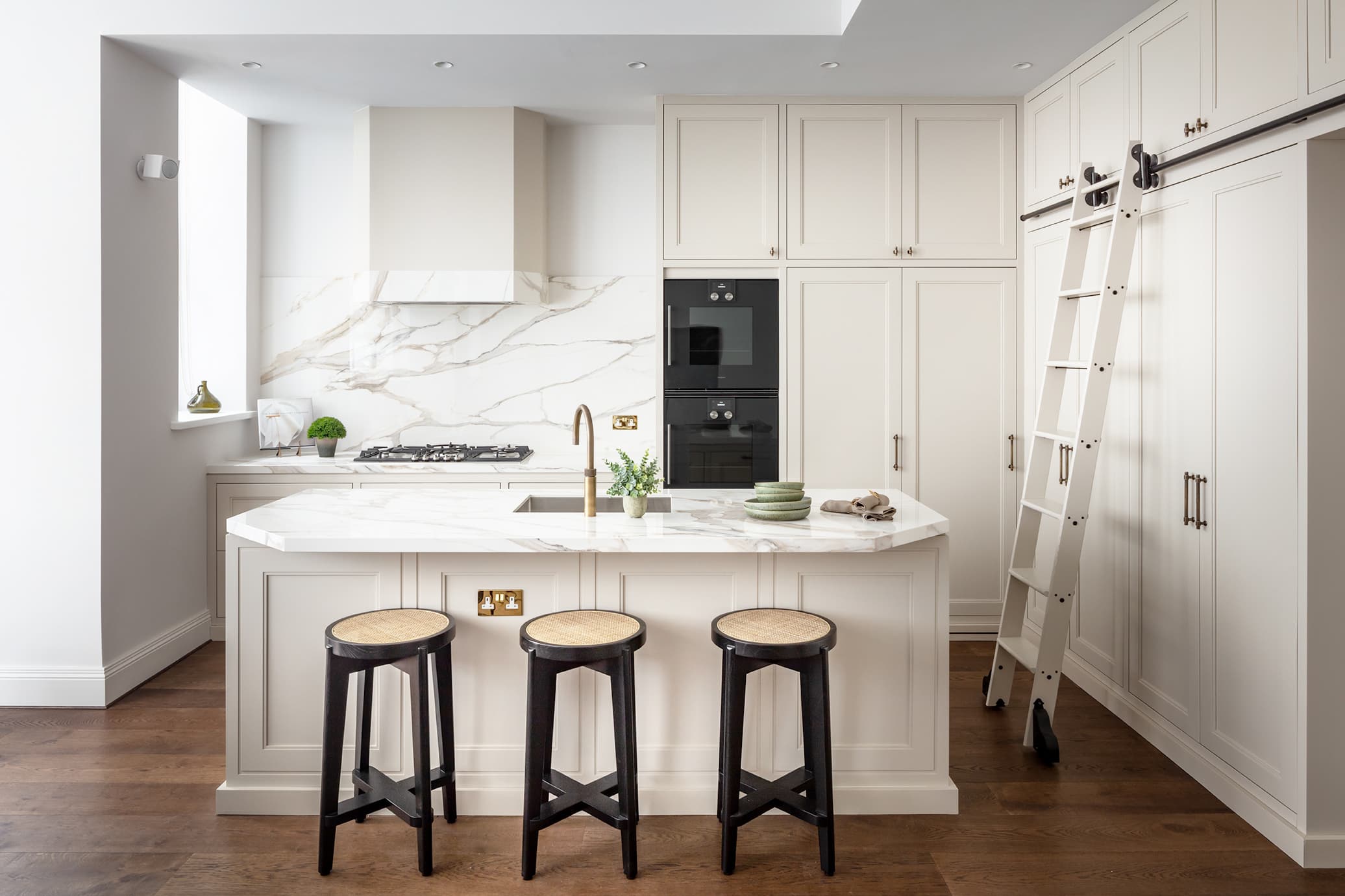
Bespoke Kitchen Cabinets: The Definitive Guide to Handmade Cabinetry
Everything you need to know about bespoke kitchen cabinets — from construction methods and timber selection to door styles, finishes, and the details that distinguish genuine craftsmanship from the merely expensive.
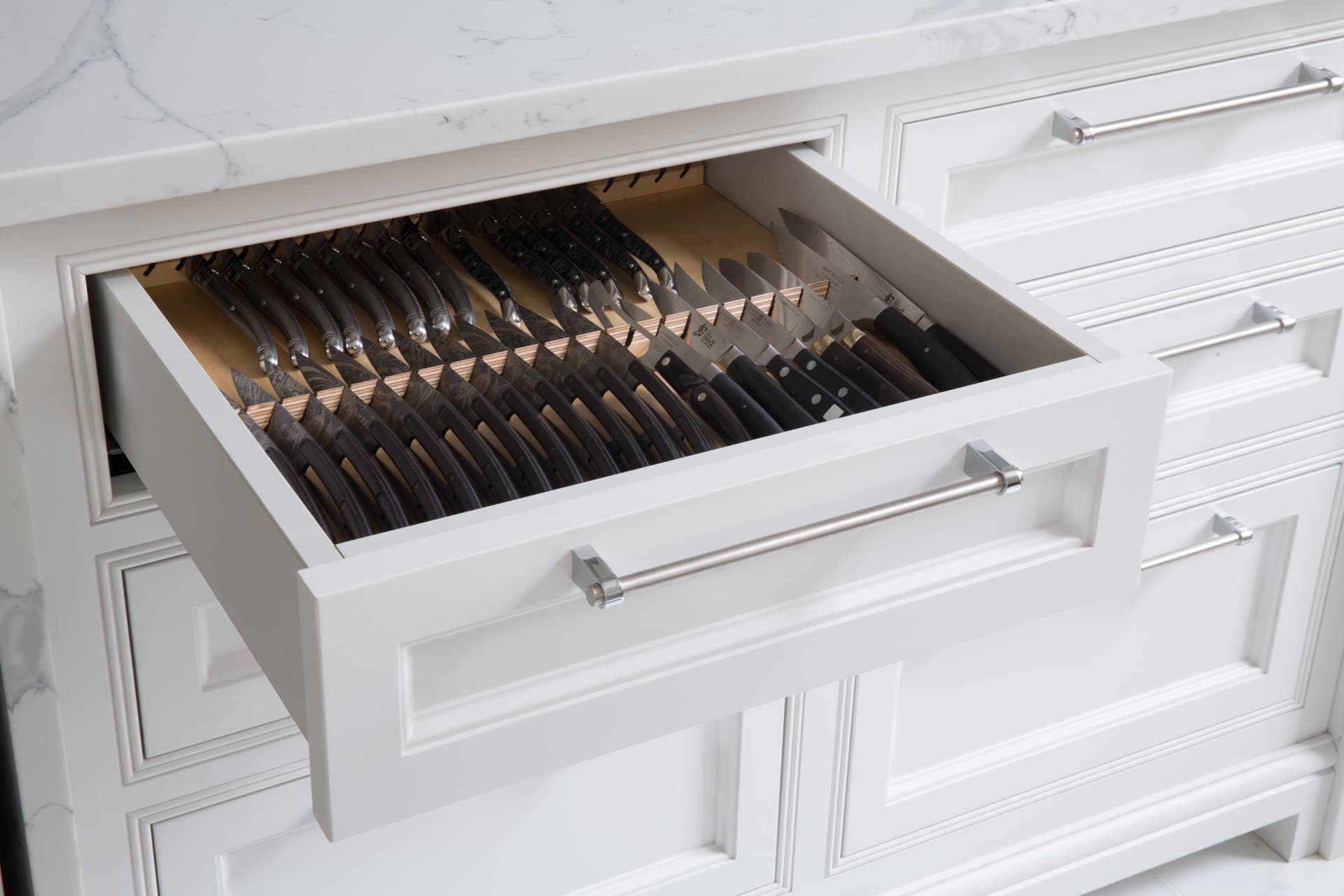
Bespoke Kitchen Joinery: The Craft Behind Cabinets That Last Generations
A detailed guide to the joinery techniques used in bespoke kitchen craftsmanship — from dovetail drawers and mortise-and-tenon frames to tongue and groove panels. Learn how to recognise quality joinery and why it determines how long your kitchen will last.
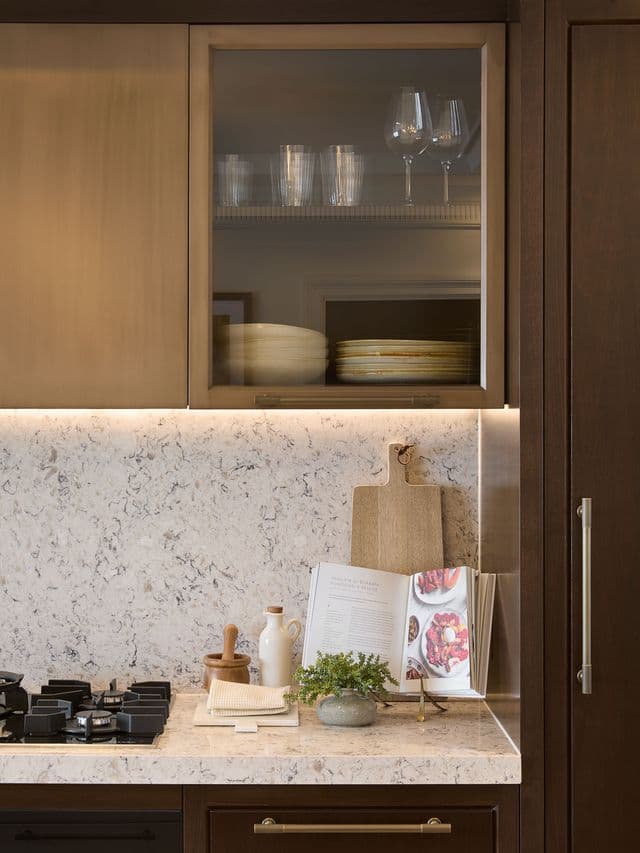
The Bespoke Kitchen Design Process: From Brief to Blueprint
How does a bespoke kitchen get designed? We walk through every stage of the design process — from developing the brief and spatial analysis to 3D visualisation, technical drawings, material specification, and sign-off.