

In-Frame Kitchens: The Definitive Guide to the Finest Form of Cabinetry
What makes in-frame kitchens the gold standard of kitchen cabinetry? We explain the construction, the craftsmanship, beaded vs plain styles, and why discerning homeowners choose in-frame over lay-on.
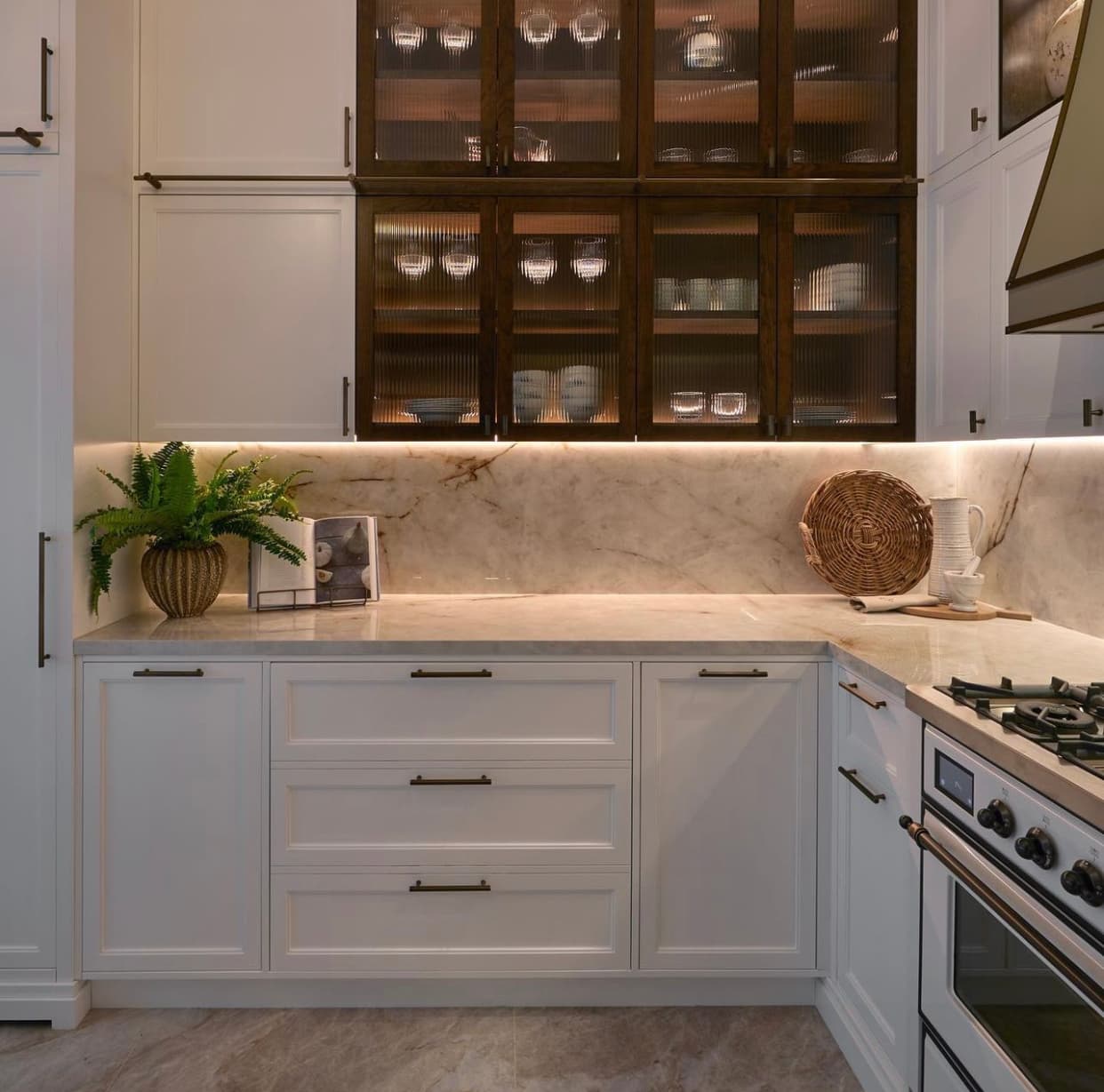
If you've ever closed a kitchen door and felt a satisfying, weighted click as it settled precisely into its frame, you've experienced the hallmark of in-frame construction. It's one of those details that's difficult to describe in words but impossible to mistake in person.
In-frame kitchens represent the highest standard of kitchen cabinetry — a method of construction where every door and drawer sits within a solid timber frame rather than simply being fixed over the front of a cabinet box. It is the approach that serious cabinetmakers have used for centuries, and for good reason. Nothing else feels quite like it.
Yet despite being the benchmark against which all other kitchen construction is measured, in-frame cabinetry is widely misunderstood. What exactly makes it different? Why does it cost more? And is it the right choice for your home?
This guide explains everything you need to know.
What Is an In-Frame Kitchen?
The defining characteristic of an in-frame kitchen is its face frame — a solid timber frame that is fixed to the front of each cabinet. The door sits flush within this face frame, closing into the opening rather than over it. When the door is closed, you see the frame surrounding the door on all four sides, with a consistent, narrow gap between the two.
This sounds straightforward enough. In practice, it demands extraordinary precision.
Every face frame must be perfectly square and true. Every door must be machined to fit within its frame with tolerances measured in fractions of a millimetre. Every hinge must be set with exacting accuracy so the door sits level, plumb, and flush when closed. There is simply nowhere to hide imperfection in an in-frame kitchen — which is precisely why it's the mark of a confident maker.
At Albury House Kitchens, our joiners build each face frame from solid hardwood, typically tulipwood or maple, selected for dimensional stability and fine grain. The frame is mortise-and-tenon jointed at each corner, then fixed permanently to the cabinet carcass before the doors are hung. The result is a structure of genuine solidity — something you feel the moment you open a door.
In-Frame vs Lay-On: Understanding the Difference
The alternative to in-frame construction is the lay-on method, sometimes called overlay. In a lay-on kitchen, the door is mounted directly onto the front of the cabinet box using concealed hinges. The door overlaps the edges of the carcass, covering them entirely.
Lay-on construction dominates the mainstream kitchen market for a simple reason: it's far more forgiving to manufacture. Because the door covers the cabinet edges, small inconsistencies in the carcass are hidden. Tolerances can be looser. Assembly is faster.
The differences become apparent in daily use:
- Visual precision — In-frame kitchens display that distinctive shadow line around each door. Lay-on doors sit proud of the surface, creating a less refined appearance.
- Feel and sound — An in-frame door closes with a firm, cushioned action into its frame. A lay-on door simply swings shut against the cabinet.
- Structural integrity — The face frame adds significant rigidity to the cabinet, making in-frame kitchens substantially more robust over time.
- Adjustability — In-frame hinges can be finely adjusted to maintain perfect alignment as the kitchen ages. Lay-on hinges, whilst adjustable, are compensating for a less precise structure.
- Longevity — Because in-frame doors are individually fitted within their frames, a single door can be removed, refinished, or replaced without affecting its neighbours.
None of this is to say that a well-made lay-on kitchen cannot serve you well. Many do. But if you are investing in cabinetry that you expect to last decades — and to feel exceptional every single day — in-frame construction is the only serious choice.
The Craftsmanship Behind In-Frame Construction
Building in-frame kitchen cabinets is not simply a matter of adding a frame to the front of a box. The entire construction method is different, and each stage demands a higher level of skill.
The Face Frame
The frame itself is typically constructed from kiln-dried hardwood — chosen for its stability, its ability to hold a clean edge, and its affinity for paint finishes. At Albury House, we use traditional mortise-and-tenon joints at each corner of the frame, reinforced with dowels. This is the same joinery used in fine furniture, and it ensures the frame remains square and rigid for the life of the kitchen.
The frame is then planed and sanded to a furniture-grade finish before being fixed to the carcass. Because the frame is visible when the door is open, the quality of the timber and the finish must be impeccable.
Door Fitting
Each door is individually fitted to its frame opening. This is not a production-line process — it's a careful, iterative adjustment where the joiner offers the door into the frame, checks the gap on all four sides, and makes fine adjustments until the fit is perfect.
The target gap — the reveal between door and frame — is typically 2mm. Consistent. All the way around. On every door and drawer in the kitchen. Achieving this across an entire kitchen, where no two openings are ever precisely identical, is one of the most demanding skills in cabinetmaking.
Hinge Setting
In-frame kitchens use a specific type of hinge — typically a concealed cup hinge with a face-frame mounting plate — that allows precise six-way adjustment. The hinge must hold the door perfectly within the plane of the frame: not protruding, not recessed, and not canted to either side.
Setting hinges correctly on an in-frame kitchen is painstaking work. But it's this attention to detail that produces the remarkably satisfying action that distinguishes a fine kitchen from an ordinary one.
Beaded vs Plain In-Frame: A Question of Character
Within the world of in-frame kitchens, there are two principal styles: beaded and plain. The difference is subtle but significant.
Beaded In-Frame
A beaded in-frame kitchen features a small, rounded moulding — the bead — applied to the inside edge of the face frame. This bead runs around the full perimeter of each door and drawer opening, creating a delicate line of shadow and texture.
The bead serves a practical purpose as well as a decorative one. It helps to mask the gap between door and frame, drawing the eye to a consistent decorative line rather than the joint itself. This makes it particularly forgiving on painted kitchens, where seasonal timber movement might otherwise cause slight variations in the gap.
Beaded in-frame construction has deep roots in English cabinetmaking and sits beautifully in period properties, country houses, and traditional interiors. It's the style most closely associated with classic Shaker-inspired design, though it works equally well with more ornate door profiles.
Plain In-Frame
A plain in-frame kitchen omits the bead entirely. The frame edge is left clean and square, and the gap between door and frame is expressed as a simple, crisp shadow line.
This pared-back approach has gained significant popularity among homeowners and designers who want the quality of in-frame construction without the traditional associations. Paired with a flat-panel or slab door, plain in-frame cabinetry achieves a refined, contemporary aesthetic that works superbly in modern homes and architectural conversions.
The choice between beaded and plain is entirely aesthetic — both are built to the same standard. We find that most clients know instinctively which they prefer. If you're uncertain, visiting our workshop to see both styles in person tends to settle the matter quickly.
Why In-Frame Kitchens Cost More
There is no avoiding the fact that in-frame kitchens carry a premium over lay-on alternatives. Understanding why helps to explain where your investment goes.
More material. Every cabinet requires a solid hardwood face frame in addition to the carcass. That's a significant quantity of carefully selected, kiln-dried timber.
More time. In-frame construction takes substantially longer than lay-on. The frames must be jointed, fitted to the carcass, finished, and prepared before any door can be hung. Each door is then individually fitted — a process that cannot be rushed.
Higher skill. The tolerances involved in in-frame work demand experienced, specialist joiners. This is not work that can be delegated to apprentices or accelerated with jigs and templates. It requires judgement, patience, and a trained eye.
Better hardware. In-frame hinges and fittings are purpose-designed for this application and are invariably of higher quality (and cost) than standard lay-on equivalents.
The result of this additional investment is a kitchen that looks better, feels better, lasts longer, and retains its precision over decades. For clients who understand what goes into it, the premium is not a cost — it's a mark of quality.
At Albury House, every kitchen we build is in-frame. We made that decision years ago because we believe it's the only construction method worthy of the materials we use and the homes we work in. It's a commitment to doing things properly, even when the easier option exists.
The Benefits of Choosing In-Frame
Beyond the craftsmanship, in-frame kitchens deliver practical benefits that compound over years of daily use.
Exceptional Durability
The face frame adds structural rigidity that a lay-on cabinet simply cannot match. Over time, as a kitchen absorbs the stresses of daily life — doors being opened and closed thousands of times, drawers loaded with heavy pans, the occasional knock from a wayward toddler — that additional structure tells.
In-frame kitchens maintain their alignment and function far longer than their lay-on counterparts. It's not uncommon for a well-built in-frame kitchen to remain perfectly true after 20 or 30 years of use.
A Tactile Experience
This is the benefit that's hardest to convey in writing but most obvious in person. The way an in-frame door opens — the slight resistance as the edge clears the frame, the gentle deceleration as it reaches its stop, the solid, confident feel of a door that sits precisely where it should — is qualitatively different from any other type of kitchen.
It's the same distinction you feel between a well-made car door and an economy one. The mechanism is similar. The experience is worlds apart.
Timeless Aesthetics
In-frame kitchens possess a visual calm that transcends trends. The regular rhythm of frame and door, the consistent shadow lines, the sense of order and precision — these qualities read as quality in any era.
Whether you choose a traditional beaded in-frame kitchen with Shaker doors and cup handles or a contemporary plain in-frame design with handleless slab fronts, the underlying architecture of in-frame construction ensures the kitchen looks resolved and intentional.
Ease of Maintenance
Because each door is individually mounted within its own frame, maintenance is remarkably straightforward. A single door can be removed for repainting or repair without disturbing anything else. Hinges can be adjusted independently. If a drawer front suffers damage after fifteen years, it can be replaced on its own — the frame, the carcass, and every other component remain untouched.
This is why many of our clients think of their in-frame kitchen as the last kitchen they'll ever buy. Not because they'll never want a change, but because the construction allows the kitchen to evolve with them.
When to Choose In-Frame
In-frame construction is the right choice in almost every scenario where quality and longevity are priorities. But it is particularly well-suited to certain situations:
- Period properties and listed buildings — where the architectural character demands cabinetry of substance and authenticity
- High-use family kitchens — where durability and the ability to withstand decades of heavy use are essential
- Open-plan living spaces — where the kitchen is permanently on display and must hold its own alongside fine furniture and architecture
- Long-term homes — where the kitchen is an investment you expect to enjoy for 20 years or more
- Homes of real architectural quality — where anything less than in-frame would feel like a compromise
If you are building or renovating a home in Cambridge, Hampstead, Essex, or the surrounding areas, and you're investing in a kitchen that reflects the quality of the property, in-frame is the natural choice.
Styling Your In-Frame Kitchen
One of the great virtues of in-frame construction is its versatility. The method is style-agnostic — it provides a superb canvas for virtually any aesthetic direction.
Classic English
The most enduring expression of in-frame cabinetry: beaded frames, Shaker or raised-and-fielded doors, turned oak knobs or brass cup handles, and a palette of heritage paint colours. This is the kitchen that looks equally at home in a Georgian townhouse and a Suffolk farmhouse. Paired with natural stone worktops and a Belfast sink, it's an approach that never dates.
Contemporary Refined
Plain in-frame construction with slab doors, integrated handles or discreet edge pulls, and a restrained palette — think soft greys, muted greens, or crisp whites. The precision of the in-frame shadow lines gives contemporary kitchens a crispness and depth that flat-fronted lay-on designs struggle to achieve.
Transitional
Perhaps the most popular approach among our clients: a kitchen that blends the warmth of traditional construction with the cleanliness of modern design. Think plain in-frame with Shaker doors, understated bar handles, engineered stone worktops, and a mix of painted and natural timber finishes. It's a style that bridges periods beautifully and works in almost any setting.
Painted and Natural Timber
In-frame construction lends itself particularly well to the combination of painted cabinetry and natural timber accents — an oak island within a painted surround, for instance, or walnut shelving set against hand-painted wall units. The face frame provides a visual structure that unifies these contrasting elements and stops the kitchen feeling disjointed.
The Albury House Approach
At Albury House Kitchens, in-frame construction isn't an upgrade or an optional extra — it's the foundation of every kitchen we make. We believe that if you're investing in bespoke cabinetry, the construction should be as considered as the design.
Our joiners build each face frame by hand in our workshop, using the same mortise-and-tenon joinery that has defined fine English furniture for centuries. Each door is individually fitted to its frame, adjusted, and hung with the care that only comes from a maker who takes personal pride in the work.
We work with homeowners, architects, and interior designers across Cambridge, Hampstead, Essex, and throughout the M11 corridor, creating kitchens that honour the homes they're built for. Whether you're drawn to a classic beaded in-frame design or a contemporary plain in-frame aesthetic, we'd welcome the chance to show you what genuine craftsmanship looks like.
Start With a Conversation
If you're considering an in-frame kitchen and would like to understand what's possible for your home, we'd love to hear from you. Every Albury House project begins with a relaxed, no-obligation conversation — usually in your home, over a cup of tea.
Get in touch to arrange your consultation — and discover why in-frame is the only construction method we'll put our name to.
Frequently Asked Questions
Thinking about a new kitchen?
Book Your Free ConsultationYou might also enjoy
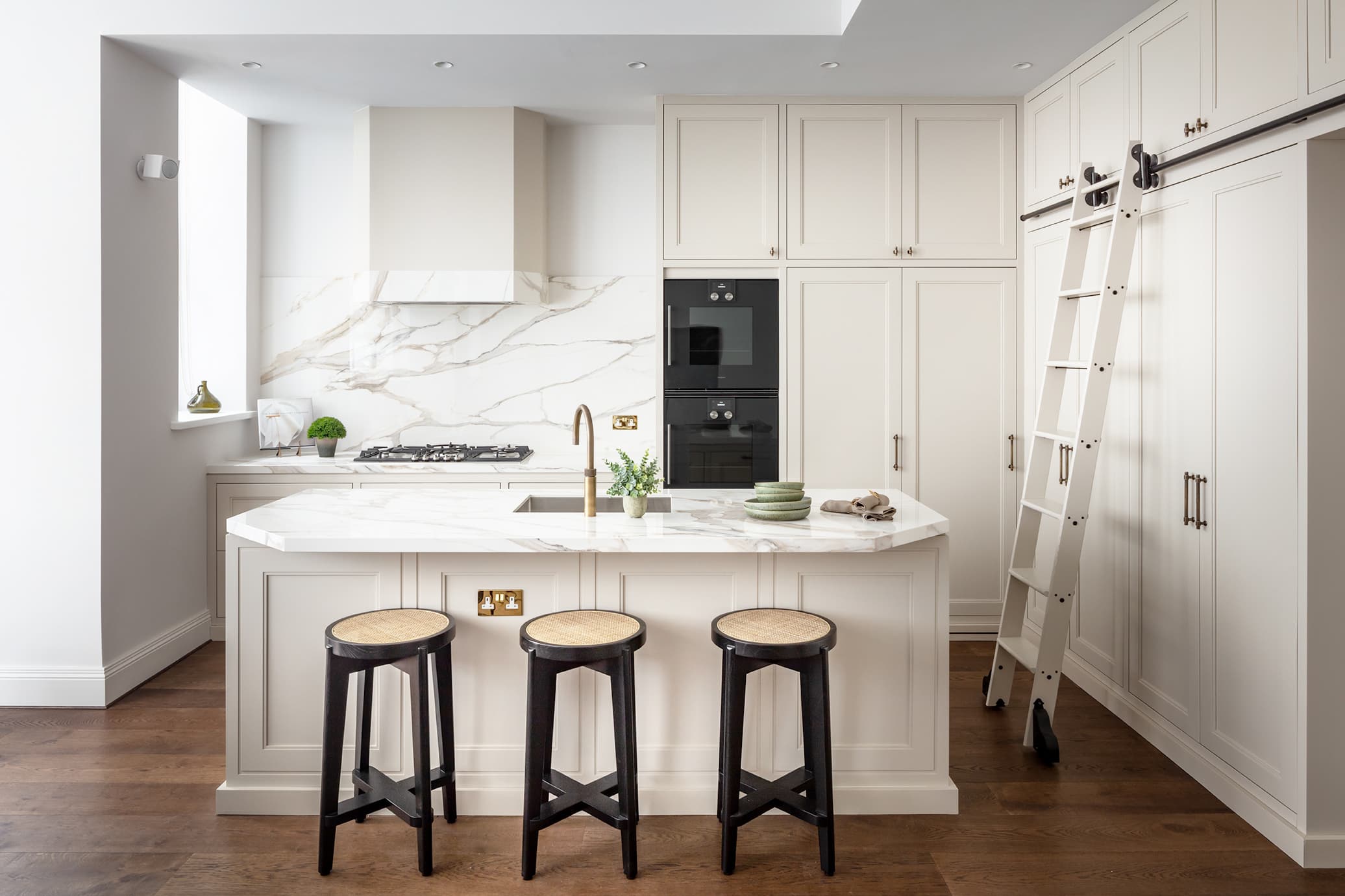
Bespoke Kitchen Cabinets: The Definitive Guide to Handmade Cabinetry
Everything you need to know about bespoke kitchen cabinets — from construction methods and timber selection to door styles, finishes, and the details that distinguish genuine craftsmanship from the merely expensive.
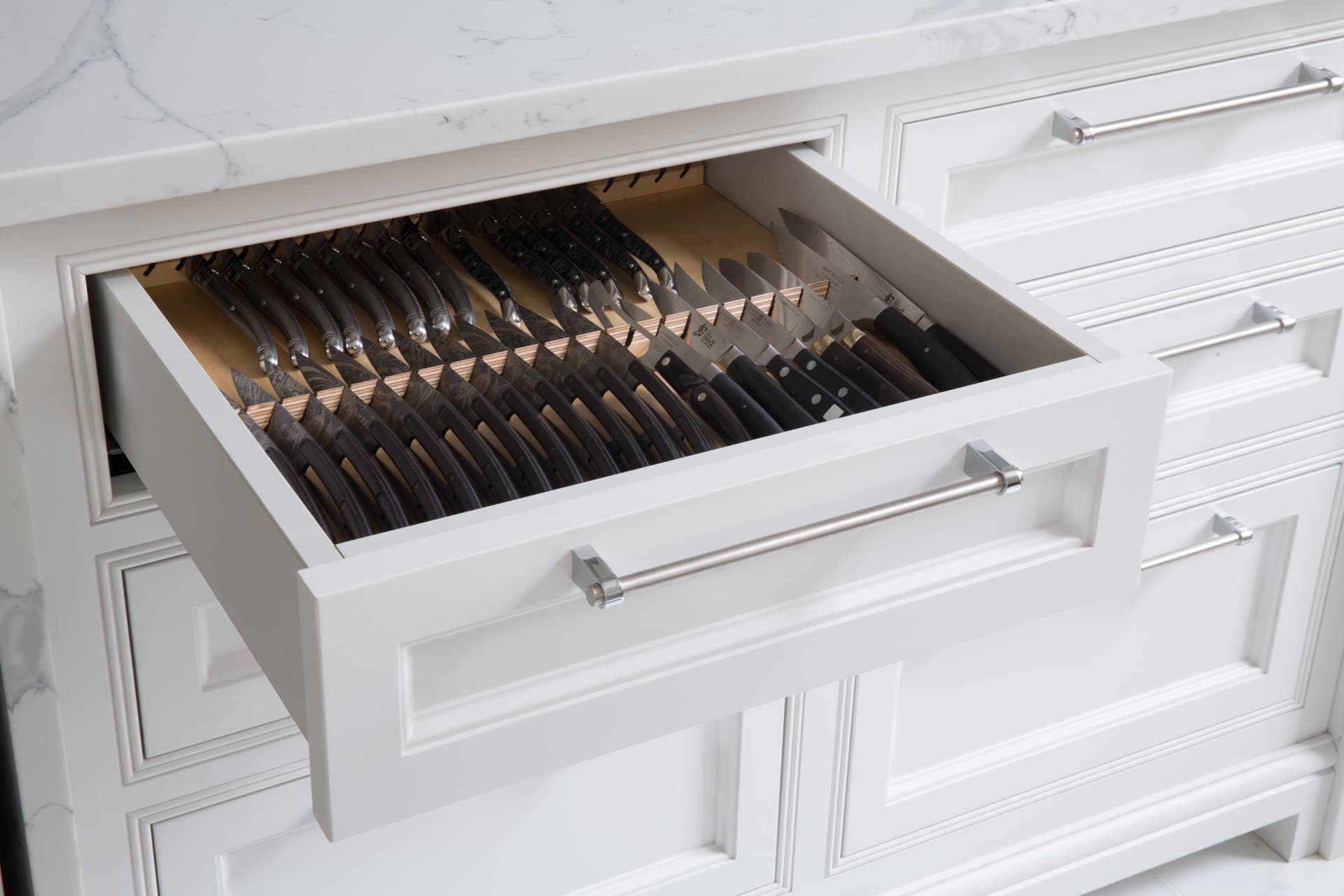
Bespoke Kitchen Joinery: The Craft Behind Cabinets That Last Generations
A detailed guide to the joinery techniques used in bespoke kitchen craftsmanship — from dovetail drawers and mortise-and-tenon frames to tongue and groove panels. Learn how to recognise quality joinery and why it determines how long your kitchen will last.
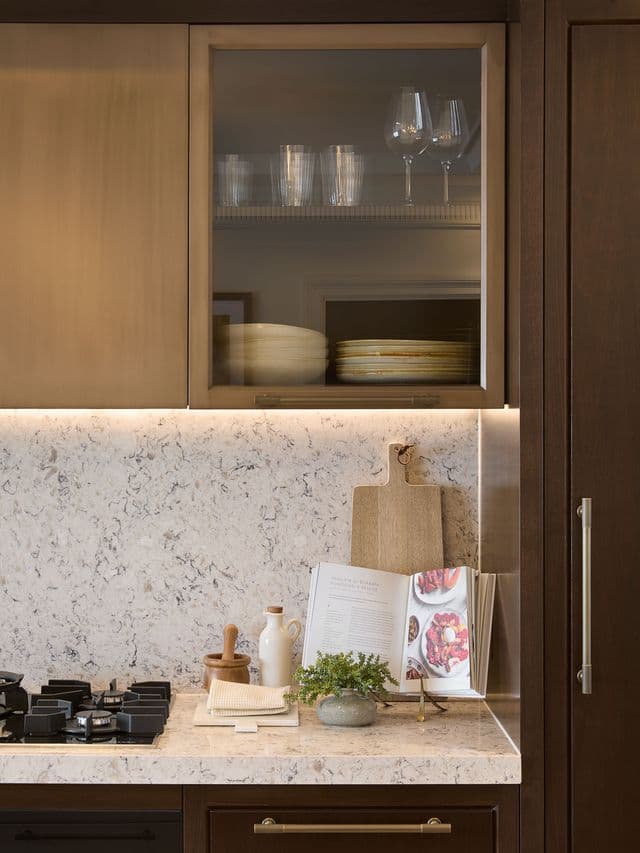
The Bespoke Kitchen Design Process: From Brief to Blueprint
How does a bespoke kitchen get designed? We walk through every stage of the design process — from developing the brief and spatial analysis to 3D visualisation, technical drawings, material specification, and sign-off.