

Integrated Kitchen Appliances: The Art of Seamless Luxury Kitchen Design
A comprehensive guide to integrating appliances into bespoke luxury kitchens. From panel-ready refrigeration and hidden dishwashers to downdraft extraction and tower oven configurations, discover how to achieve a seamless kitchen where technology disappears into craftsmanship.
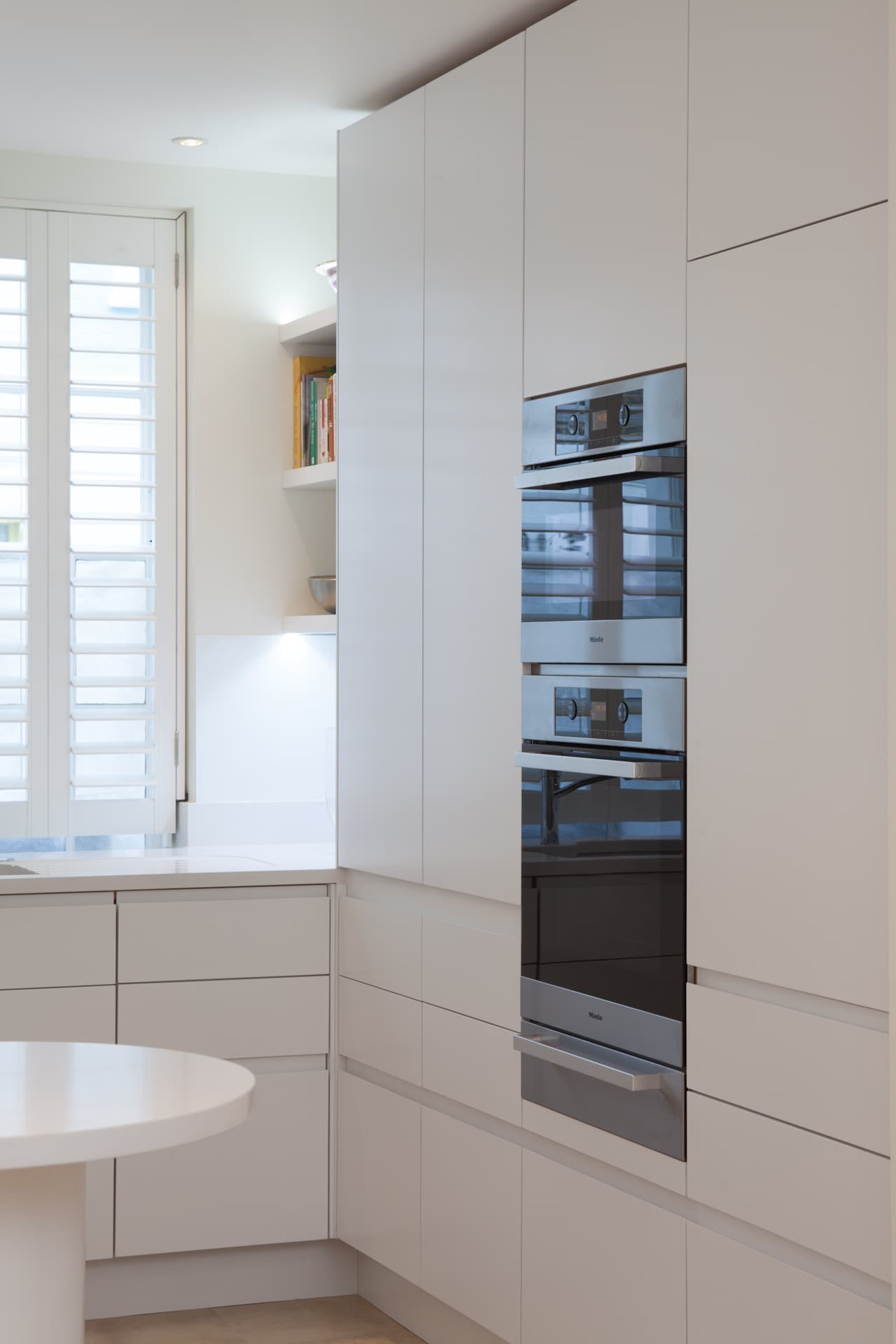
There is a particular moment in the design process when a client looks at their kitchen drawings and says something along the lines of, "But where has everything gone?" The fridge, the dishwasher, the ovens — all present and accounted for, all doing precisely what they should, but none of them announcing themselves. That moment, more than any other, captures what integrated appliances in a luxury kitchen are really about.
It is not about hiding technology for the sake of it. It is about allowing the architecture, the materials, and the craftsmanship of your cabinetry to speak without interruption. When a run of hand-painted in-frame doors flows from one end of a wall to the other — unbroken by the glint of stainless steel or the branding of a manufacturer — you are looking at a kitchen that has been designed rather than assembled.
This guide explains how we approach appliance integration in our bespoke kitchen projects, from the technical realities of panel-ready specification to the finer points of choosing brands, planning workflow, and future-proofing your investment.
What "Integrated" Actually Means
The term "integrated" is used rather loosely in kitchen marketing, so it is worth establishing what we mean by it. In the context of a luxury bespoke kitchen, there are two distinct levels of integration.
Fully Integrated Appliances
A fully integrated appliance is entirely concealed behind a cabinetry panel. When the door is closed, it is indistinguishable from the cabinet beside it — same panel, same handle, same shadow gap. The appliance has no visible fascia, no external controls, and no branding. It simply vanishes.
This is the standard we work to at Albury House for dishwashers, fridge-freezers, and most other appliances where full concealment is possible. The effect is transformative: the kitchen reads as furniture, not as a collection of boxes.
Semi-Integrated Appliances
A semi-integrated appliance conceals the main body behind a matching panel but leaves the top portion — typically a control strip or display — visible. Semi-integrated dishwashers are the most common example, where the control panel sits above the door line.
Semi-integrated can make sense where daily visibility of controls is genuinely useful, but in a bespoke kitchen of this calibre, we almost always recommend full integration. The aesthetic difference is significant, and modern appliances manage perfectly well with controls accessed by opening the door.
Refrigeration: The Largest Integration Challenge
Refrigeration presents the single biggest integration challenge in any kitchen, for the simple reason that fridges and freezers are large, deep, and generate heat. Getting it right demands careful planning.
Column Refrigeration
The gold standard for integrated refrigeration is the column format — separate, full-height fridge and freezer units, each built into its own tall cabinet. This approach, perfected by brands like Sub-Zero and Gaggenau, offers several advantages.
First, it allows the fridge and freezer to be positioned independently. The fridge can sit near the main prep zone whilst the freezer tucks into a larder or scullery area, where it is accessible but not occupying prime kitchen real estate. Second, column units tend to be shallower than freestanding American-style fridge-freezers, sitting flush with standard 600mm-deep cabinetry rather than protruding awkwardly.
Sub-Zero's column series deserves particular mention. Their units are designed from the ground up for integration, with front-breathing ventilation that eliminates the need for clearance space behind or above the appliance. In a bespoke kitchen where every millimetre of cabinetry alignment matters, this is not a trivial advantage.
Integrated Fridge-Freezers
For kitchens where two separate columns are impractical — perhaps the layout does not allow two tall units, or the household simply does not need that much cold storage — an integrated fridge-freezer in a single tall housing is the sensible alternative.
The key specification here is depth. Many integrated fridge-freezers require a cabinet depth of 580mm or more, and the door panel adds further depth. In a bespoke kitchen with 20mm-thick in-frame doors, these tolerances need to be resolved at the design stage, not discovered during installation.
Wine Storage
For clients who take wine seriously — and a good number of our clients in Cambridge and Hampstead do — integrated wine conditioning is a quiet luxury that earns its place. Units from Sub-Zero, Gaggenau, and Miele can be built into cabinetry at any height, with temperature zones for both red and white storage. A 45cm-wide column fitted beneath a worktop or within a dresser unit is often all that is needed.
Dishwashers: The Easiest Win
If there is one appliance that benefits most obviously from full integration, it is the dishwasher. A stainless-steel dishwasher front in an otherwise panelled kitchen is like a loudly patterned tie with a Savile Row suit — technically functional, but rather missing the point.
Fully integrated dishwashers from Miele and Gaggenau accept a furniture panel on their door, and the handle is provided by the cabinetry itself. When closed, the dishwasher is invisible. When opened, you are greeted by what is, frankly, an exceptionally well-engineered machine.
We typically position the primary dishwasher adjacent to the sink, within the main washing-up zone. In larger kitchens, a second dishwasher — or a dishwasher drawer unit — near a butler's pantry or island provides the flexibility that serious entertainers appreciate. Both disappear behind panelling.
Ovens, Steam Ovens, and Tower Configurations
The oven zone is where integrated appliance design becomes genuinely exciting. Modern luxury kitchens have moved well beyond the solitary built-in oven, and the possibilities are considerable.
The Oven Tower
A tower configuration — two, three, or even four appliances stacked vertically in a tall cabinet — is the most elegant way to house cooking appliances. A typical arrangement might include a primary oven at comfortable working height, a combination steam oven above it, and a warming drawer below.
Gaggenau's 400 series is designed precisely for this kind of stacking, with flush-mounted appliances that sit behind a single plane of glass. The effect is architectural: a column of dark, reflective surfaces set within the surrounding cabinetry, powerful but restrained.
Wolf takes a slightly different approach, with their professional-grade ovens offering commercial performance in domestic dimensions. Their convection ovens are deeper than many competitors, which needs to be accounted for in the cabinet depth — another reason why bespoke cabinetry, built to the exact dimensions required, outperforms standard fitted units.
Steam Ovens and Combination Units
Steam ovens have shifted from curiosity to essential in the luxury kitchen. They cook more gently, retain more nutrients, and produce results with bread, fish, and vegetables that a conventional oven simply cannot match. Miele and Gaggenau both offer combination steam ovens that handle conventional baking, pure steam, and hybrid modes, meaning a single appliance does the work of two.
In a bespoke kitchen, we integrate steam ovens into the oven tower at a height that suits daily use — typically at eye level or just below, where you can see into the cavity without bending.
Coffee Machines and Warming Drawers
Built-in coffee machines from Miele and Gaggenau integrate into the oven tower or into a dedicated beverage station within the cabinetry. The machine sits flush behind a matching fascia panel, plumbed directly into the water supply for genuinely effortless coffee.
Warming drawers, often overlooked, are one of those quietly indispensable appliances. Positioned below the oven tower, they keep plates warm, prove dough, slow-cook, and generally make the kitchen work more smoothly. Integrated behind a panel, they are invisible until needed.
Hobs and Extraction: Where Form Meets Function
The hob and extraction pairing is arguably the most visible element of any kitchen, and the one where integration decisions have the greatest impact on the room's character.
Induction Hobs
Induction has won the argument in luxury kitchens. It is faster, safer, more controllable, and — crucially for integration — completely flat. A flush-mounted induction hob from Bora, Gaggenau, or Miele sits level with the worktop surface, creating a seamless plane of stone or engineered material. When the hob is not in use, the worktop reads as a continuous surface. That is integration at its purest.
Downdraft Extraction
The rise of downdraft extraction has been one of the most significant developments in integrated kitchen design. Rather than mounting a hood above the hob — which dominates the visual field and complicates island installations — a downdraft unit sits within or immediately behind the hob, drawing steam and cooking vapours downward and out through ducting beneath the floor or through the cabinet below.
Bora has led this field with conviction. Their integrated systems combine the hob and extraction into a single unit, with the extractor built directly into the hob surface. The aesthetic result is remarkable: no hood, no chimney, no visual interruption. Just a clean, unobstructed view across the kitchen.
For island installations, downdraft extraction is particularly compelling. It removes the need for a bulky canopy hanging from the ceiling, preserving sightlines and allowing pendant lighting or architectural details to take centre stage.
Ceiling-Mounted Extraction
Where downdraft is not suitable — above a range cooker, for instance, or where very high extraction rates are needed — ceiling-mounted extractors offer a discreet alternative to wall-mounted hoods. Recessed into the ceiling above the cooking zone, they are barely visible and significantly quieter than traditional canopy hoods. Gaggenau and Miele both offer ceiling ventilation units that integrate neatly into plasterwork.
The Panel-Ready Approach
The success of any integrated kitchen depends on what the industry calls "panel-ready" specification. This means the appliance is designed to accept a custom furniture panel on its front face, made from the same material and finished to the same standard as the surrounding cabinetry.
In a bespoke kitchen, we manufacture these panels in our own workshop, ensuring an exact match in timber species, paint colour, and finish. The panel is fitted to the appliance door using the manufacturer's fixing brackets, and the handle — whether a D-bar, a knob, a routed grip, or a push-to-open mechanism — is integrated into the panel exactly as it would be on any other cabinet door.
The devil is in the detail. Panel weight matters — a heavy solid-timber panel requires robust hinges and may need counterbalancing. Panel thickness affects how the door sits relative to the surrounding frames. And the gap between the panel edge and the adjacent cabinetry must match the shadow lines elsewhere in the kitchen, down to the millimetre.
This is precisely why integrated appliances belong in a bespoke kitchen rather than a fitted one. Standard fitted kitchens work within fixed tolerances that may or may not align with a particular appliance. Bespoke cabinetry is built around the appliance, ensuring a fit that is genuinely seamless.
Choosing Appliance Brands for a Luxury Kitchen
Not all premium appliance brands are created equal, and the right choice depends on your priorities. Here is how we think about it.
Gaggenau — The architect's choice. Gaggenau appliances are designed as a system, with consistent dimensions, flush mounting across the range, and a distinctive anthracite glass aesthetic. Their oven and steam oven combinations are outstanding, and their Vario cooktop system allows you to configure hobs, grills, and tepan yakis in bespoke arrangements.
Miele — The engineer's choice. Miele builds appliances of extraordinary reliability and refinement. Their dishwashers are the benchmark, their laundry appliances are unmatched, and their kitchen range covers every category with quiet competence. Excellent service network in the UK.
Sub-Zero and Wolf — The American prestige pairing. Sub-Zero's refrigeration is in a class of its own, with dual compressor technology and NASA-derived air purification. Wolf's ovens and rangetops bring professional-grade performance to domestic kitchens. Together, they represent the most comprehensive premium appliance ecosystem available.
Bora — The extraction specialist. Bora's integrated downdraft systems have transformed kitchen island design. If you are planning an island without a hood, Bora is the conversation you need to have. Their combined hob-and-extraction units are beautifully engineered.
We are brand-agnostic in our recommendations. The right appliance suite is the one that matches your cooking habits, your aesthetic preferences, and your kitchen's design requirements. We are happy to discuss the options in detail during your initial consultation.
Planning Appliance Layout for Workflow
Integrating appliances is not merely a visual exercise. The placement of each appliance must serve the kitchen's workflow — the daily choreography of cooking, cleaning, and storage that determines whether a kitchen is a pleasure to use or a beautifully dressed frustration.
The principles are straightforward:
- The fridge belongs near the prep zone — you reach for ingredients, then turn to the worktop to prepare them. Minimise the distance between these two actions.
- The dishwasher belongs near the sink and crockery storage — unloading a dishwasher should involve as few steps as possible. Ideally, the cupboard where the plates live is directly above or beside the dishwasher.
- Ovens belong at comfortable working height — bending to a low oven with a hot tray is neither safe nor pleasant. A tower configuration at mid-height solves this elegantly.
- The hob and extraction belong together — this sounds obvious, but the extraction method (downdraft, ceiling, or hood) must be determined early, as it affects ducting routes, ceiling design, and the structural requirements of the island or worktop.
- Coffee machines and secondary appliances belong in a beverage zone — slightly removed from the main cooking area, where the morning coffee routine does not collide with breakfast preparation.
In a bespoke kitchen, these zones are planned from the very first design meeting. The appliance selection informs the cabinetry design, not the other way around. This is one of the many reasons we encourage clients to make appliance decisions early in the process rather than treating them as an afterthought.
Future-Proofing for Appliance Replacement
A bespoke kitchen should outlast several generations of appliances. The cabinetry we build at Albury House is designed to last twenty-five years or more, but even the finest oven or dishwasher will need replacing within ten to fifteen.
Designing for this reality means:
- Using standard cavity dimensions wherever possible — so a replacement appliance from the same or a different manufacturer can slot into the existing housing without modification.
- Ensuring adequate service access — appliances need to be removable without dismantling the surrounding cabinetry. Proper planning of electrical, water, and waste connections behind and beneath appliances makes future servicing straightforward.
- Designing transferable panels — the furniture panel on an integrated appliance should be fixable to a replacement unit. We use mounting systems that accommodate the bracket positions of multiple manufacturers.
- Planning ventilation generously — airflow requirements vary between brands and models. Building in slightly more clearance than the current appliance demands ensures that a future replacement with different ventilation needs can be accommodated.
This is forward-thinking design, and it is one of the less glamorous but most valuable aspects of commissioning a bespoke kitchen.
Cost Considerations
Integrated appliances in a luxury kitchen represent a significant investment, and it is worth understanding where the money goes.
The appliances themselves carry a premium. A fully integrated Sub-Zero column fridge will cost considerably more than even a high-quality freestanding model. A Gaggenau oven tower — oven, steam oven, and warming drawer — represents a substantial commitment. A comprehensive suite of premium integrated appliances for a luxury kitchen typically falls in the range of fifteen thousand to thirty-five thousand pounds.
Beyond the appliances, there is the cost of integration itself. Custom panels, specialist hinges, bespoke housings, and the additional design and installation time required to achieve truly seamless results all contribute. In a bespoke kitchen, this integration cost is absorbed into the cabinetry price rather than itemised separately, but it is real and should be anticipated.
The return on this investment is a kitchen that looks, feels, and functions as a unified whole — where the technology serves you brilliantly without ever demanding attention. For our clients across Cambridge, Essex, and Hampstead, that seamless quality is not a luxury. It is the entire point.
If you are beginning to think about a kitchen where every appliance earns its place and none of them shouts about it, we would welcome the conversation. You can explore our approach to luxury kitchen design or get in touch to arrange a consultation. We are rather good at making things disappear.
Frequently Asked Questions
Thinking about a new kitchen?
Book Your Free ConsultationYou might also enjoy
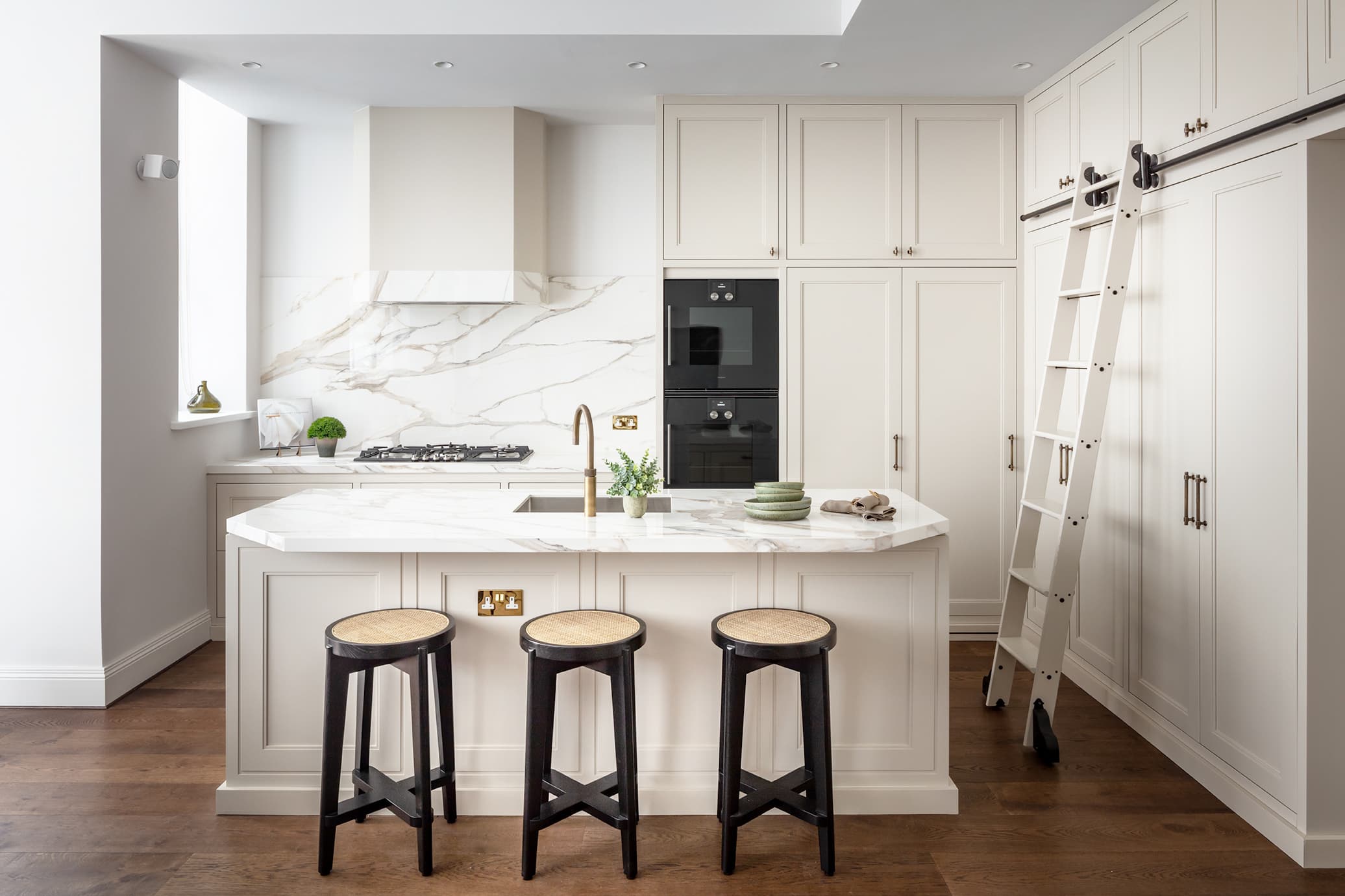
Bespoke Kitchen Cabinets: The Definitive Guide to Handmade Cabinetry
Everything you need to know about bespoke kitchen cabinets — from construction methods and timber selection to door styles, finishes, and the details that distinguish genuine craftsmanship from the merely expensive.
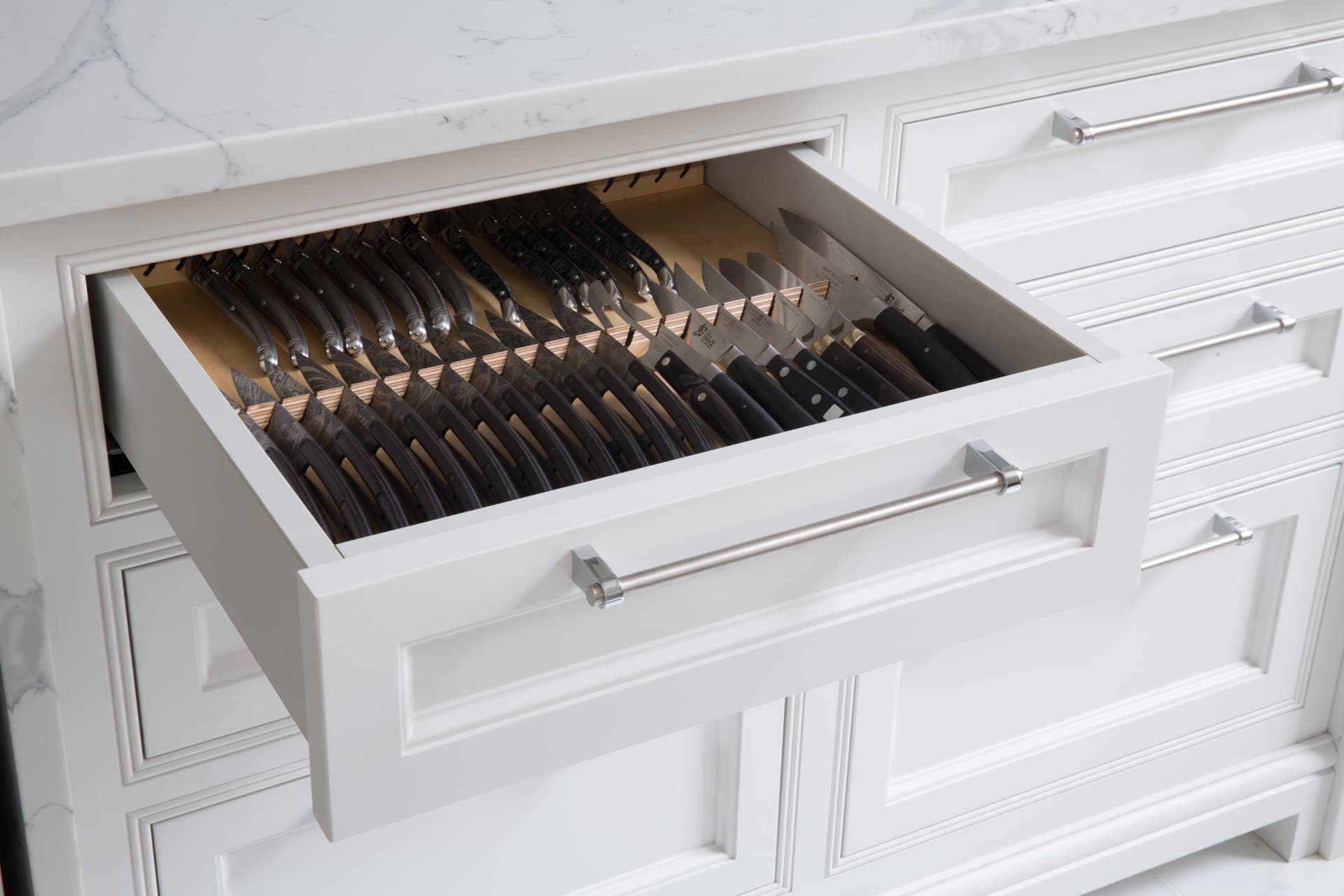
Bespoke Kitchen Joinery: The Craft Behind Cabinets That Last Generations
A detailed guide to the joinery techniques used in bespoke kitchen craftsmanship — from dovetail drawers and mortise-and-tenon frames to tongue and groove panels. Learn how to recognise quality joinery and why it determines how long your kitchen will last.
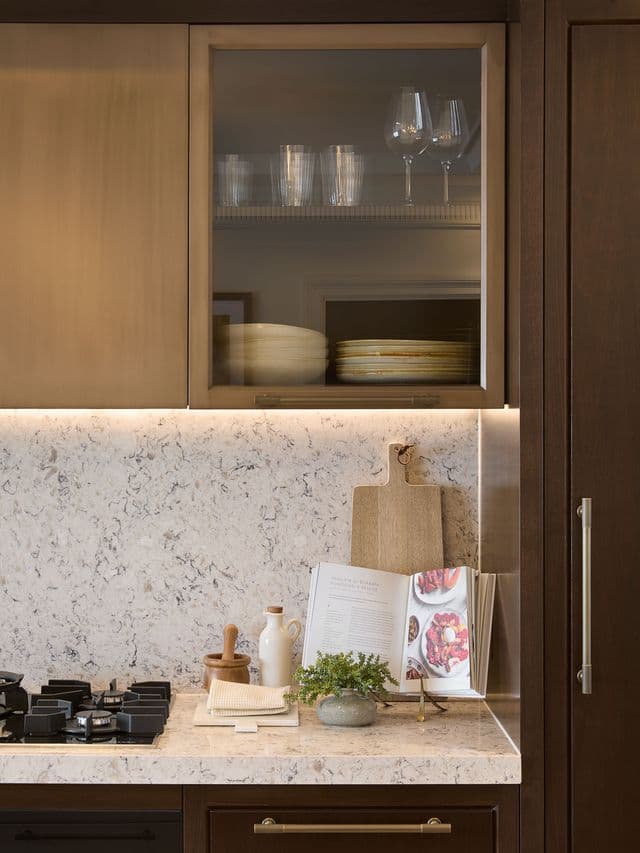
The Bespoke Kitchen Design Process: From Brief to Blueprint
How does a bespoke kitchen get designed? We walk through every stage of the design process — from developing the brief and spatial analysis to 3D visualisation, technical drawings, material specification, and sign-off.