

Sustainable Kitchen Design: Why Luxury Is Leading the Way
Luxury and sustainability are not contradictions — they are natural partners. Discover how bespoke kitchen design, local manufacturing, timeless aesthetics, and intelligent material choices make the most environmentally responsible kitchen the one built to last a lifetime.
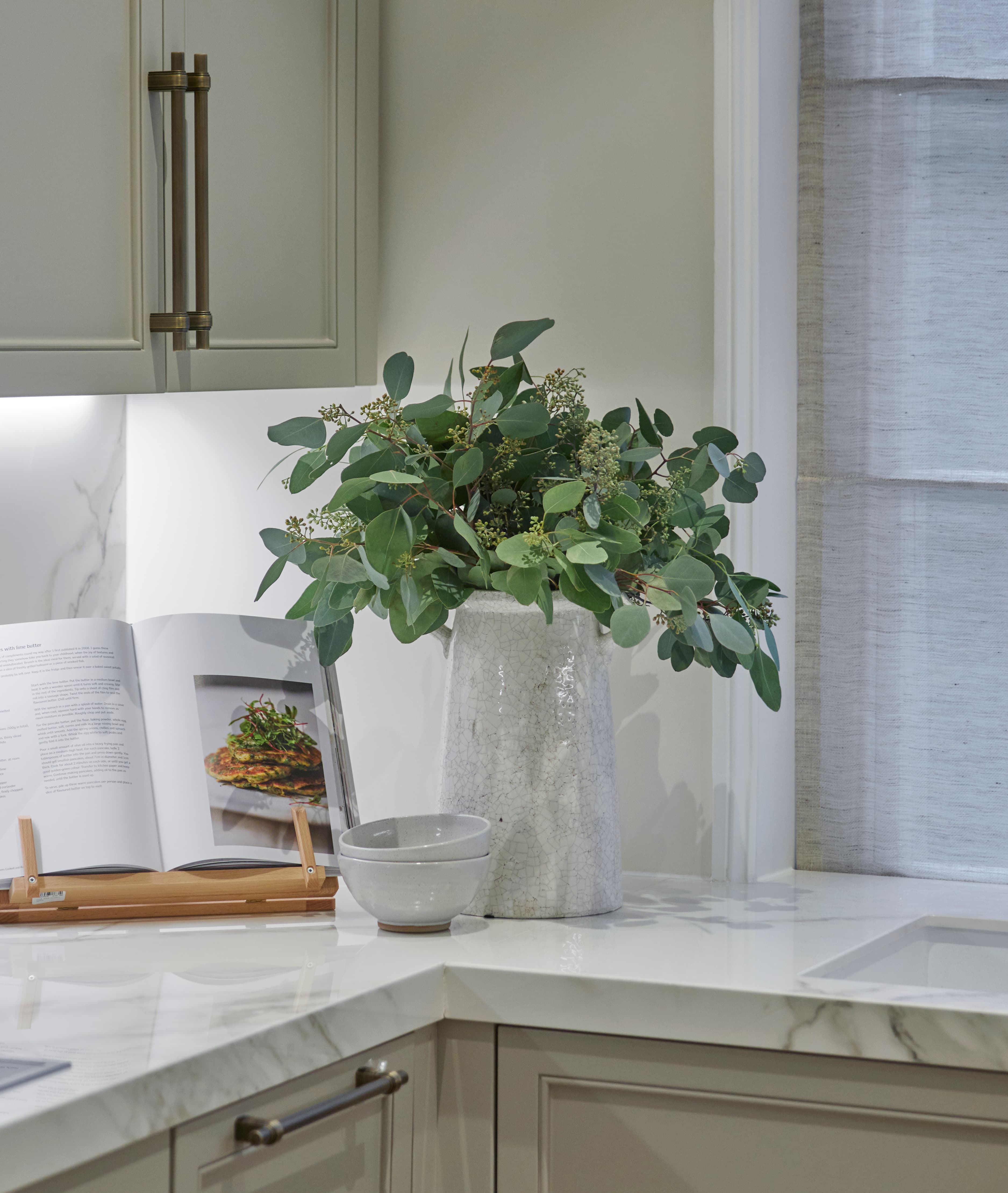
There is a conversation happening in kitchen design right now that would have seemed peculiar twenty years ago. Clients who are commissioning kitchens costing six figures are not simply asking about door styles and worktop materials. They are asking where the timber comes from. They want to know the carbon footprint of their cabinetry. They are interested — genuinely, specifically interested — in whether their kitchen can be repaired in fifteen years rather than replaced.
This is not a passing trend. It is a fundamental shift in how thoughtful people think about their homes. And it is being led, perhaps surprisingly, by the luxury end of the market.
The reason is straightforward, once you think about it. Sustainable kitchen design and luxury kitchen design are not opposites pulling in different directions. They are, in almost every meaningful respect, the same thing. The principles that make a kitchen environmentally responsible — longevity, quality materials, local craftsmanship, timeless design — are precisely the principles that make a kitchen worth commissioning in the first place.
What follows is a thorough exploration of why this matters, how it works in practice, and what to consider if you are planning a kitchen that is as kind to the planet as it is beautiful to live with.
The Longevity Argument: Thirty Years vs Three Replacements
If there is a single idea at the heart of sustainable kitchen design, it is this: the greenest kitchen is the one you do not have to replace.
A mass-produced fitted kitchen has an average lifespan of eight to fifteen years. The hinges loosen. The vinyl-wrapped doors delaminate. The chipboard carcasses swell where moisture has found its way in. At some point — usually sooner than anyone anticipated — the whole thing comes out and goes to landfill, and the cycle begins again.
Over a thirty-year period, a homeowner with a standard kitchen will likely commission two or three full replacements. Each one involves the extraction of raw materials, the energy of manufacturing, the emissions of transport (often from continental Europe or further), the waste of demolition, and the carbon cost of fitting a new kitchen from scratch.
A bespoke kitchen, by contrast, is built to last the life of the home. Solid timber frames joined with traditional mortise-and-tenon joinery do not degrade in the way that chipboard and cam-lock fittings do. Dovetailed drawers running on precision slides will still glide smoothly in thirty years. Hand-painted finishes can be refreshed without replacing a single component.
The mathematics of this are striking. Even before you consider the environmental credentials of the materials themselves, the simple act of building one kitchen instead of three represents an enormous reduction in waste, energy, and carbon. Longevity is not merely a luxury benefit. It is an environmental strategy.
Designing for Timelessness as an Environmental Act
There is another dimension to longevity that is easy to overlook: aesthetic durability. A kitchen that looks dated after a decade is functionally obsolete even if it is structurally sound. Many perfectly serviceable kitchens are ripped out not because they have failed, but because their owners cannot bear to look at them any longer.
This makes design taste an environmental issue, whether we like it or not.
A kitchen designed around a fleeting trend — the ultra-high-gloss finish of 2010, the industrial concrete look of 2015, the handleless slab in millennial pink of 2020 — carries an inherent expiry date. It will feel fresh for three years, acceptable for five, and increasingly embarrassing for the remainder of its structural life.
Timeless design, by contrast, ages gracefully. A well-proportioned shaker door in a considered heritage colour will look as right in 2056 as it does today, because its appeal is rooted in proportion and craftsmanship rather than novelty. The kitchen design trends that endure are invariably the ones that were never really trends at all — they are principles of good design that happen to be fashionable at the moment because they have always been quietly excellent.
At Albury House, we actively steer clients away from choices they might regret. Not because we are prescriptive, but because we understand that the most sustainable kitchen is one its owner still loves in twenty years. That requires a design conversation that goes deeper than what looks good on a mood board this month.
Energy-Efficient Kitchen Design
A kitchen is one of the most energy-intensive rooms in any home. It heats, it cools, it extracts, it illuminates. The design decisions made at the planning stage have a profound effect on how much energy the room will consume over its lifetime.
Cooking Technology
The shift from gas to induction hobs is perhaps the most significant energy improvement available in kitchen design today. An induction hob transfers approximately 85 to 90 per cent of its energy directly to the pan, compared with roughly 40 per cent for gas. The remainder — the heat that gas sends into your kitchen rather than your saucepan — is simply waste. In a well-insulated modern home, that waste heat then requires additional energy to extract or cool.
We now specify induction as standard unless a client has a specific reason to prefer otherwise. The cooking experience, once people adjust to the speed and precision, is invariably preferred.
Heat-Pump Integration
As heat-pump technology becomes the standard for domestic heating and hot water, kitchen design must adapt. Hot water systems connected to air-source or ground-source heat pumps require different plumbing layouts than traditional combi-boiler systems. Designing for this at the kitchen planning stage — rather than retrofitting later — avoids both disruption and the waste of redoing pipework.
Natural Light and Ventilation
Thoughtful kitchen design maximises natural light, reducing the need for artificial illumination during daylight hours. This might mean positioning the main working areas near windows, specifying glazed upper cabinets that allow light to travel deeper into the room, or incorporating rooflights above island workstations.
Similarly, natural ventilation — operable windows, cross-ventilation strategies, stack-effect roof vents — can significantly reduce reliance on mechanical extraction, which is both energy-intensive and, in many installations, surprisingly ineffective.
Appliance Positioning
The placement of appliances matters more than most people realise. A refrigerator positioned next to an oven or in direct sunlight works considerably harder to maintain temperature. A dishwasher run on a hot water feed from a heat pump uses less energy than one heating cold water with its own internal element. These are decisions made on the drawing board, not in the showroom, and they compound over decades.
Water-Conscious Kitchen Design
Water is an increasingly precious resource, and the kitchen is the second-largest consumer of water in most homes. Sustainable kitchen design addresses this through several strategies.
Aerated taps reduce flow rates without perceptible loss of pressure. Boiling-water taps eliminate the waste of heating a full kettle for a single cup. Dishwashers — which use considerably less water than hand washing, despite popular belief — should be sized appropriately for the household rather than defaulting to the largest available model.
At the design level, the positioning of the sink, the specification of waste systems, and the integration of water filtration all play a role. A well-designed kitchen makes water efficiency invisible — it simply works well while using less.
Reducing Food Waste Through Kitchen Design
It is rarely discussed in design magazines, but the layout of a kitchen has a direct and measurable effect on how much food a household wastes. And food waste, globally, is a staggering environmental problem.
Intelligent Storage
A kitchen with well-designed storage keeps food visible, accessible, and properly preserved. Deep, unlit cupboards where tins go to be forgotten are the enemy of sustainable eating. Pull-out pantry systems, clear-fronted storage, and properly ventilated vegetable drawers all contribute to a household that wastes less simply because it can see what it has.
Our modern larder designs are developed with exactly this principle in mind — combining generous capacity with the visibility that prevents the back-of-the-cupboard problem.
Composting Integration
Organic waste that goes to landfill produces methane, a greenhouse gas roughly eighty times more potent than carbon dioxide over a twenty-year period. Kitchen designs that integrate composting — whether through a discreet countertop caddy, a built-in pull-out system, or a direct connection to an outdoor composting arrangement — make the right choice the easy choice.
This is one of those areas where bespoke design shines. A standard kitchen has no provision for composting whatsoever. A bespoke kitchen can integrate it so seamlessly that it becomes second nature.
Temperature Zones
Different foods last longer at different temperatures. A kitchen designed with multiple temperature zones — a cool larder, a standard refrigerator, a warmer ambient store for items that do not belong in the fridge — extends the life of fresh produce significantly. This is traditional kitchen wisdom, frankly, dressed in modern clothing. The Victorian kitchen understood temperature zoning instinctively; we are merely rediscovering it with better insulation.
The Embodied Carbon of Kitchen Materials
Every material in a kitchen carries embodied carbon — the total greenhouse gas emissions involved in extracting, processing, manufacturing, and transporting it. Understanding this helps inform better choices.
Solid timber from sustainably managed forests is one of the lowest-carbon structural materials available. Wood actively sequesters carbon during growth, and well-managed forestry ensures that harvested trees are replaced. A solid timber kitchen is, in a meaningful sense, a carbon store.
Compare this with the alternatives commonly used in mass-produced kitchens. MDF and chipboard require significant energy to manufacture and rely on formaldehyde-based resins. Aluminium, often used for modern cabinetry frames, is extraordinarily energy-intensive to produce. Plastics, laminates, and vinyl wraps are petroleum-derived and effectively unrecyclable in kitchen applications.
Natural stone worktops — granite, marble, quartzite — carry higher embodied carbon than timber but are effectively permanent. A stone worktop installed today will still be functional in a century, making its per-year carbon impact remarkably low. The calculus changes entirely when you compare it with engineered surfaces that might need replacing every fifteen years.
The key principle is simple: materials that last longer and can be maintained or repurposed are almost always the more sustainable choice, even if their initial carbon footprint is higher.
Local Manufacturing vs Imported Kitchens
Here is a fact that surprises many clients: a significant proportion of the luxury kitchens sold in Britain are manufactured overseas. German kitchen brands, in particular, dominate the upper end of the market. The cabinetry is manufactured in factories in the Rhineland or Bavaria, flat-packed, loaded onto lorries, driven across Europe, shipped across the Channel, and then assembled in your home.
The transport emissions alone are substantial. But there are less obvious costs too. The impossibility of visiting the factory to verify claims about material sourcing. The challenge of arranging repairs when components must be shipped internationally. The disconnect between a brand's marketing narrative and the reality of industrial-scale production.
A kitchen manufactured locally — within the M11 corridor, in our case — eliminates most of these concerns. Our timber travels tens of miles, not thousands. Clients can visit the workshop, meet the craftspeople, and see their kitchen taking shape. When a modification is needed in year fifteen, it is a conversation and a short drive, not an international logistics exercise.
Local manufacturing is not merely an environmental choice. It is a practical one that happens to be better for the planet.
The Repair Economy: Kitchens That Adapt
Perhaps the most powerful sustainability argument for bespoke kitchens is one that the mass-market kitchen industry would prefer you did not think about: repairability.
A bespoke kitchen built from solid timber with traditional joinery can be repaired, repainted, adapted, and reconfigured throughout its life. A drawer front that suffers a knock can be refinished. A door that has tired after a decade of family life can be repainted in a fresh colour — the entire kitchen can — for a fraction of the cost and environmental impact of replacement.
Need to accommodate a new appliance that did not exist when the kitchen was designed? A bespoke kitchen can be modified. Want to add a new section of cabinetry because the family has grown? The original maker can build matching components. Fancy a completely different colour after fifteen years? A few days of careful preparation and hand-painting, and the kitchen is transformed.
Try doing any of this with a vinyl-wrapped, cam-locked, modular kitchen. You cannot repaint vinyl. You cannot repair chipboard that has swollen. You cannot order a matching door for a range that was discontinued three years after you bought it. The only option is replacement, and that means another kitchen in the skip.
This is the repair economy in action, and it is one of the most compelling reasons to invest in quality from the outset. A kitchen that can be maintained is a kitchen that does not need to be replaced. And a kitchen that does not need to be replaced is, by definition, the most sustainable kitchen you can own.
Certifications and Standards Worth Understanding
The world of environmental certifications can be bewildering, but a few are genuinely meaningful in the context of kitchen design.
FSC and PEFC certification confirm that timber has been sourced from responsibly managed forests. At Albury House, we use FSC-certified timber as standard and can provide full chain-of-custody documentation.
VOC ratings matter for indoor air quality. Volatile organic compounds are emitted by many paints, lacquers, and adhesives, and in a room where you prepare food, minimising them is both a health and an environmental priority. Water-based finishes have improved dramatically in recent years and now offer durability that rivals traditional solvent-based products.
EPC and building regulations are increasingly relevant to kitchen design as Part L requirements tighten. A kitchen designed with energy performance in mind — well-positioned appliances, efficient lighting, appropriate ventilation — contributes positively to the overall energy rating of the home.
BREEAM and Passivhaus standards, whilst primarily whole-building frameworks, have kitchen-specific implications. Designers working within these standards must consider material toxicity, thermal performance, and resource efficiency at a granular level.
What to Ask Your Kitchen Designer About Sustainability
If you are commissioning a kitchen and sustainability matters to you — and we would gently suggest it should — here are the questions that separate genuine commitment from marketing language.
Where is the kitchen manufactured? The answer should be specific. A town and a postcode, not a country. If the maker is evasive about the location of their workshop, that tells you something.
What timber species do you use, and where does it come from? Look for FSC or PEFC certification and a willingness to provide documentation. British-grown hardwoods — oak, ash, cherry — are increasingly available from well-managed estates and represent the shortest possible supply chain.
What finishes do you apply? Water-based paints and lacquers have lower VOC emissions than solvent-based alternatives. Ask for specific product names and data sheets if you want to verify claims.
What is the expected lifespan of the cabinetry? A confident answer of twenty-five to thirty years, backed by examples, is what you are looking for. Anything less than fifteen suggests the kitchen is not built to last.
Can the kitchen be repaired, repainted, or adapted? This is the question that most clearly distinguishes bespoke from mass-produced. If the answer involves replacing rather than repairing, the kitchen is not as sustainable as it might appear.
What happens to offcuts and waste? A responsible workshop will have clear waste management: timber offcuts repurposed or recycled, finishing products disposed of properly, packaging minimised.
These are not aggressive questions. Any maker who takes their craft seriously will welcome them. If they do not, that tells you everything you need to know.
A Kitchen Worth Keeping
Sustainability in kitchen design is not about sacrifice. It is not about choosing less beautiful materials or accepting a shorter list of features. It is about recognising that the qualities which make a kitchen truly luxurious — exceptional materials, precise craftsmanship, timeless design, and the kind of build quality that improves with age — are the very same qualities that make it environmentally responsible.
A kitchen built to last thirty years from sustainably sourced timber, manufactured by local craftspeople, designed to be repaired and adapted rather than replaced, finished with low-toxicity products, and laid out to minimise energy and water consumption is not a compromise. It is the finest kitchen you can commission. The fact that it is also the most sustainable is not a coincidence. It is the point.
If you are beginning to think about a kitchen and would like to explore how sustainability and luxury work together in practice, we would be delighted to have that conversation. Get in touch and we will arrange a time to talk through your project, your priorities, and the possibilities.
Frequently Asked Questions
Thinking about a new kitchen?
Book Your Free ConsultationYou might also enjoy
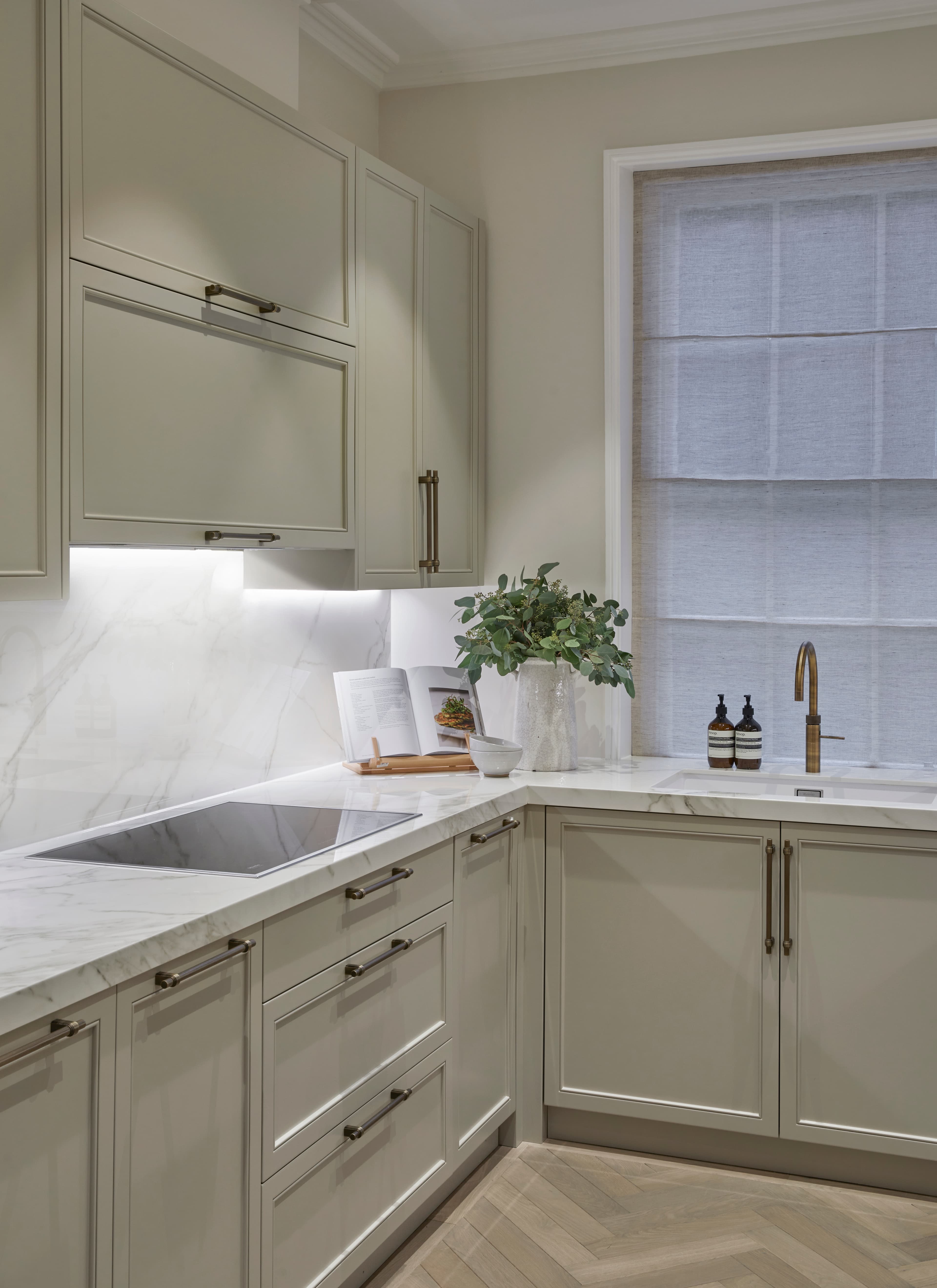
Earthy Kitchen Colours 2026: The Palette Shift Every Luxury Kitchen Needs
Why cool greys are fading and earthy, saturated kitchen colours are defining 2026. From sage green and terracotta to deep plum and burnt umber — how to choose, test, and live with the new warm palette in a bespoke kitchen.
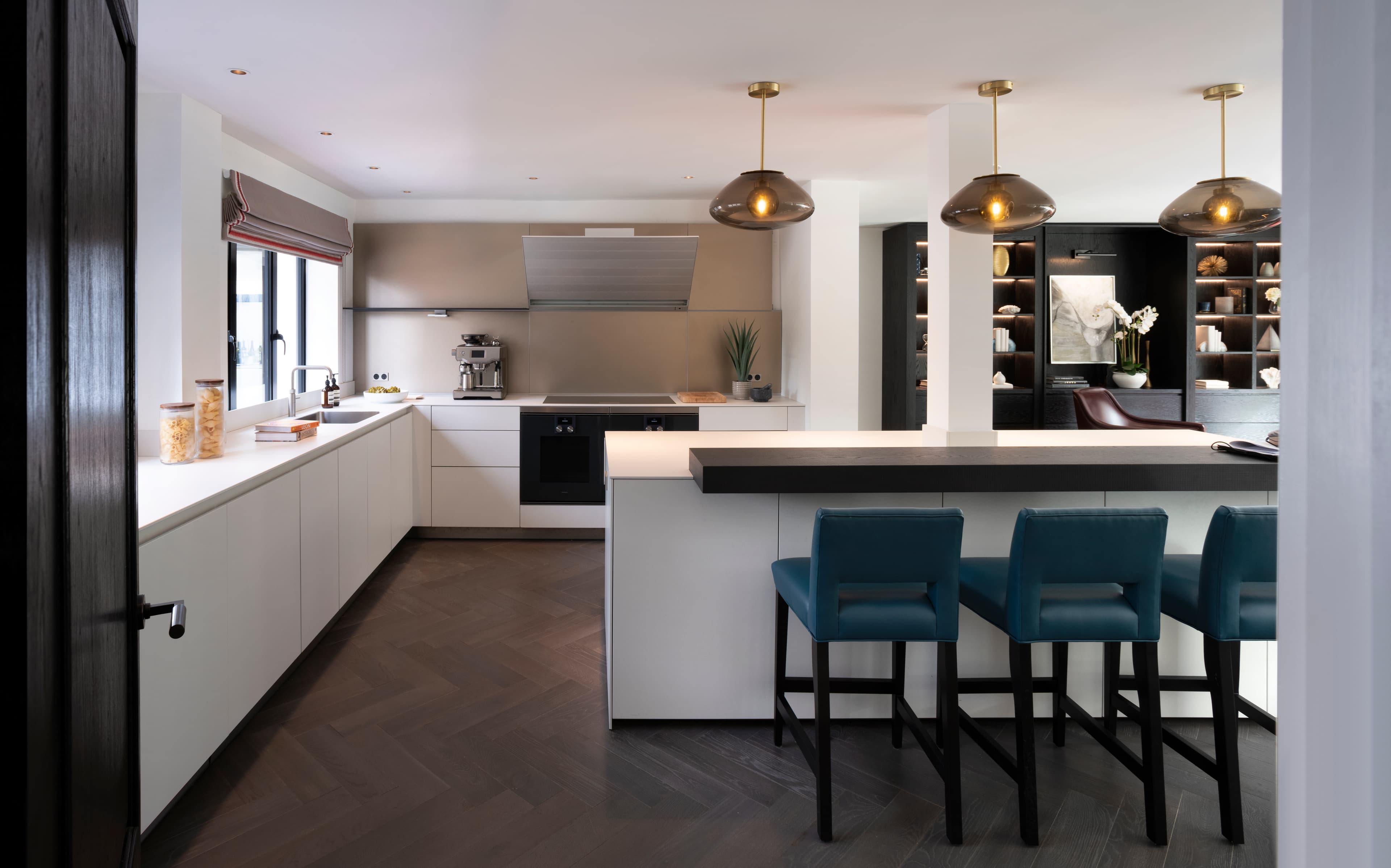
Kitchen Design Trends 2026: The Definitive Guide to What's Shaping Luxury Kitchens This Year
The 10 kitchen design trends defining 2026 — from the return of real wood and earthy colour palettes to sculptural islands, hidden sculleries, and the quiet triumph of handcraft over mass production. An authoritative guide from Albury House Kitchens.
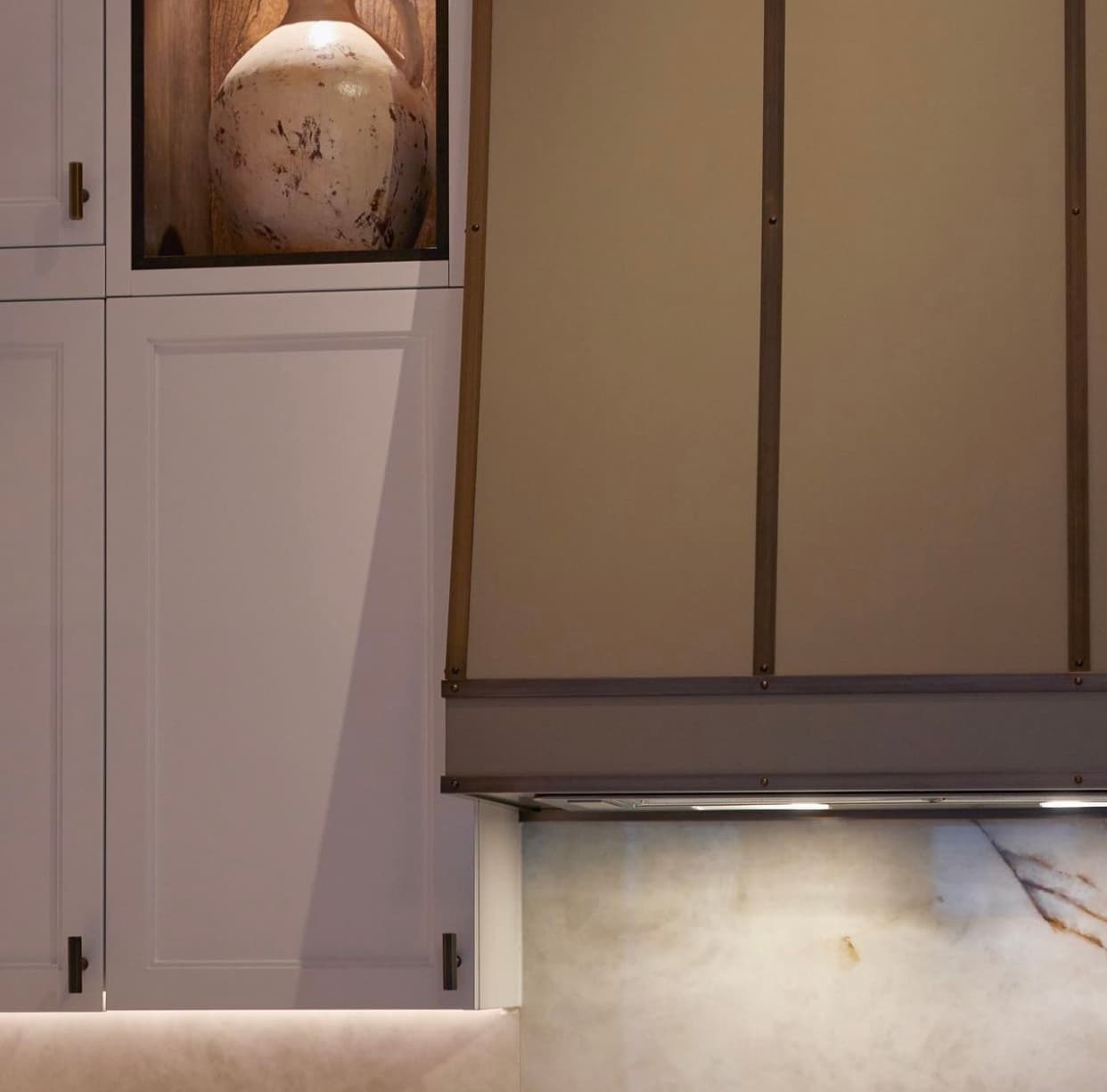
Matte Kitchen Finishes: Why the Quiet Surfaces Are Having Their Moment
The definitive guide to matte finishes in luxury kitchen design — from matt lacquer cabinetry and honed stone worktops to brushed brass hardware and limewash paint. How to use texture, sheen, and restraint to create a kitchen that feels as good as it looks.