

New Build Luxury Kitchen Design: How to Get It Right from the Ground Up
Designing a luxury kitchen for a new-build home is a rare opportunity to create something extraordinary — if you involve the right people early enough. A guide to timing, layout, services, and avoiding the most common mistakes.
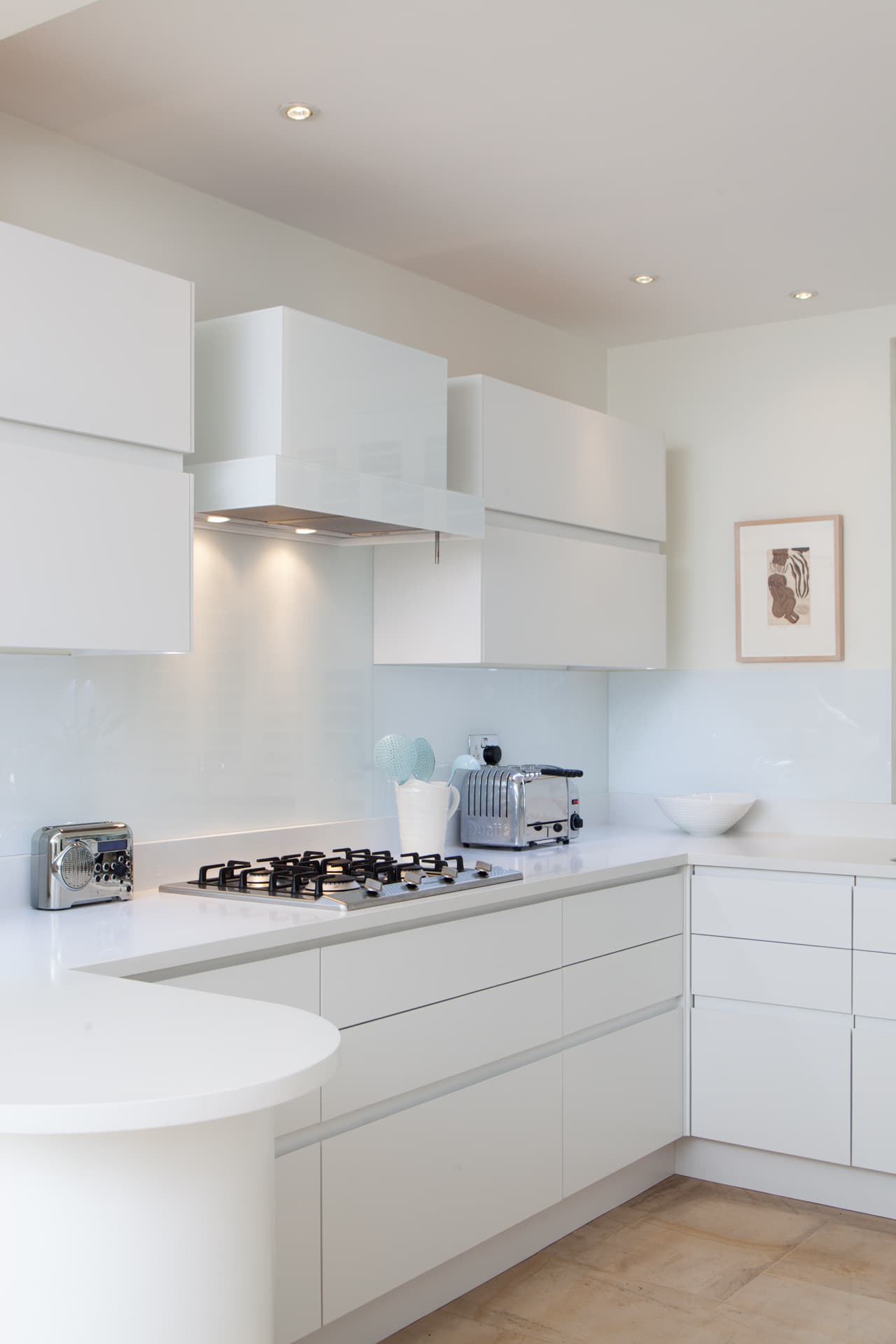
A new-build home is, in kitchen terms, the rarest of things: a genuine blank canvas. No inherited plumbing to work around. No structural walls dictating where the island can go. No ceiling heights that cannot be changed. No previous owner's questionable decisions embedded in the brickwork.
It is, frankly, an extraordinary opportunity. And it is extraordinary how often it gets wasted.
We see it with depressing regularity. A client invests a significant sum in building a beautiful new home, engages a talented architect, agonises over every brick and roofline — and then accepts a kitchen from a developer's catalogue without a second thought. Or worse, brings in the kitchen designer after the walls are up, the services are in, and the floor slab has been poured, by which point half the decisions that matter have already been made by default.
This guide is about getting the sequence right. Because a new build luxury kitchen, designed properly from the outset, can be something remarkable. But only if the kitchen is treated as a core part of the architectural design — not an afterthought that gets bolted on at second fix.
The Extraordinary Advantage of Designing from Scratch
In a renovation project, every kitchen designer works with constraints. The drain is where it is. The boiler cupboard cannot move. The ceiling height is what the Victorians decided. These constraints can produce characterful kitchens — some of our finest work has emerged from the creative friction of an awkward space — but they are constraints nonetheless.
A new build has none of them.
When you are building from the ground up, everything is negotiable. The room can be the size it needs to be. The windows can sit exactly where they serve the kitchen best. The ceiling can rise to create the proportions that luxury cabinetry deserves. Services can arrive precisely where the design requires them, rather than the design contorting itself around wherever a plumber happened to put a waste pipe thirty years ago.
This freedom is the fundamental advantage of a new build luxury kitchen. But freedom, as anyone who has ever stared at a blank page will tell you, brings its own challenges. More on that shortly.
When to Involve the Kitchen Designer
Here is the single most important piece of advice in this entire guide: involve your kitchen designer before the architect finalises the floor plan.
Not after. Not during construction. Not at second fix. Before the layout is signed off.
This is not conventional wisdom. Most people assume the sequence is: design the house, build the house, then choose a kitchen. That sequence works well enough if you're buying an off-the-shelf fitted kitchen that simply needs a room to go in. It does not work if you want a bespoke kitchen that is genuinely integrated with the architecture.
At Albury House Kitchens, the projects that produce the most exceptional results are invariably those where we join the conversation at RIBA Stage 2 or 3 — the concept and developed design phases. At that point, the floor plan is taking shape but nothing is fixed. Walls can move. Rooms can grow. The entire spatial relationship between kitchen, dining, and living areas is still being explored.
The projects that produce the most frustration — for us and for the client — are those where we're invited in after the slab has been poured and the structural engineer has signed off. By then, we're no longer designing from a blank canvas. We're designing around a set of decisions that someone else made without the kitchen in mind.
Influencing the Architect's Layout
A good architect will welcome kitchen design input at an early stage. An excellent architect will insist on it.
Here is what a specialist kitchen designer can contribute to the floor plan that a generalist architect — however talented — may not consider:
Room Proportions
Kitchen design has its own spatial logic. The ideal kitchen-dining-living space is not simply the largest room you can manage. It is a room whose proportions allow the kitchen zone to function with efficiency and elegance while the social areas breathe.
We frequently suggest adjustments to room dimensions that seem minor on a floor plan — pulling a wall back by 400mm here, extending a run by 600mm there — but that transform the kitchen layout from workable to wonderful. An island that feels generous rather than squeezed. A larder wall that can accommodate full-depth cabinets without encroaching on the circulation route. These refinements are only possible when the kitchen designer is in the room with the architect.
Ceiling Heights
Ceiling height is one of the most undervalued elements in kitchen design. Standard new-build ceiling heights of 2.4 metres produce kitchens that feel compressed, particularly when tall cabinets and extractor housings are involved. Raising the ground floor ceiling to 2.7 or even 3 metres — which is often achievable in a new build at modest additional cost — gives the luxury kitchen design room to breathe.
Higher ceilings allow for properly proportioned cabinetry, more elegant extractor solutions, and that indefinable sense of generosity that distinguishes a truly special kitchen from a competent one. They also improve natural light penetration, which brings us to the next point.
Window Placement and Natural Light
The position, size, and orientation of windows should be influenced by the kitchen design, not the other way around. A kitchen that faces north needs different glazing strategies from one that faces south-west. A prep zone benefits from generous natural light. A scullery or utility area can manage with less.
We routinely advise on window positions — suggesting, for example, that a long horizontal window above the main worktop run will be more useful than a standard casement placed for external symmetry. Or that a rooflight above the island will transform the quality of light in the room without compromising wall space for cabinetry.
These are conversations that can only happen before the window schedule is finalised.
Service Positioning: The Invisible Infrastructure
If early design involvement is the most important advice, this is the most practical: get the service positions right first time.
In a new build, services — water supply, waste drainage, gas, and electrical feeds — are typically cast into or under the floor slab, run through the walls during first fix, and are extremely expensive to move afterwards. The position of every pipe and cable directly affects what the kitchen can do and where it can do it.
A bespoke kitchen designer will provide your architect and M&E engineer with a detailed service specification that covers:
- Water supply and waste positions for the main sink, any secondary prep sink, a boiling water tap, and potentially a dedicated utility sink
- Gas supply for a range cooker or gas hob, positioned to allow the flue or extraction route the design requires
- Electrical feeds for ovens (often requiring dedicated circuits), induction hobs, integrated appliances, and island power
- Lighting circuits zoned to allow independent control of task, ambient, and accent lighting
- Data and connectivity if you're integrating smart home systems or under-cabinet USB provision
Getting these positions specified early — rather than relying on a builder's standard assumptions — prevents the dreaded discovery at second fix that the waste pipe emerges 300mm from where the sink needs to be, or that the single electrical spur on the island wall is on the wrong side for the oven bank.
The Blank Canvas Challenge
We mentioned earlier that the freedom of a new build brings its own difficulties. This is worth dwelling on, because it catches more people out than you might expect.
When everything is possible, choosing becomes harder. In a renovation, the constraints themselves help shape the design — the chimney breast suggests the range cooker position, the window dictates the sink placement, the room's proportions guide the layout naturally. Remove those constraints and you're faced with an almost infinite number of options, which can be paralysing.
This is precisely why working with an experienced kitchen designer matters even more in a new build than in a renovation. Our role is not merely to draw what you ask for. It is to distil the overwhelming number of possibilities into a coherent design that reflects how you actually live.
We'll ask questions you haven't thought of. Do you unpack shopping from the left or the right? Do you want to see the garden while you cook or while you eat? Do you need the kitchen to close down visually in the evening, or do you want it on display? These practical, human questions are what give a blank canvas its first marks — and they're far more valuable than any Pinterest board.
Why Bespoke Makes Even More Sense in a New Build
If you're reading this, you likely already appreciate the difference between a bespoke kitchen and a fitted kitchen. But it's worth noting that the case for bespoke is even stronger in a new build than in a renovation.
Here's why.
In a renovation, a high-end fitted kitchen from a reputable manufacturer can work perfectly well. The standard carcass sizes may not be optimal, but the room's existing dimensions provide a framework within which they function. The compromises are small and liveable.
In a new build, you're creating the room from scratch. The room's dimensions, ceiling height, window positions, and service locations can all be tailored to the kitchen design. To then fill that bespoke room with standard-sized cabinets is, to put it gently, a contradiction. You've built a made-to-measure house and furnished the most important room with off-the-peg furniture.
A bespoke kitchen in a new build achieves a level of integration that renovation projects can only aspire to. Every cabinet fits the space as though the room was built around it — because, in a sense, it was. The proportional harmony between architecture and joinery is seamless. Services arrive exactly where they're needed. Nothing is fudged, filled, or worked around.
The cost argument also shifts in your favour. A new build kitchen installation avoids the demolition, skip hire, making-good, and replastering that renovation projects require. Those savings can be redirected into better materials, more refined details, or that larder unit you were told was over budget.
Avoiding the Developer-Spec Kitchen
A brief word on developer kitchens, because this is a trap that claims even well-informed buyers.
When you purchase a new-build home from a developer, the kitchen is typically included in the purchase price. It will be a competent, clean-lined kitchen from a mid-range manufacturer, installed efficiently and finished to a reasonable standard. It will be perfectly functional on day one.
It will also be generic. The layout will follow the developer's standard template, adjusted for the room dimensions but not designed for them. The carcass sizes will be standard. The worktop will be from a limited palette. The appliance package will be whatever the developer negotiated in bulk.
For a first-time buyer, this may be entirely acceptable. For someone building or buying a luxury new-build home — the kind of home where the architecture has been carefully considered and the interiors deserve equal attention — a developer-spec kitchen is an incongruity. It is the acoustic ceiling tile in the Georgian drawing room.
If you are buying from a developer, it is often possible to negotiate a kitchen credit — effectively removing the standard kitchen from the specification and receiving an allowance towards your own design. We navigate this process with clients regularly and can advise on how to approach the conversation.
Common New-Build Kitchen Mistakes
Having designed kitchens for new builds ranging from modest family homes to substantial country houses, we've seen the same mistakes recur often enough to catalogue them:
1. Treating the kitchen as a separate workstream. The kitchen should be designed as part of the architecture, not procured separately like a bathroom suite. When the kitchen designer, architect, and builder work in isolation, the result is invariably compromised.
2. Fixing services before the kitchen is designed. We cannot say this enough. Once the waste pipe is in the slab, the slab wins. Every service position should be confirmed against the kitchen design before concrete is poured.
3. Defaulting to the developer's layout. Just because the architect has drawn a kitchen in a particular position on the floor plan doesn't mean that position is optimal. Question everything at the concept stage.
4. Underestimating storage needs. New-build kitchens often look generous on paper but fall short on practical storage because the design prioritised aesthetics over function. A bespoke designer balances both.
5. Neglecting the utility and scullery. In a new build, there is usually scope for a proper utility room, a scullery, or a pantry. These supporting spaces dramatically improve how the main kitchen functions and are much easier to incorporate during the design phase than to retrofit.
6. Getting the timeline wrong. Kitchen lead times — particularly for bespoke cabinetry — need to be mapped against the build programme. A bespoke kitchen typically requires 12 to 20 weeks from signed-off design to completed installation. If you commission the design too late, you'll either delay the build or rush the kitchen. Neither is acceptable.
Coordinating with the Build Programme
Timeline coordination is the practical reality that underpins everything above. A new build luxury kitchen must be designed in parallel with the house, not sequentially after it.
Here is a realistic timeline for a new-build kitchen project, mapped against the typical build programme:
- Pre-planning / RIBA Stage 2-3 — Kitchen designer engaged. Initial concepts developed. Room dimensions and ceiling heights influenced.
- Technical design / RIBA Stage 4 — Kitchen design developed in detail. Service specifications issued to M&E engineer. Window positions confirmed.
- Construction: foundations to slab — Service routes cast in. Kitchen designer confirms all below-slab positions.
- Construction: first fix — Electrical and plumbing first fix installed to kitchen specification. Kitchen designer visits site to verify positions.
- Construction: plastering and screeding — Kitchen design finalised and signed off. Manufacturing begins.
- Construction: second fix — Kitchen installation coordinated with electrician and plumber for final connections.
- Completion — Kitchen installed, commissioned, and handed over.
This timeline requires communication between your kitchen designer, architect, and main contractor throughout the build. At Albury House Kitchens, we manage this coordination as part of the project, attending site meetings, issuing specifications, and maintaining a shared programme with the build team. It is, candidly, one of the things we do best.
Starting the Conversation
If you are planning a new-build home — or have recently purchased one where the kitchen specification is still open — the right time to talk to us is now. Not when the plastering starts. Not when the developer asks you to confirm your kitchen selection. Now.
The earlier we're involved, the more we can do. And in a new build, the gap between a good kitchen and an extraordinary one is almost entirely determined by timing.
We'd welcome the chance to discuss your project. A home visit or a conversation at our workshop — whichever suits — is the simplest way to begin. No obligation, no pressure, and absolutely no developer catalogues in sight.
Get in touch to start the conversation, or explore our guides on commissioning a bespoke kitchen and the kitchen renovation timeline for more on how the process works.
Frequently Asked Questions
Thinking about a new kitchen?
Book Your Free ConsultationYou might also enjoy
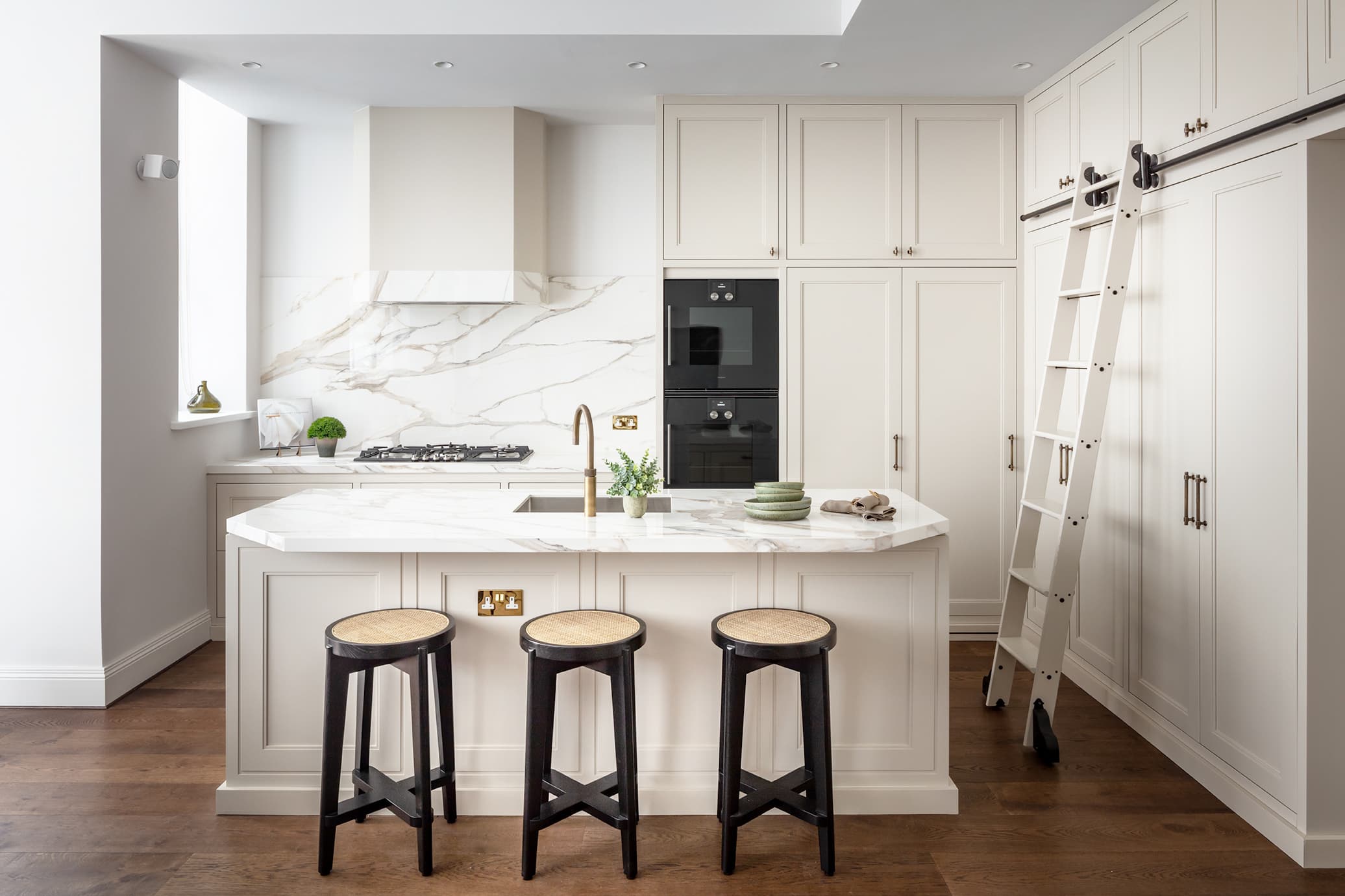
Bespoke Kitchen Cabinets: The Definitive Guide to Handmade Cabinetry
Everything you need to know about bespoke kitchen cabinets — from construction methods and timber selection to door styles, finishes, and the details that distinguish genuine craftsmanship from the merely expensive.
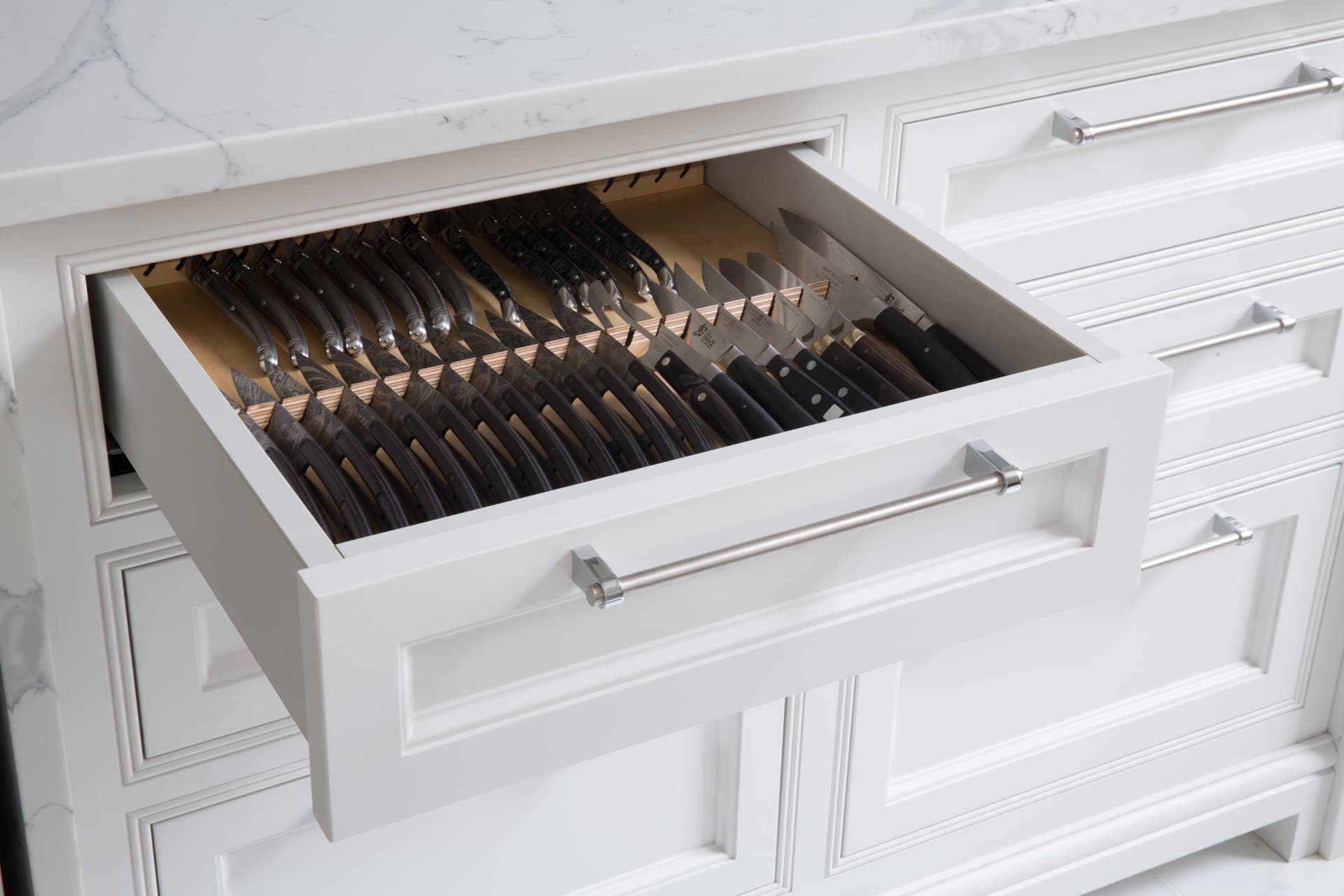
Bespoke Kitchen Joinery: The Craft Behind Cabinets That Last Generations
A detailed guide to the joinery techniques used in bespoke kitchen craftsmanship — from dovetail drawers and mortise-and-tenon frames to tongue and groove panels. Learn how to recognise quality joinery and why it determines how long your kitchen will last.
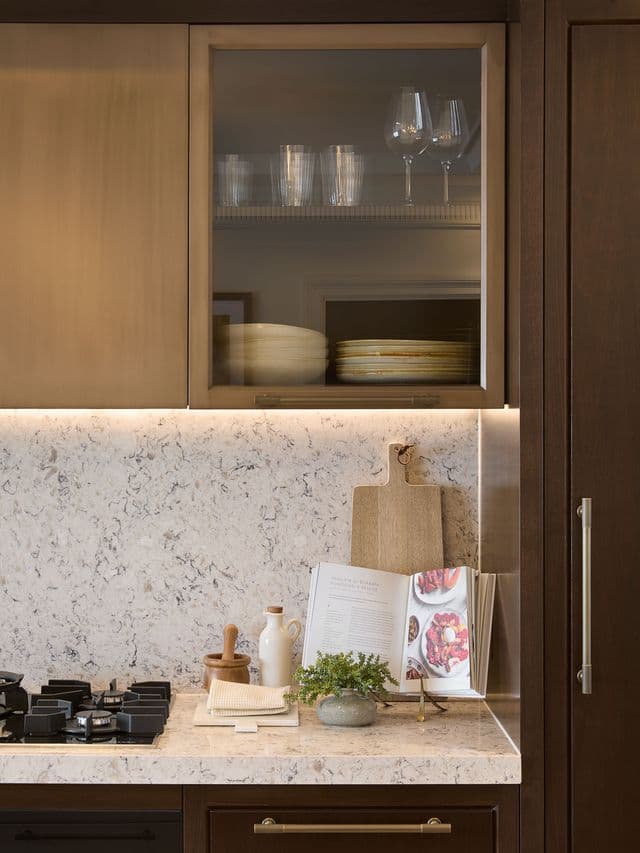
The Bespoke Kitchen Design Process: From Brief to Blueprint
How does a bespoke kitchen get designed? We walk through every stage of the design process — from developing the brief and spatial analysis to 3D visualisation, technical drawings, material specification, and sign-off.