

Family-Run Bespoke Kitchen Maker vs Showroom Chain
Seventeen years building kitchens from our Essex workshop. We explain honestly what separates a family-run bespoke maker from a showroom chain — and what to ask before you sign.

Seventeen years in one Essex workshop — what continuity means for your project
We have been making kitchens from the same Essex workshop since 2007. The bench where a cabinet gets its final hand-finish today is the same bench it was finished on the year we opened. That is not a boast — it is simply the shape our working life has taken, and it turns out to matter enormously to the people who commission us.
Continuity is one of those words that sounds corporate until you understand what its absence costs you. When the same family designs, makes, and fits every kitchen that leaves this workshop, there is no version of a project where information falls between departments, where a specification agreed in a showroom becomes a surprise on a delivery note, or where the person who understood exactly what you meant by "warm but not yellow" has moved on by the time your carcasses are being assembled. We are here. We were here at the first conversation. We will be here at the last snag.
Seventeen years in one place also means we have made mistakes — and learned from them without anyone else absorbing the lesson. Our joinery details have evolved because we noticed where earlier work aged less gracefully. Our material sourcing has changed because we tracked how certain timbers moved in real Essex homes over ten winters. That kind of knowledge does not live in a product manual. It lives in the people who did the work.
The problem with showroom chains: who actually builds your kitchen?
This is the question most buyers never think to ask, and it is the most important one on the list.
A showroom chain sells you a kitchen. The designer — sometimes excellent, often under pressure to hit a monthly target — draws it up and hands the specification to a manufacturer they may never have visited. That manufacturer produces carcasses to a price point. A separate logistics company delivers them. A self-employed fitter, engaged through a third-party installation network, puts them in. Each of these people has a legitimate job to do. None of them is accountable to the others once their portion is complete.
When something goes wrong — a door that will not hang true, a worktop joint that opens after six months, a filler panel that was never ordered — you discover that accountability has been carefully distributed into invisibility. The showroom points at the fitter. The fitter points at the cabinet quality. The manufacturer is several phone calls away. You are left managing a dispute between strangers.
We are not strangers. The cabinet maker who cuts the dovetails on your drawer boxes is the same person who will come back if a runner needs adjusting two years later. That is not a promise we make lightly — it is just the practical consequence of being one family, in one workshop, building kitchens we then go and fit ourselves.
Bespoke vs. off-the-shelf: a frank comparison from the people who make both sides
We should be honest: early in the workshop's history, we took on some semi-bespoke work that involved modifying stock carcasses. We stopped, not because there is anything inherently wrong with that model, but because the compromises accumulated in ways our clients could feel even when they could not name them.
The fundamental difference is this. A factory-made kitchen is designed around a range of standard sizes, and your room is made to fit around them. A bespoke kitchen is designed around your room — its actual dimensions, its structural quirks, the way the light moves through it in the afternoon, the height of the person who cooks in it most often. The word "bespoke" is used loosely in this industry. What it should mean is that nothing in your kitchen existed before we designed it for you specifically.
In practical terms, that means:
- Carcasses sized to the millimetre rather than to the nearest 100mm module, which eliminates the filler strips that mark every "fitted" kitchen as not quite fitted at all.
- Joinery details — drawer construction, door profiles, hinge recessing — chosen for your aesthetic rather than inherited from a catalogue.
- Material selections that go beyond the laminate and painted-MDF options of a showroom range, including solid timbers, hand-applied lacquers, and stone that we source and specify ourselves.
- A design that solves the spatial problems particular to your home, rather than one that assumes a generic kitchen-shaped room.
The trade-off is time and investment. A bespoke commission from our workshop takes longer than ordering from a showroom, and the starting point for our projects reflects the craft involved. If you are comparing on unit cost alone, we will lose that comparison. We are not competing on that basis.
How our family-run process works from first sketch to final fitting
People sometimes ask whether our process is different from a large company's — and the honest answer is yes, structurally, from the first conversation.
We begin with a studio visit or a site visit, sometimes both. This is not a sales appointment. We are trying to understand the project: the architecture of the space, how the household actually uses the kitchen, what has not worked about previous kitchens, what materials feel right and wrong to the people who will live with the result. This conversation has no agenda beyond understanding.
From that we produce hand drawings and then CAD plans — not a CGI render of a showroom fantasy, but working drawings that show how the cabinetry will be constructed and where it will sit in relation to the room. We discuss these, revise them, and discuss them again. The design is not fixed until you are certain of it.
Making happens in our Essex workshop. We do not sub-contract production. The cabinets that leave here were made here, by us. Fitting is done by the same team, which means the people installing understand every joint and every tolerance because they cut them.
After fitting, we are available. Not through a customer services department, but directly. If something needs attention — a seasonal adjustment to a door, a replacement component, advice about caring for a specific finish — you call the workshop.
Clients who've come back for a second commission — and why
We count returning clients not as a metric but as the most straightforward evidence that the work holds up. Several households have commissioned us more than once — a kitchen first, then a utility room or a study; a kitchen in one property and then another when they moved. A few have referred us to adult children setting up their own homes.
When we ask people why they came back, the answers are consistent. It is not usually the aesthetics of the finished kitchen they lead with, though they are usually pleased with that. It is the experience of the process — specifically, the sense that their project was being looked after rather than processed. They knew who to call. The people they called knew their project.
That is only possible at a certain scale. We are deliberately not large. We take a limited number of commissions each year, which means every project has the senior attention of the people who founded this workshop. That is a structural decision, not a marketing position.
There is also the question of longevity. Kitchens made to a genuine bespoke standard, from solid materials, with traditional joinery methods, do not date in the way that trend-led showroom ranges date. Clients who have had their kitchen for a decade tell us it looks better now than it did when the dust settled after fitting — the timber has settled, the patina has developed, the whole thing has become part of the house rather than something installed in it. That is what we are aiming for when we make a kitchen. Not the photograph on the day of completion, but the room in ten years.
What to ask any kitchen maker before you sign
Whether you commission us or someone else, these are the questions that will tell you what you are actually buying.
Who makes the cabinets? The answer should name a workshop, ideally one you can visit. If the answer is a manufacturer the company sources from, ask to see their quality standards and understand where accountability sits if something is wrong.
Who fits them? The best design can be undone by an installation team that did not make the cabinets and does not know their tolerances. Ask whether the fitting team is employed directly or engaged through a network.
How long have you been trading, and from where? Longevity and location are signals of stability. A business that has been in one place for a decade or more has a track record that can be checked.
Can I speak to a previous client? Any maker confident in their work will facilitate this. References from clients whose projects are two or three years old are more useful than testimonials from recent completions — you want to know how the kitchen has aged.
What happens after fitting? Ask specifically: if a door needs adjustment in eighteen months, who comes, and at what cost? The answer reveals whether after-sales care is built into the relationship or treated as an inconvenience.
What is actually bespoke here? Push on this. Some makers use the word to mean a wide choice of painted finishes on factory carcasses. Others mean every component is made to specification. The difference is significant and worth understanding before you commit.
We are happy to answer all of these questions about our own practice. You can find more about how we work on our about page, and we would encourage you to ask the same questions of anyone else you are considering.
Our portfolio: commissions that show what longevity looks like
A portfolio photograph taken the week after fitting tells you something. A photograph of the same kitchen five years later tells you considerably more.
Our portfolio includes projects that span the full range of domestic briefs we have undertaken since 2007 — from Georgian farmhouses in rural Essex where the kitchen needed to feel as though it had always been there, to contemporary new builds where the brief was precision and restraint. The common thread is not a house style. It is a standard of making.
We also include, where clients have permitted it, notes on how projects have been used and how they have aged. We think that context is more useful to a prospective client than a mood board.
If you are at the stage of considering who to commission, we would welcome a conversation. There is no obligation in a first call, and we are straightforward about whether a project is a good fit for our workshop or not. You can reach us through our studio page.
Frequently Asked Questions
Thinking about a new kitchen?
Book Your Free ConsultationYou might also enjoy
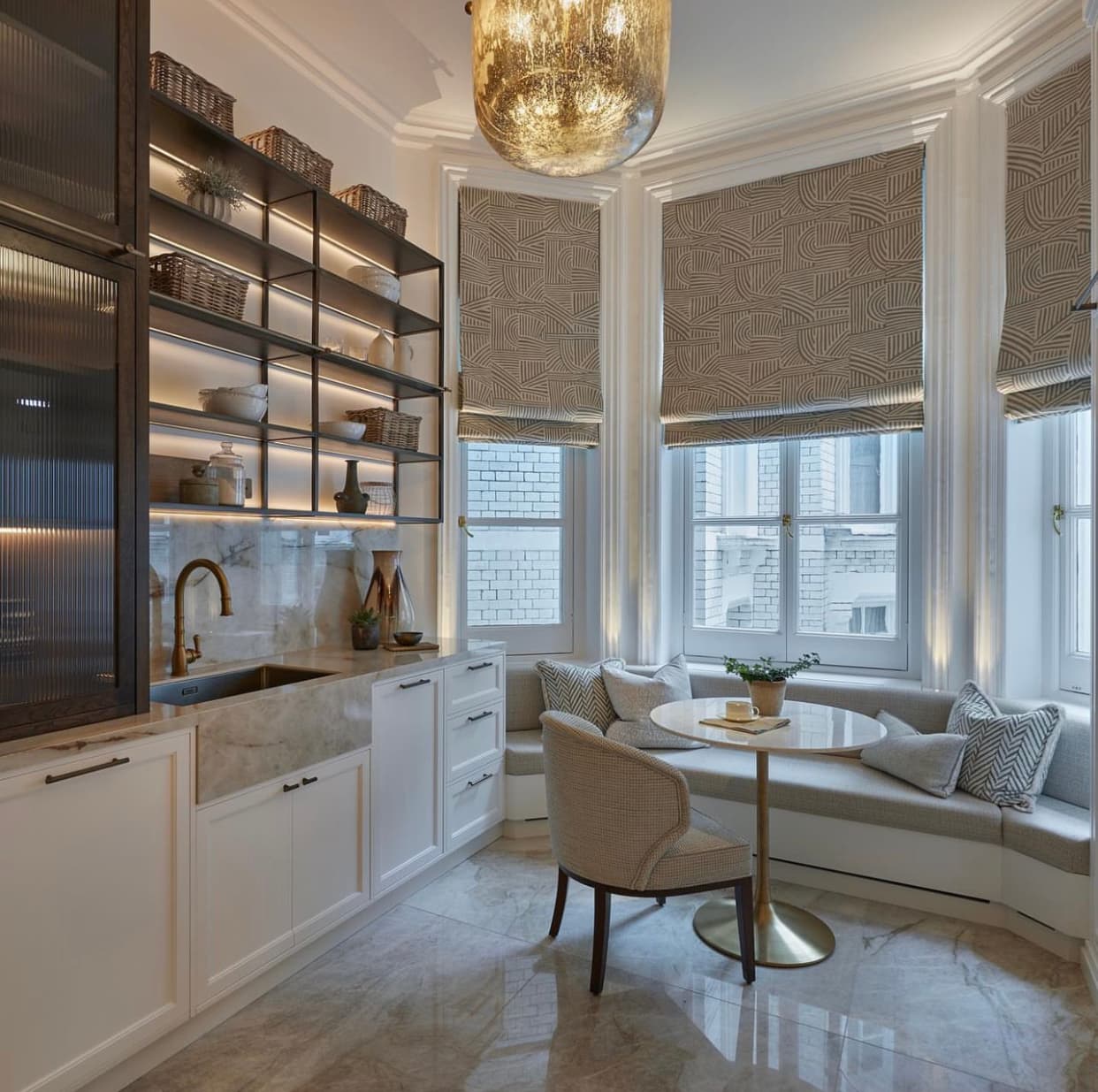
Bespoke Kitchens Essex: Handcrafted in Our Workshop, Designed for Your Home
Albury House Kitchens designs and builds bespoke kitchens in Essex from our own workshop. Handmade luxury kitchens for period farmhouses, barn conversions, townhouses, and new-builds across Chelmsford, Brentwood, Colchester, and the Essex countryside.
Bespoke Kitchen Cost £100,000+: Where the Money Goes
A transparent breakdown of what a £100,000+ bespoke kitchen commission actually costs — cabinetry, stone, appliances, fitting and project management explained.
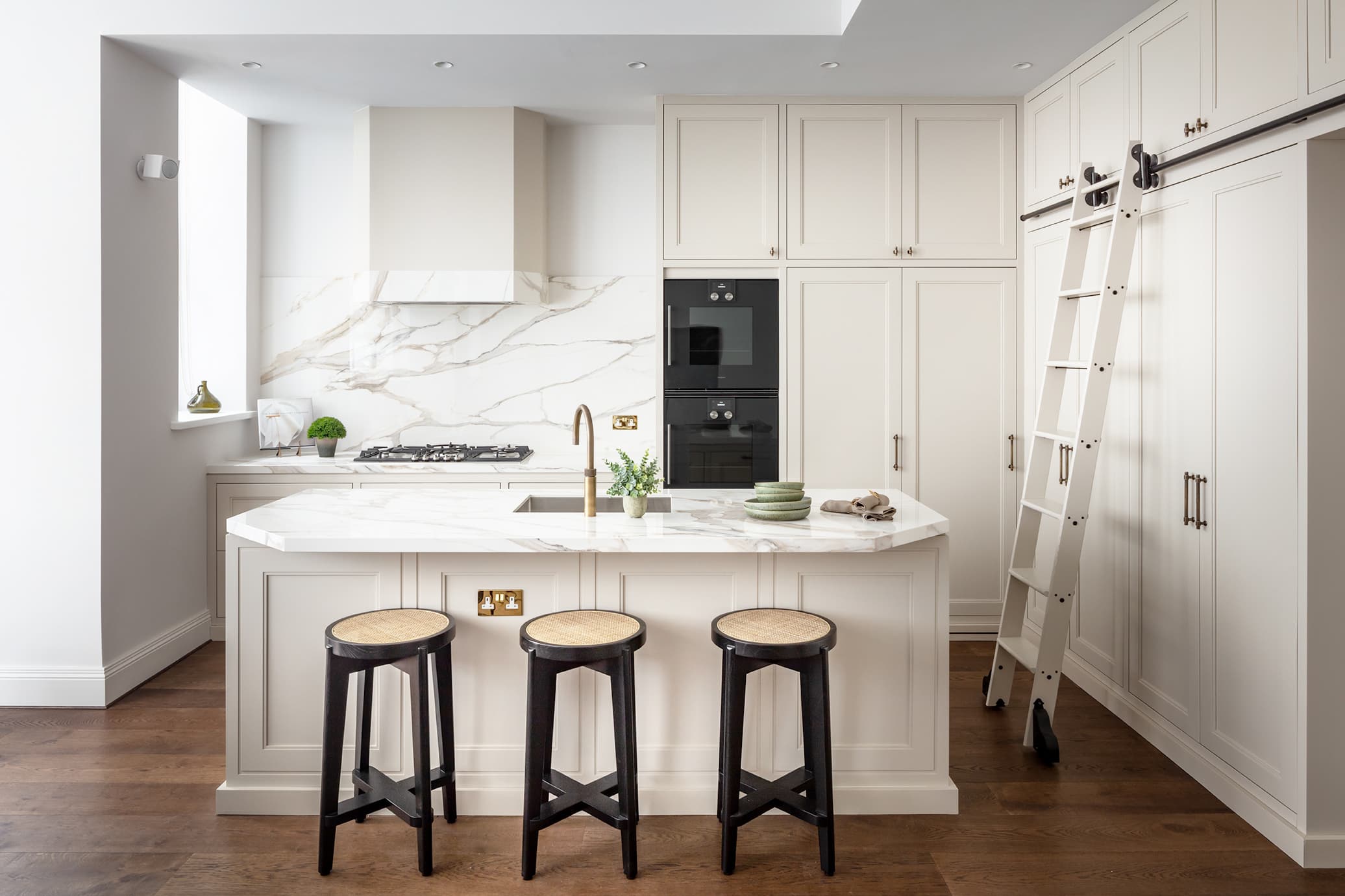
Bespoke Kitchen Cabinets: The Definitive Guide to Handmade Cabinetry
Everything you need to know about bespoke kitchen cabinets — from construction methods and timber selection to door styles, finishes, and the details that distinguish genuine craftsmanship from the merely expensive.